Surveys specifically tracking whether lifetime retirees worked their “dream job” are rare, but general workforce and retirement studies show that the vast majority of people never attain a dream career, and career dissatisfaction often drives post-retirement work. Across multiple workforce surveys, only about 7% to 10% of adults report currently working in their dream career, meaning up to 93% of the workforce has taken a different path.
Moneypenny Resources found that only 9% of those surveyed thought that they were in their “dream job” or career. There is a lot of fascinating data on what jobs seem to bring the most satisfaction, who are the “happy workers,” and even what states or areas of the US have the happiest workers. In 2023, Wyoming had the highest percentage of workers who are happy (100%, how could this even be true?) Washington DC sat at 87.5% so I feel the data must be skewed.
Never-the-less, this past Sunday’s message at the church I attend here in Northern Virginia had me wondering about dream jobs. Now that I have been retired for 8 1/2 years, I can look back at my own career in graphic arts with a good deal of pride mixed with a tiny twinge of regret.

I had started out in college majoring in Fine Arts and fully expected to go on to obtain a masters degree in either printmaking or painting. I moved to San Diego and it was there in 1976 that my eventual career path took a slight left turn. I remained in graphic arts and production for the next 26 years, eventually retiring from a church as their director of communications in 2018. And I loved every job I’ve had: they quite often combined my love of art with that of language (majored in Art, minored in English). But did I ever obtain my “dream job”? I don’t think so, though I have no regrets about the career field I eventually found myself in.
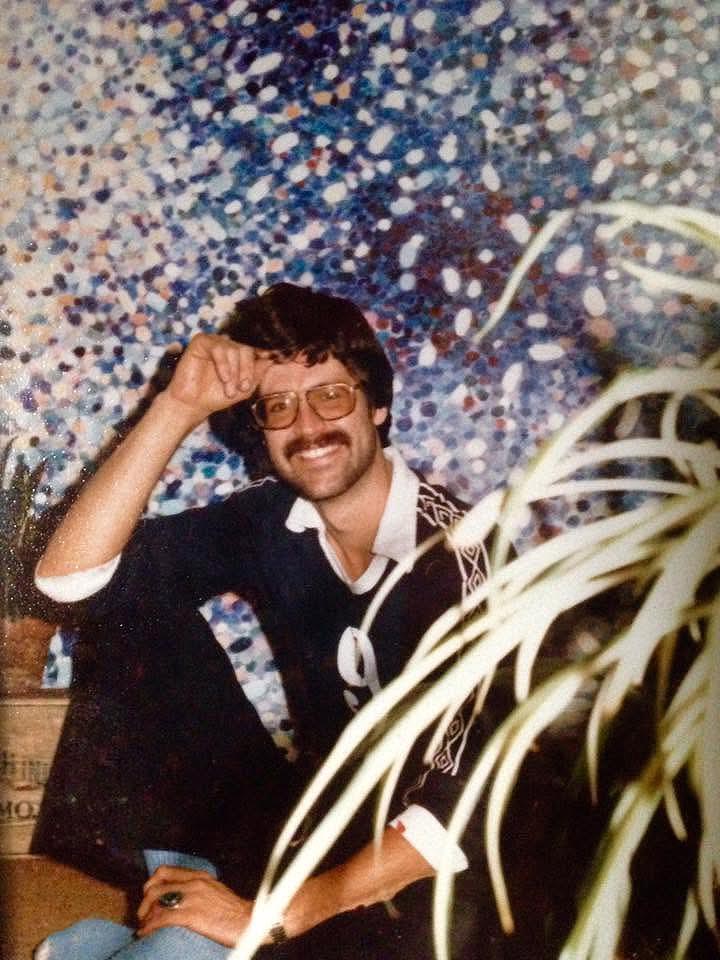
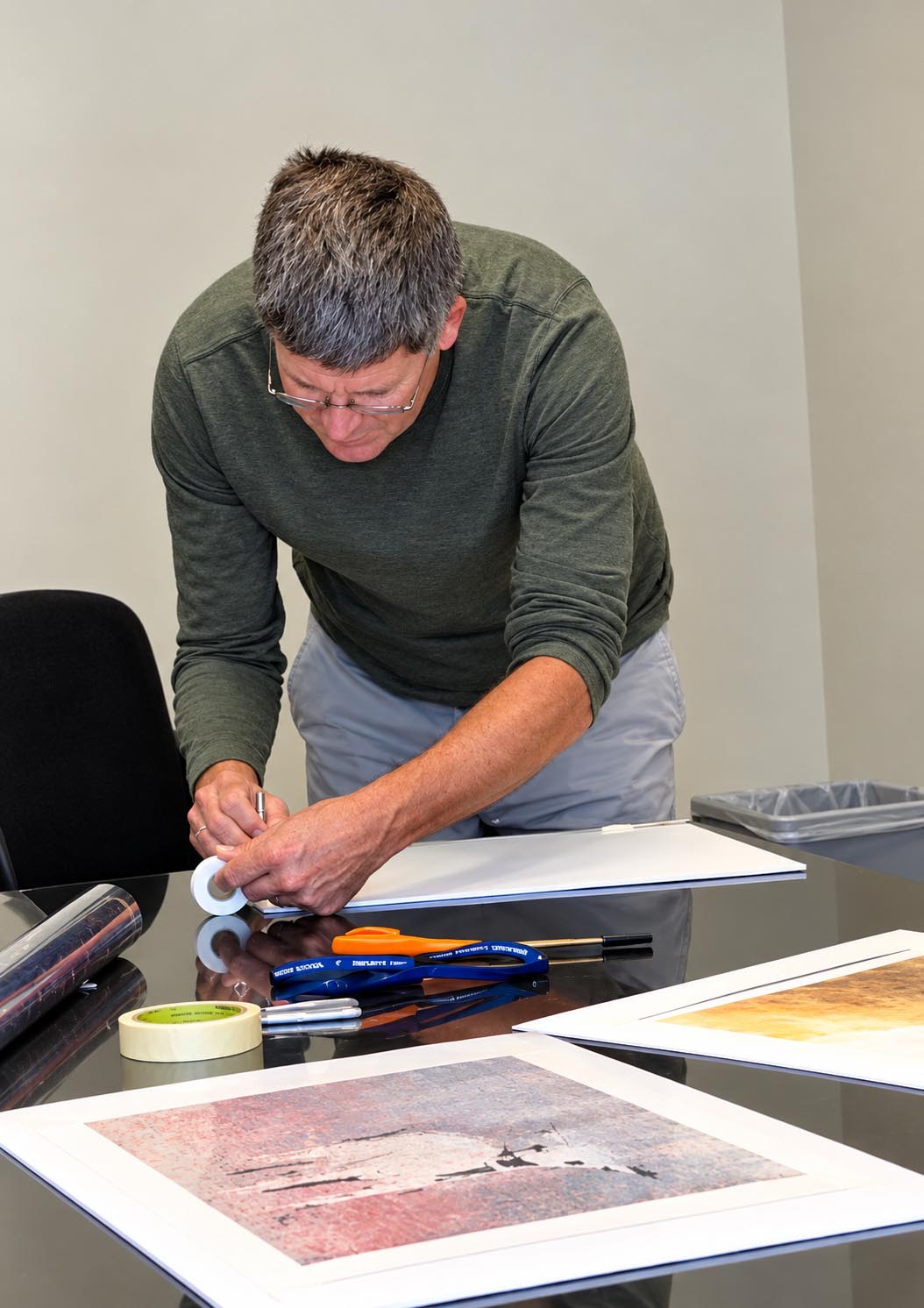
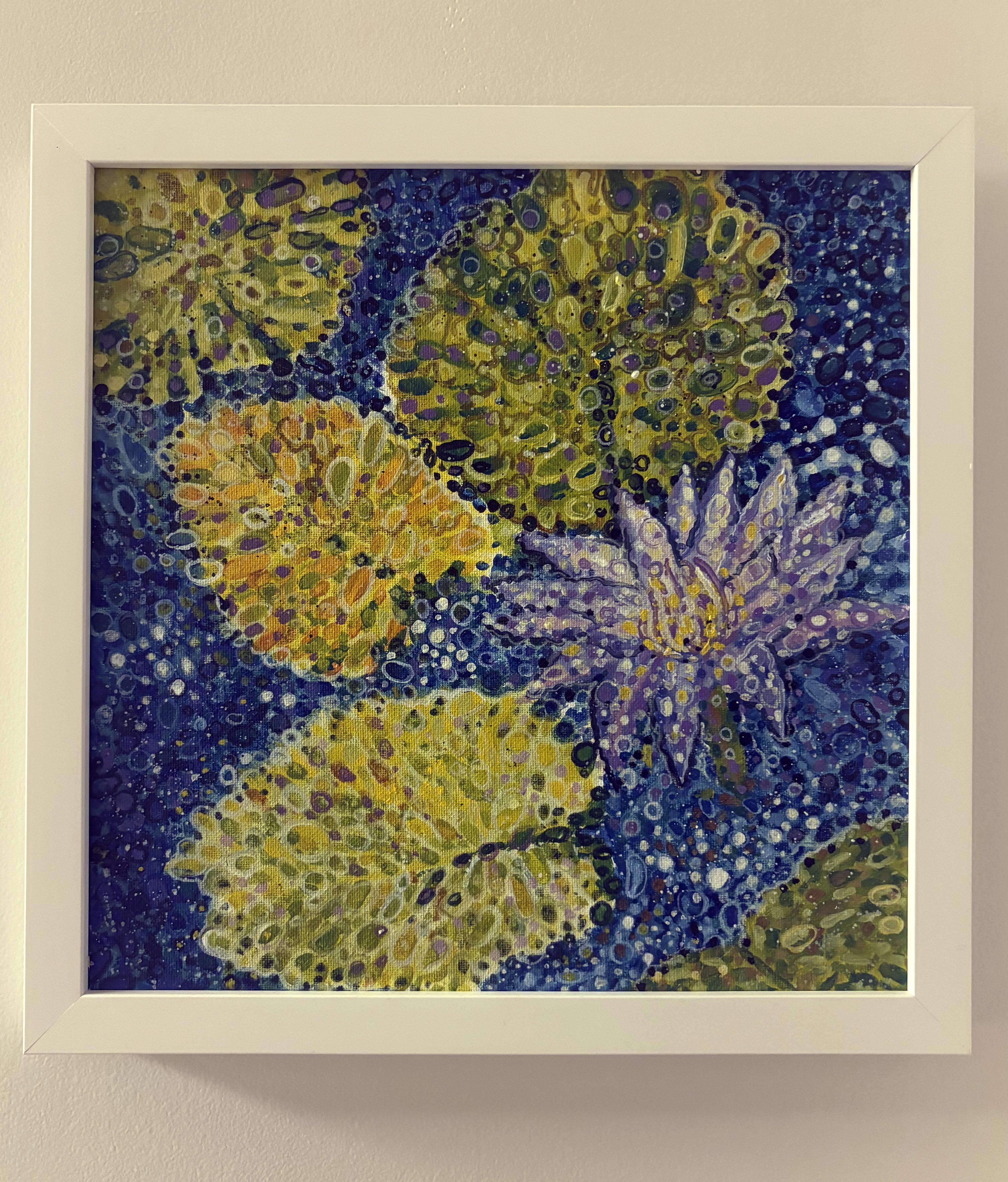
Above, one of my paintings from my senior show in 1974; working on matting prints of a friend’s artwork; and a recent acrylic painting of my own. I still work in that pointilist style, though on a much smaller scale than I did before.
According to workforce research, the choice to pivot away from a dream job is rarely due to laziness; it is almost entirely dictated by real-world friction. Again, data from Moneypenny highlights the top barriers preventing people from ever obtaining their dream: financial constraints (specialized training or education); lack of opportunities; or family obligations. Looking back at my own career path, it would have been financial constraint (the cost of advanced education) combined with fear of failure.
In a lifetime career regret series by Business Insider, hundreds of older Americans noted that they chose paths purely out of survival rather than passion. Many expressed deep regret over not prioritizing higher education or specialized training when they were younger, which permanently locked them out of the competitive “dream” fields they actually wanted to enter. That tracks, doesn’t it? The very high cost of education can certainly act as a gatekeeper, admitting some, excluding others from a career path.
Interestingly, what people regret while working changes dramatically once they actually retire.
- Before retirement: People stress over a lack of status, missed promotions, or not making enough money.
- After retirement: The narrative flips entirely. According to a large-scale study of over 750 retirees tracking what they regretted most about working past age 60, the overwhelming sentiment was the loss of time
Once the job is gone, retirees rarely wish they had climbed higher up a corporate ladder they didn’t care about. Instead, they express profound regret that they sacrificed their prime physical “health span” working a job they merely “enjoyed to some degree” instead of retiring sooner to chase personal passions, travel, or spend time with family.
Ultimately, the data shows that most people do realize they settled for second best, but they only truly mourn it once the structured routine of the career vanishes and they are left trying to figure out who they are without it.
While working on this post, I reached out to a college-friend of mine for his perspective. John is a few years younger than I am, and while we both attended the same university (go UNR!) at the time we pursued different majors. Today John McCaskill is the Artist/Owner of Studio Jomac in St. Pete Beach Florida.
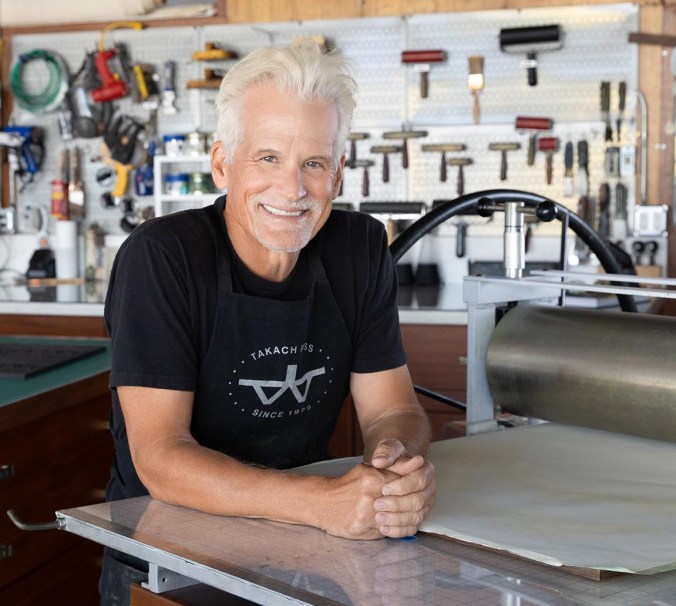
John, as my wife and I were talking, I realized that I had worked some very interesting, and fulfilling jobs over my career. But now that I am retired, I don’t think I actually ever had my “dream job.” But I thought of you and your transition to full time artist, printmaker, and studio owner. To me that seems much more closely aligned with obtaining your dream job. Any thoughts you could share with me on your own journey?
“Becoming a full-time artist, printmaker, and studio owner didn’t happen overnight. I worked hard for many years to create the freedom and opportunity to build this kind of life, but it has absolutely been worth it. I love creating, and I love having a studio where I can explore ideas, experiment, and bring them to life.
You were actually an early influence on my creative journey. When we were roommates and you were working toward your BFA, seeing your large-scale, dot-based paintings helped open my eyes to the possibilities of pursuing art seriously. Our time working together at Outdoor Posters also left a lasting impression. Even today, I still posterize and lay out many of my portraits using principles much like those we worked with back then.
For me, a dream job is not necessarily something you find. Sometimes it is something you gradually build through years of work, experience, and persistence. It also requires an openness to something larger than ourselves, a higher wisdom and universal harmony that we can tap into when we become truly receptive to the creative spirit. My earlier careers and relationships gave me the skills, inspiration, and resources to arrive here, so I see this chapter as part of the same continuing journey rather than a departure from it.”

Where are you in your own personal journey? Do you feel like you’ve arrived or are you still on the road? Sometimes it helps just to check in with a friend.
You can read more about John’s story and view his artwork on his website here. And definitely check out his gallery when you are in the St. Petersburg area.
 My Retired Life
what is your regret?MomSent from my iPadOn Sep 9, 2026,
LikeLike
I think the idea of a dream job is more of an orientation than a destination. I look back and had different ideas of dream jobs at different points in my life all of which would’ve probably trapped me in something that was not what I imagined. But I feel like I have had a rich journey of experiences that led one to another that created a dream path rather than a dream job. And thankfully that path still continues on and opens up new opportunities every day as I’m sure it does for you retired or not.
LikeLike