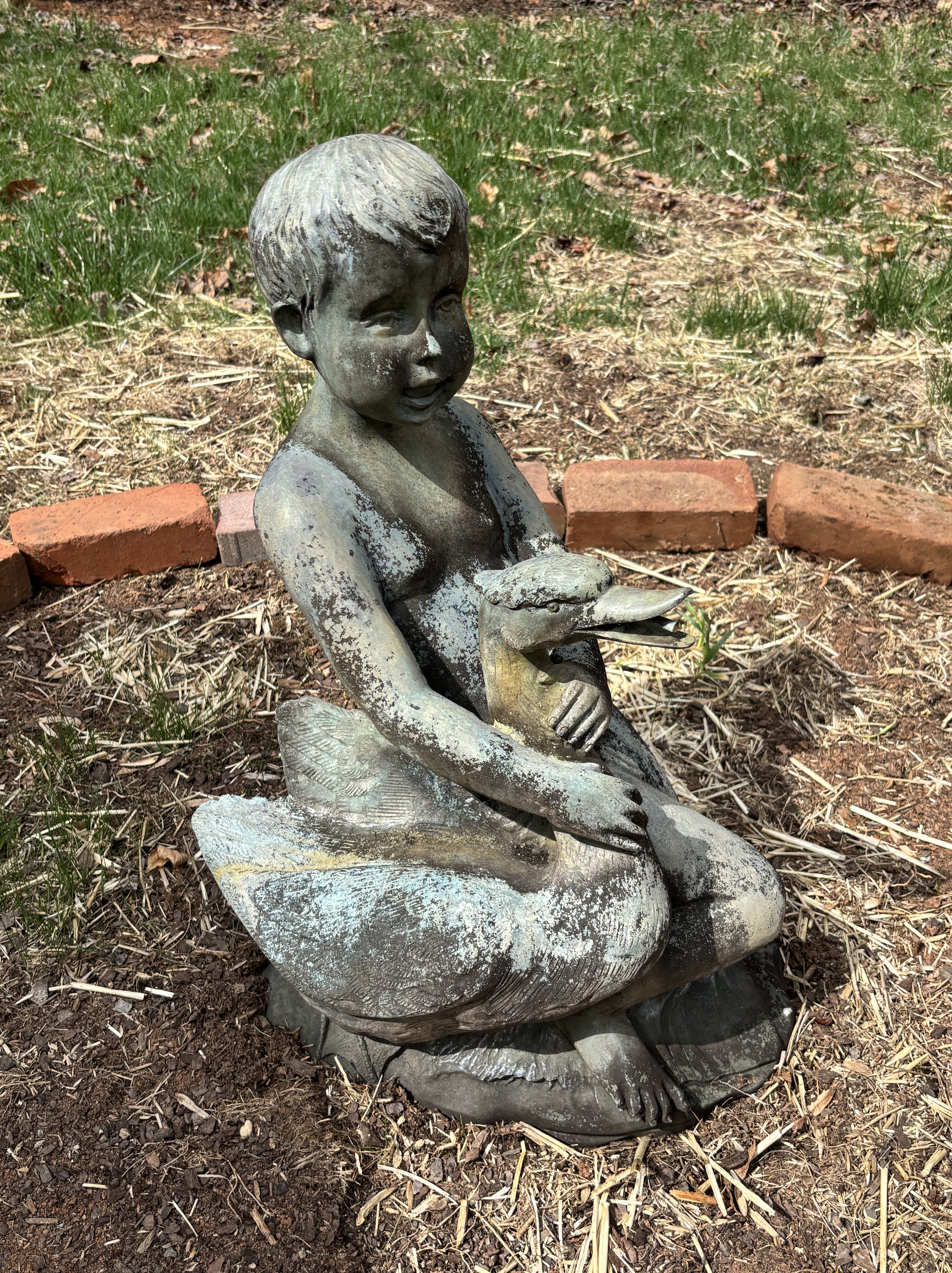
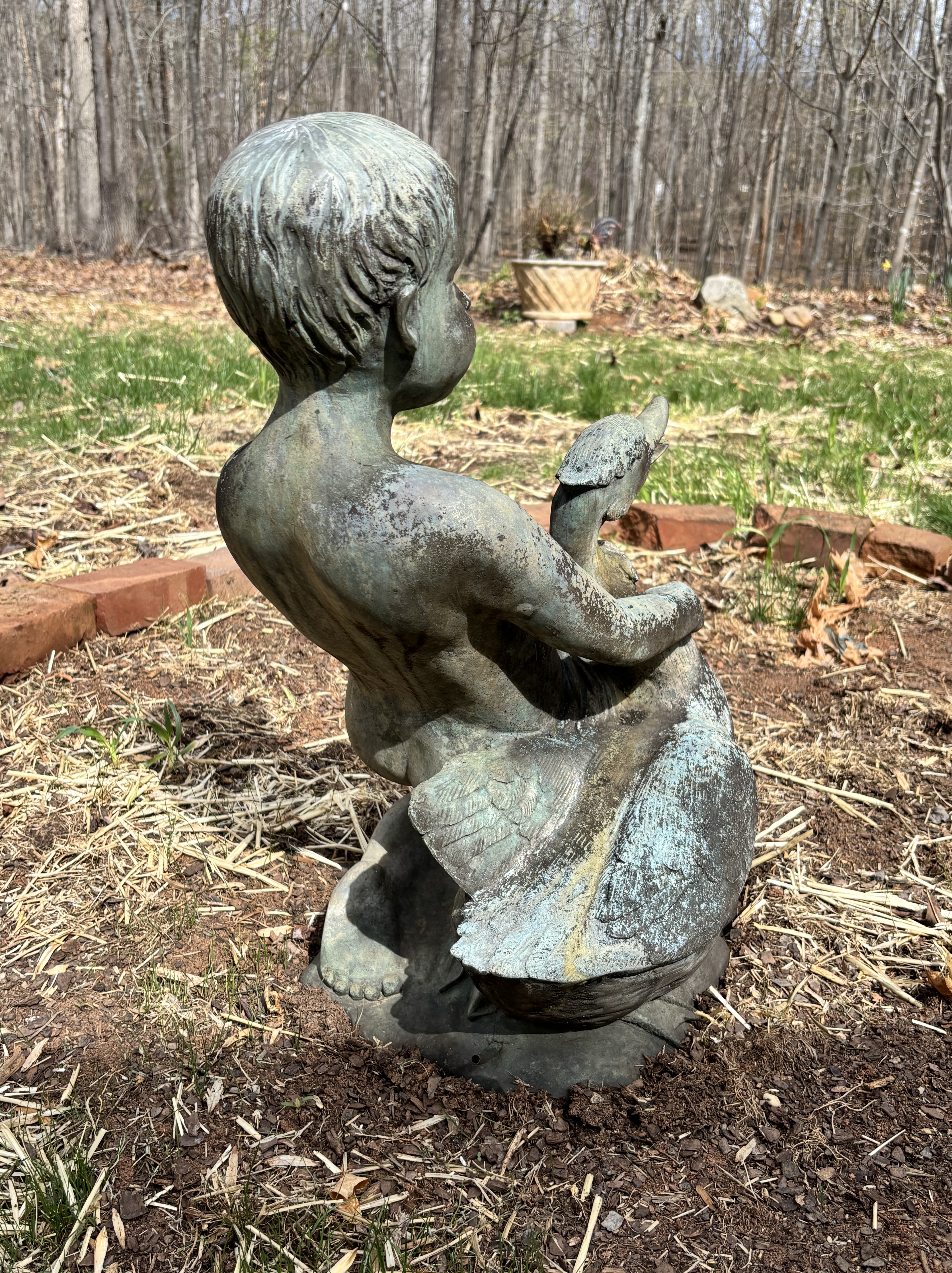
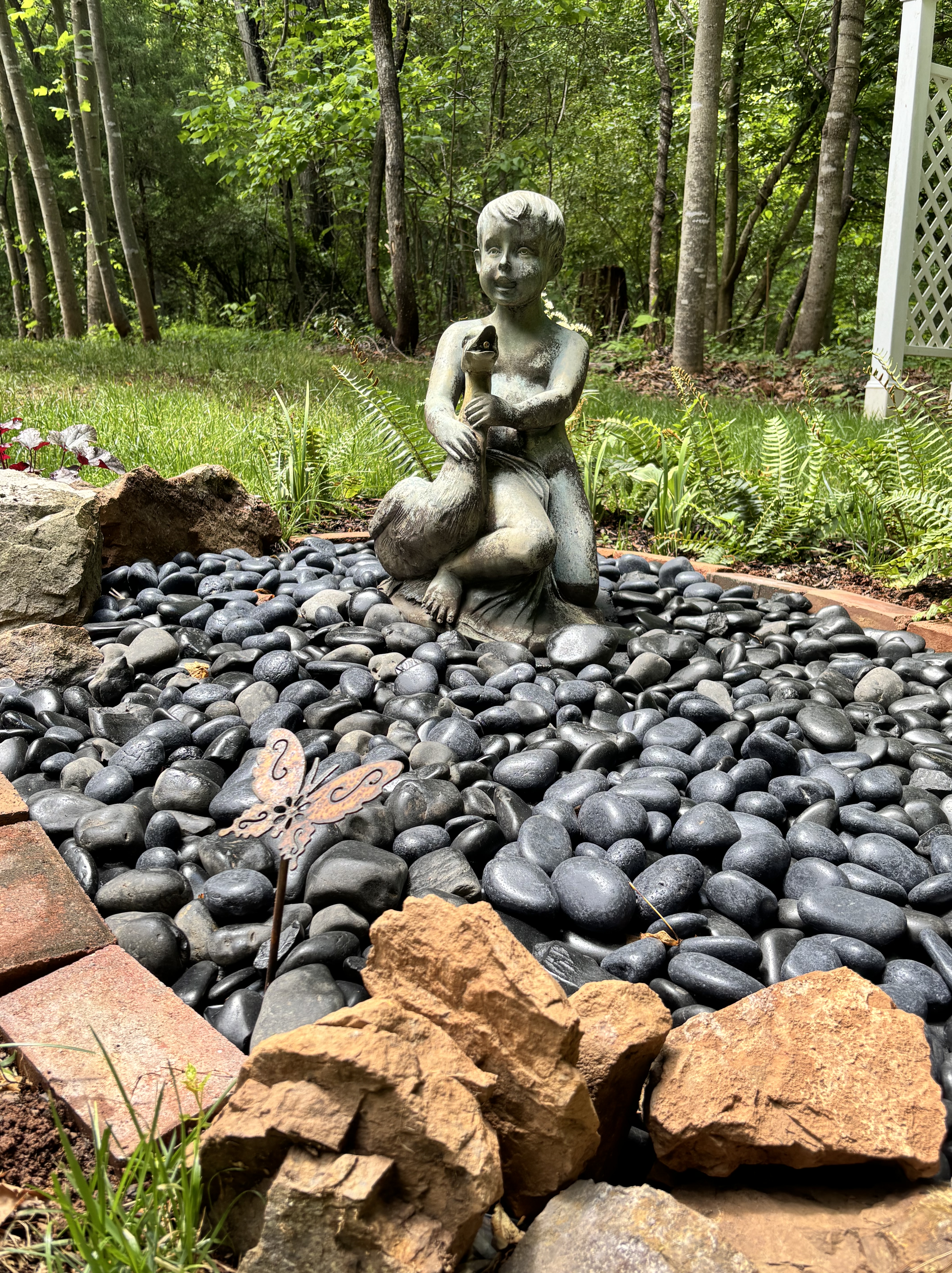
The original Boy and Goose sculpture is a 2nd-century CE Roman copy based on a Hellenistic Greek original (circa 2nd Century BCE) often attributed to Boethos of Chalcedon. It is a well-known motif depicting a seated boy with a goose or duck, with various versions housed in museums like the Louvre and Galleria Borghese. When this particular fountain sculpture came up for auction I knew it was going to fit in beautifully with the pond I envisioned for our backyard.
We have an area of the yard that can’t seem to grow grass: well, it can grow grass, it just has a hard time sustaining it. It could be grubs, it could be the poor condition of the soil, it could even be that it doesn’t really get enough hours of sunlight to grow a lush green carpet of grass. Whatever the reasons, I’ve become convinced that a rock garden or pond would look great in that area and certainly require less upkeep. When I’ve planted grass seed, the forces of nature are definitely working against me!
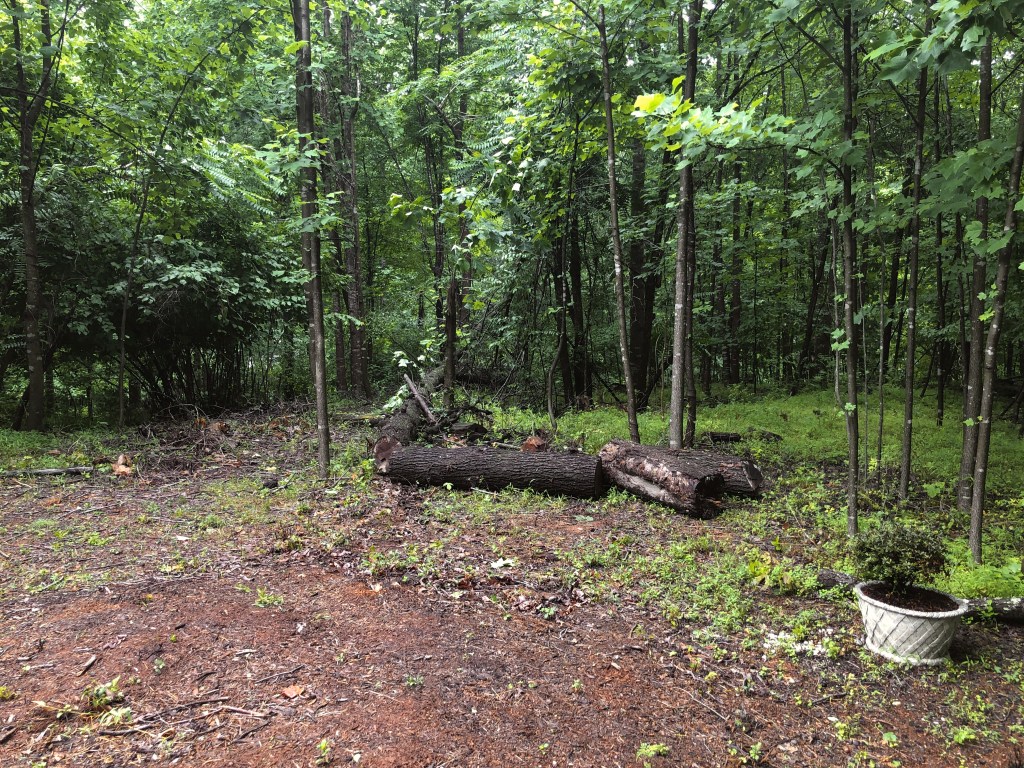
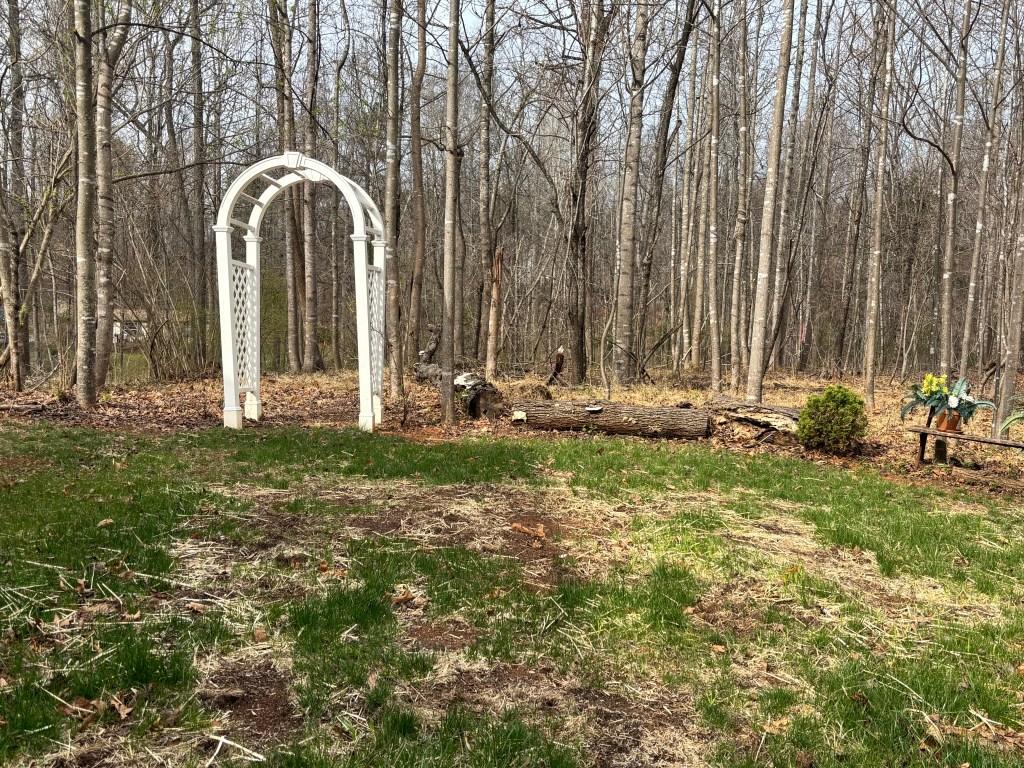
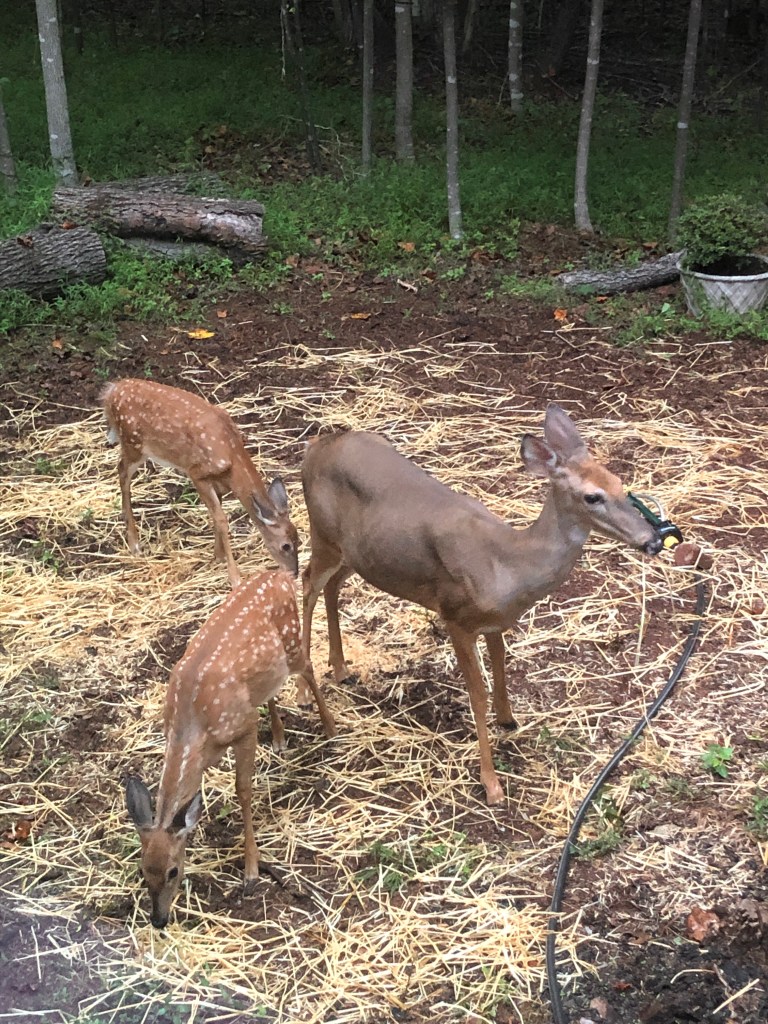
With the help of an online planner I decided to pivot from a field of grass to something smaller and more engaging. A wet or dry pond, each had certain advantages though different design requirements.
Here’s the full concept narrative:
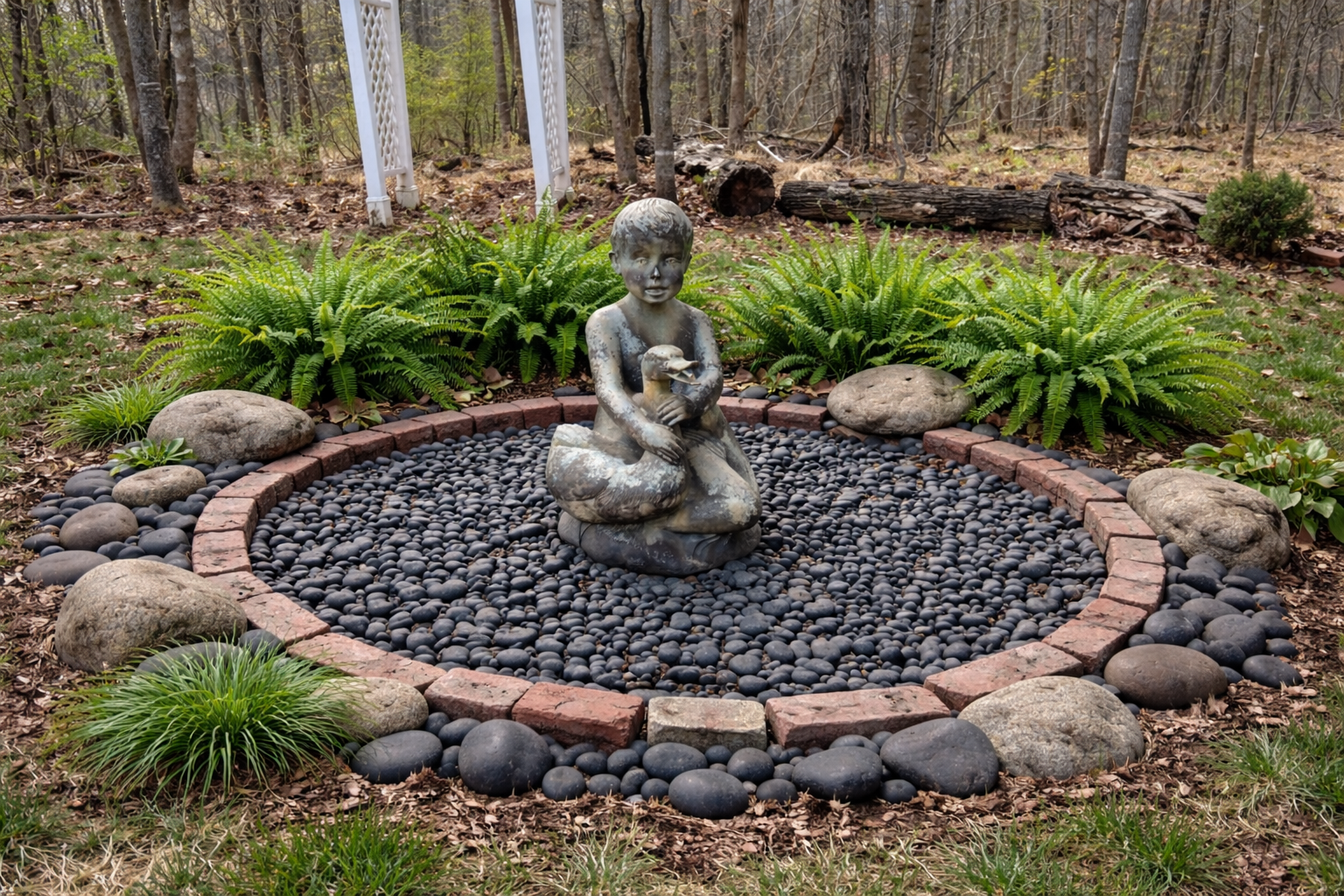
The idea — the island is read as a dry pond, roughly oval, about 2–3 metres across. The black river pebbles give it a still, reflective quality that plays beautifully against the weathered stone of your sculpture. The boy with the goose becomes the “source” — as if he’s sitting in the middle of a pond he’s claimed.
Sculpture placement — position the boy slightly north of centre so that when viewed from the house or a main seating area, he sits in the sweet spot of the composition. Raise him on a flat irregular stone or small concrete plinth so his base is just above the pebble line — this separates him from the ground and gives him presence.
The pebble bed — lay a weed-suppressing membrane first, then 5–8cm depth of black river pebbles. This depth keeps them from migrating and gives a solid, finished look. The contrast between the dark pebbles and the greenery around the edge is what makes the “pond” illusion work.
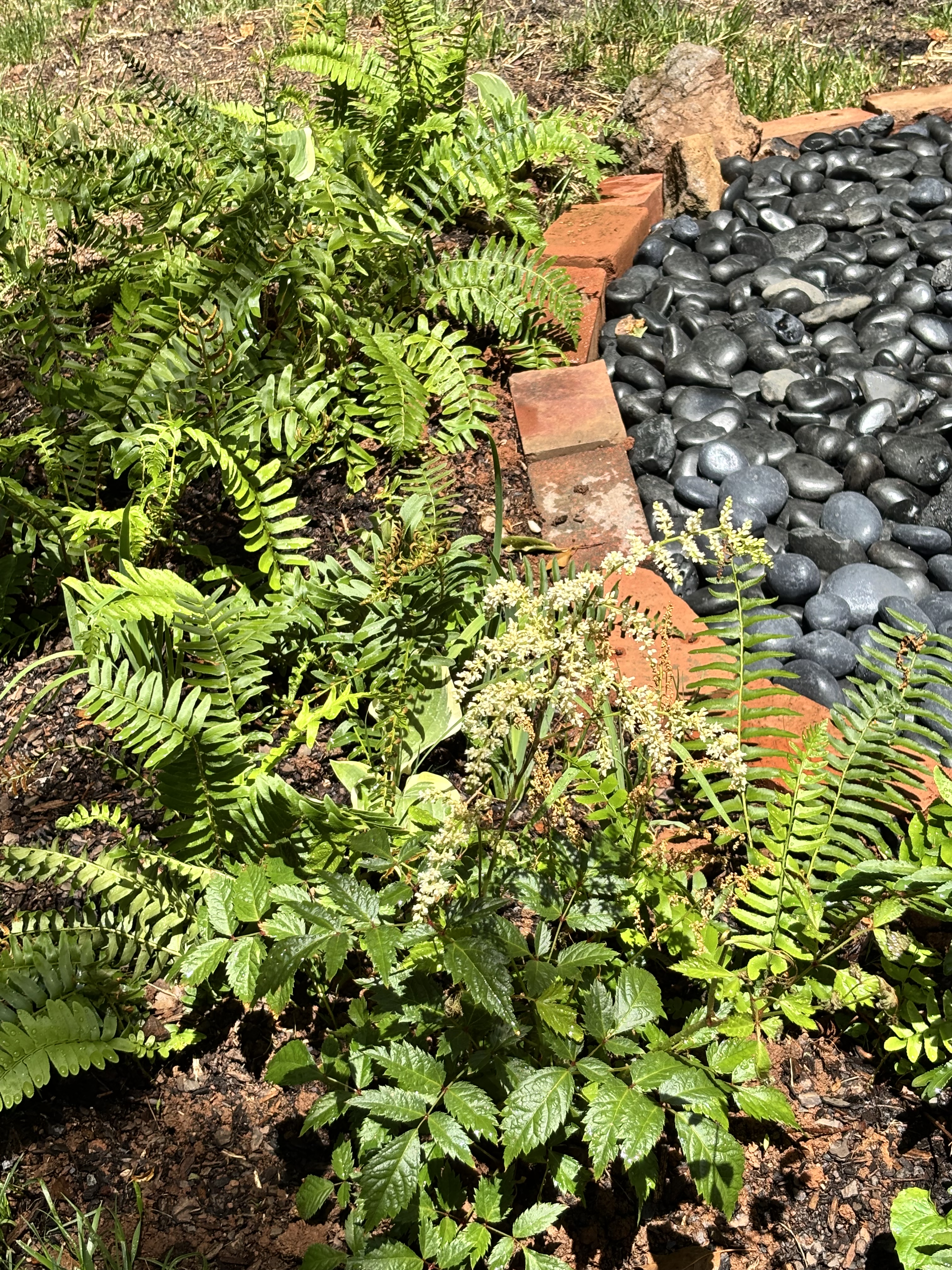
Ferns around the edge — use soft, arching varieties like Dryopteris erythrosora (with its warm coppery new fronds) or Polystichum setiferum for a lacy look. Plant them so they droop slightly over the pebble edge, softening the boundary between “water” and “land.”
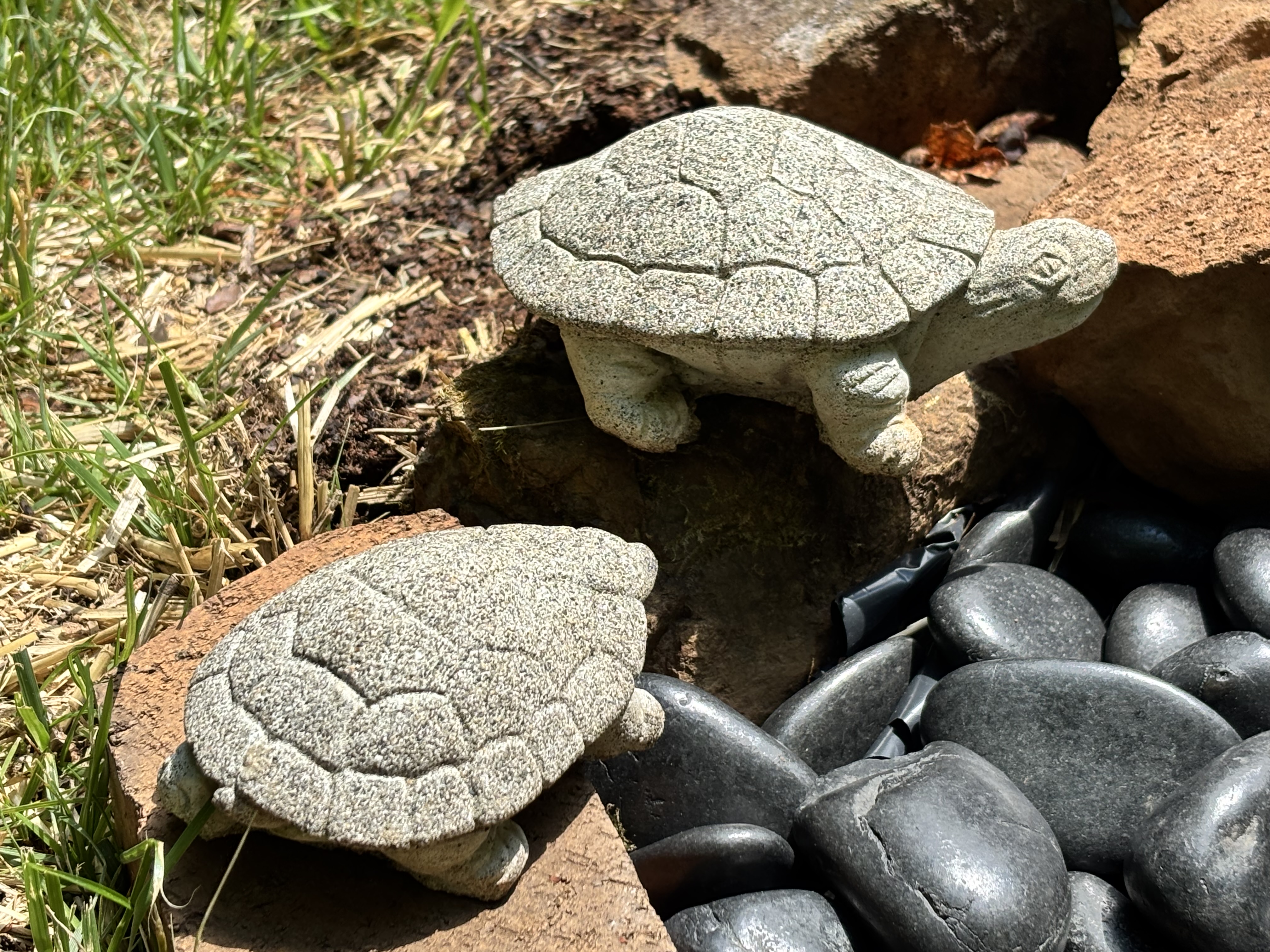
A finishing touch — consider one or two rounded mossy stones tucked among the ferns at the edge. At that point the whole garden reads less like a planted bed and more like a scene discovered in nature — exactly the mood your sculpture deserves.
I might add that the garden water feature I had in mind is one that I had seen at the National Memorial Park in Fairfax VA. The Fountain of Faith, sited in the National Memorial Park in Fairfax VA was created by Swedish sculptor Carl Milles and dedicated in 1952 after having taken 12 years to complete. The fountain sits in a large courtyard and consists of 37 figures. The figure of a young boy with a bird on his shoulder and arm was especially moving for our family and we used the image in a poster at the memorial service of our nephew who is buried there. The sculptor was a prolific artist and taught at Cranbrook Academy of Art for twenty years here in the States, 1931-1951. You can read more about him and his art here.
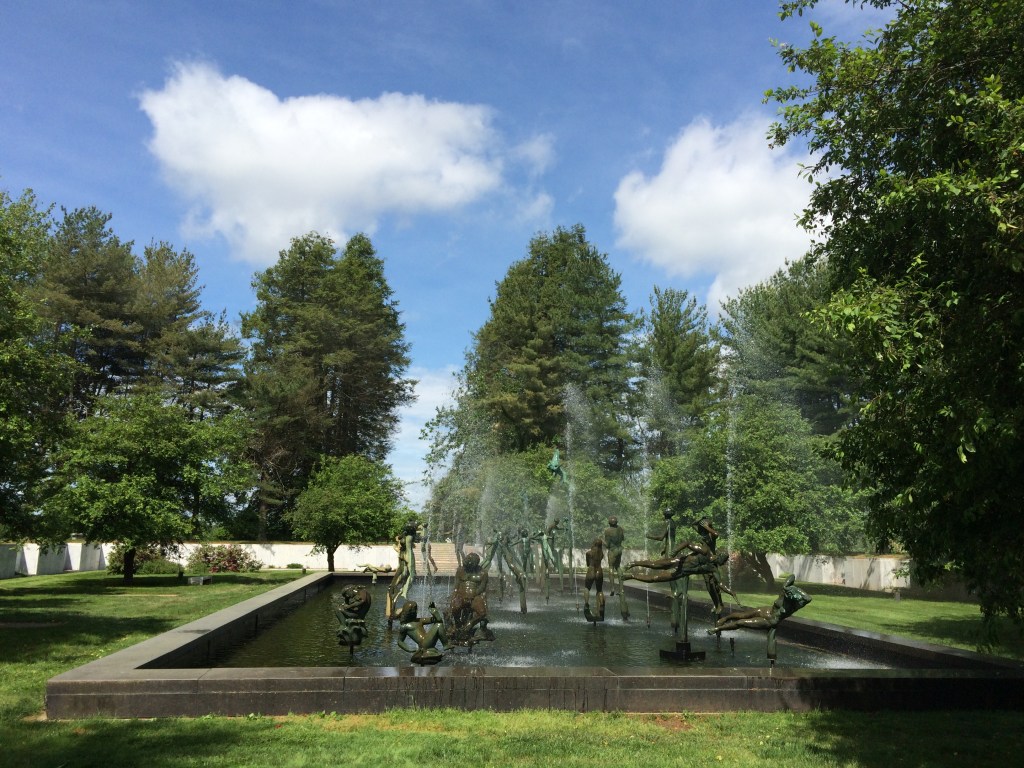
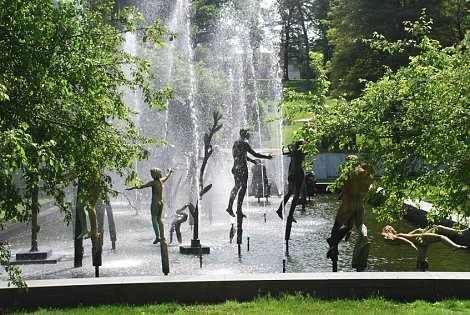
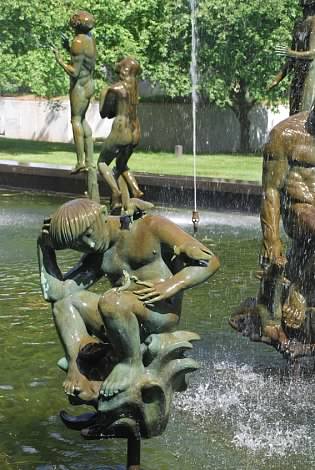
We’ve been working on our pond for the past several weekends. With a plan in mind, I’ve tried to source most of the accent pieces from our property. The border of the pond was created from odd-sized bricks we’ve found lying throughout the woods, discarded from the remnants of a brick pathway and possibly a patio in the former owner’s backyard. The rocks and ferns are from the woods that surround us. The initial design was created through AI; a version of a wet pond was gorgeous but truthfully would have required too much effort to create and maintain, hence the river-rocks version.
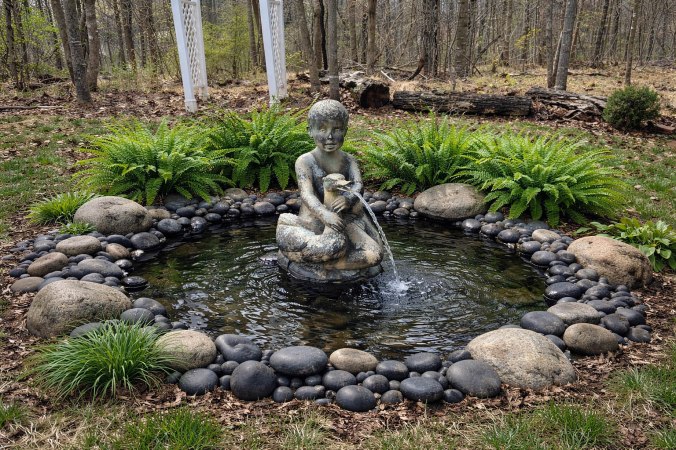
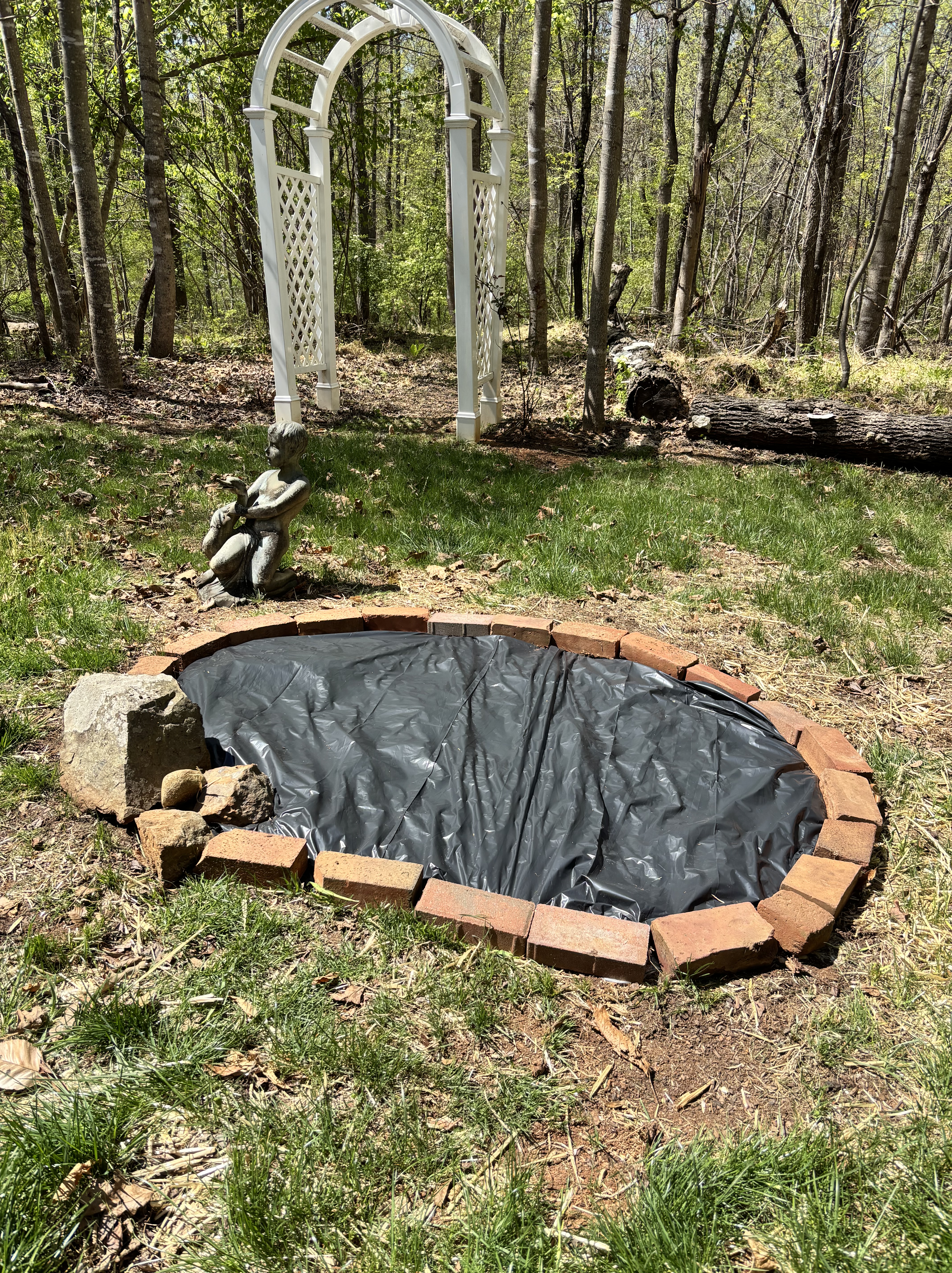
Hopefully the garden pond will help to create an area of quiet respite, maybe we’ll add a bench or seating area close by for reflection and comtemplation.
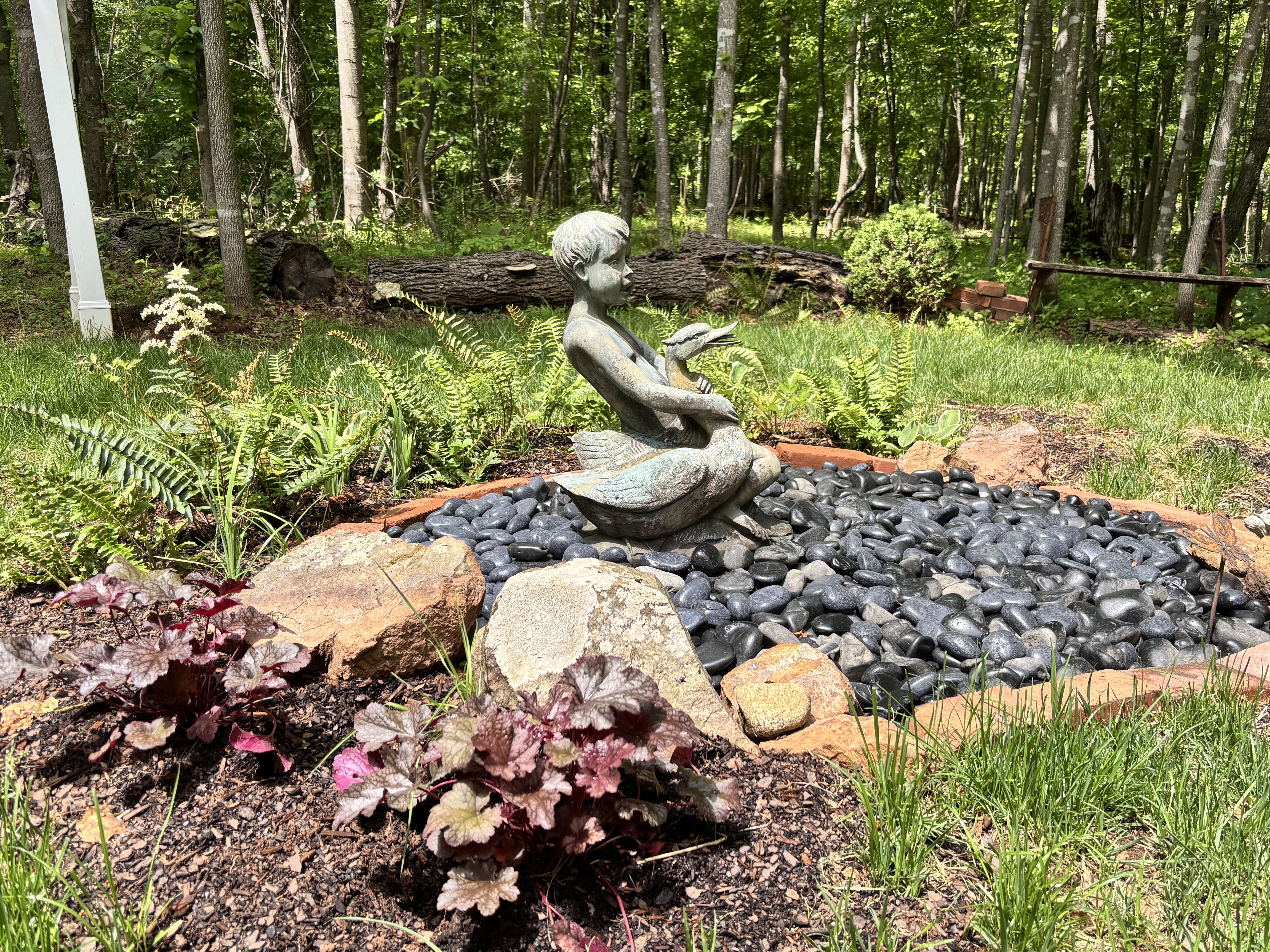
The finished pond looks very much like the AI-generated concept. Our plants have some growing to do before they start to fill in, but the ferns, astilbe, huchera, and Siberian irises that I’ve planted are really starting to look good. And there is less grass to mow! I love it.
 My Retired Life
The deer se
LikeLike
I’m really impressed by this and may steal it. An advantage to us is that it doesn’t require the upkeep a reall pond would need.
2 of my irises have 1 brave flower on, but I think they’re too close to trees sadly. It’s a good thing we have gardens in this world isn’t it?
LikeLike
Gardens really are a never-ending source of delight, but they can be a challenge at times! I’m still trying to get the balance of low maintenance, visual impact right. This was a fun addition to the garden!
LikeLike