More Weeds

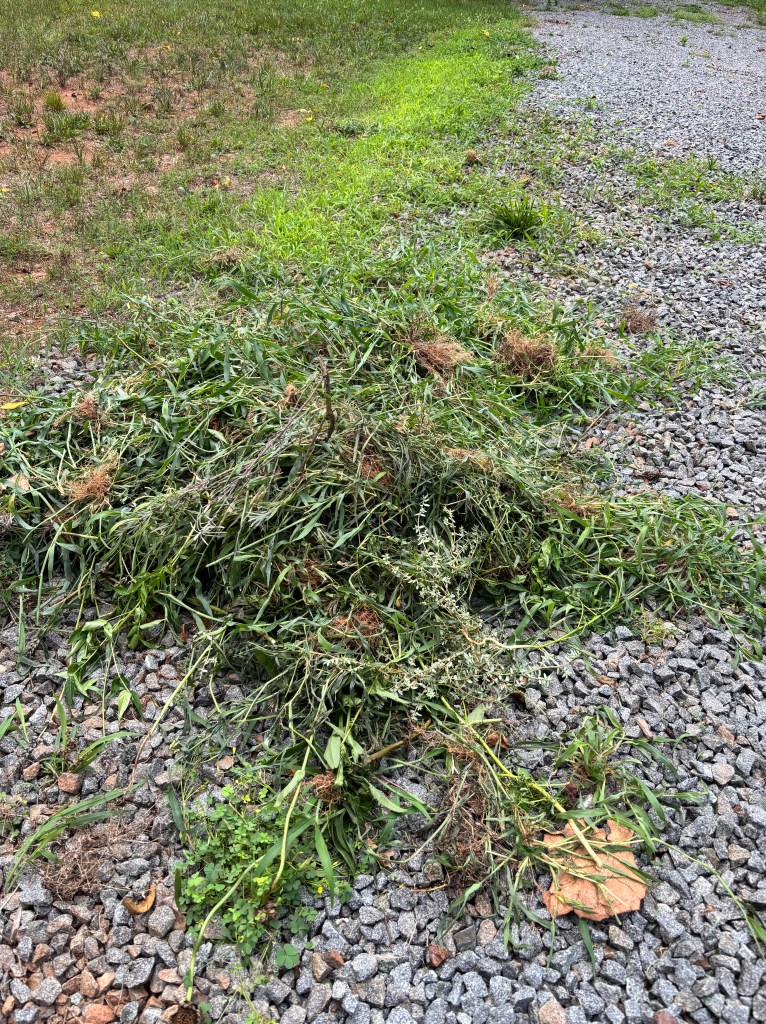
It had been a couple of weeks since my last visit to the cottage, and even then it was only a quick stop to meet with a contractor. We haven’t had much rain lately—not the kind of long, steady, grass-soaking rain that keeps everything green. So I expected the yard to look a little rough. It did. The grass was dry and patchier than usual. 

But it’s the middle of July, and summer heat, humidity, and scattered afternoon thunderstorms are simply part of the season. What I didn’t expect was the utter chaos of weeds.
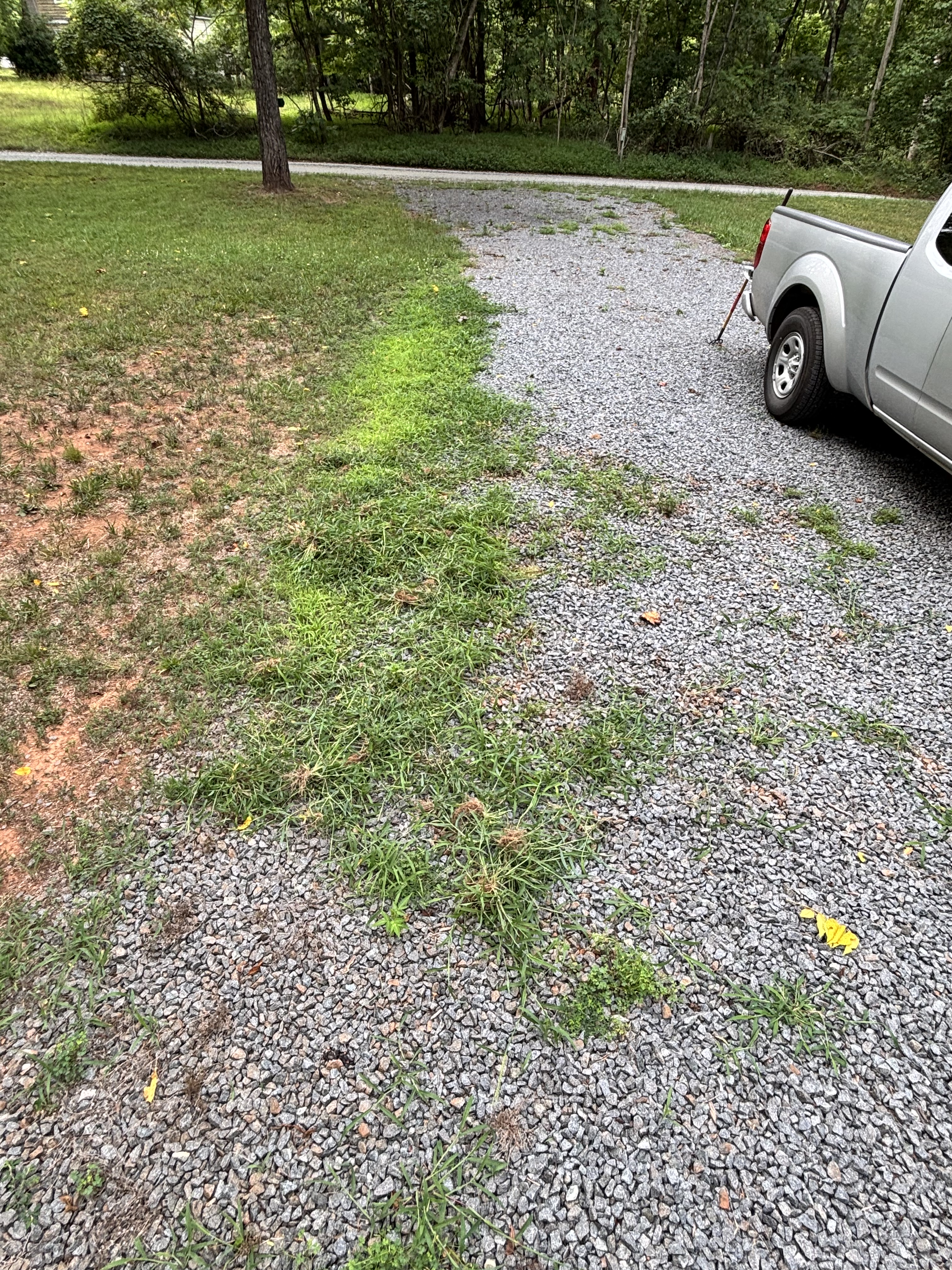
I’ve been thinking a lot lately about the book of Proverbs. Our church is spending the summer studying it, and the most recent passage was Proverbs 6:6:

“Go to the ant, O sluggard; consider her ways, and be wise.”

I’ll admit, I’m not much of a fan of ants, so this verse didn’t immediately resonate with me.

Our pastor gave an inspiring message from those few words, but one word stayed with me: sluggard. Depending on the translation, it appears as lazybonesslacker, or simply lazy one. I’d run across that word before, and that’s where Scripture and experience suddenly came together.

Consider Proverbs 24:30–34:

I passed by the field of a sluggard, by the vineyard of a man lacking sense, and behold, it was all overgrown with thorns; the ground was covered with nettles, and its stone wall was broken down. Then I saw and considered it; I looked and received instruction.

A little sleep, a little slumber, a little folding of the hands to rest, and poverty will come upon you like a robber, and want like an armed man.

That phrase caught my attention: “I looked and received instruction.” What a wonderful description of a teachable spirit. Back in my Army days, my friends and I quoted verses 33 and 34 to one another all the time.

“Get up, you sluggard!”

We loved that part.

But we rarely paid attention to the verses that came before it—the neglected vineyard, the weeds, the broken stone wall.There are countless lessons packed into this proverb, but on this particular morning, standing in my gravel driveway and staring at weeds that seemed to have appeared overnight, only one thought came to mind:

A little sleep, a little slumber… and your yard and driveway will be overrun with weeds.

It doesn’t take long. Ignore something for a little while, and suddenly the vineyard is overgrown and the stone wall begins to crumble. And once it reaches that point, a few minutes of pulling weeds isn’t enough. I spent hours out there… or at least it felt like hours. If I’m being honest, it was probably closer to thirty minutes. But it was hot! Of course, Proverbs isn’t really teaching us how to grow vineyards or maintain our landscaping. It’s pointing to something much deeper.

Another proverb we often quoted says:

“Know well the condition of your flocks, and give attention to your herds.” (Proverbs 27:23)

Pay attention. Know what’s happening around you. If you’re a parent, know your children. If you’re a supervisor, know your people. If you’re a friend, stay connected. If you’re a follower of Christ, don’t neglect your own heart.

Weeds rarely appear overnight. They grow because small things are ignored for too long. The same is true in our relationships, our work, our spiritual lives, and yes—even our driveways.

A little attention today often prevents a lot of work tomorrow.
A Garden Pond


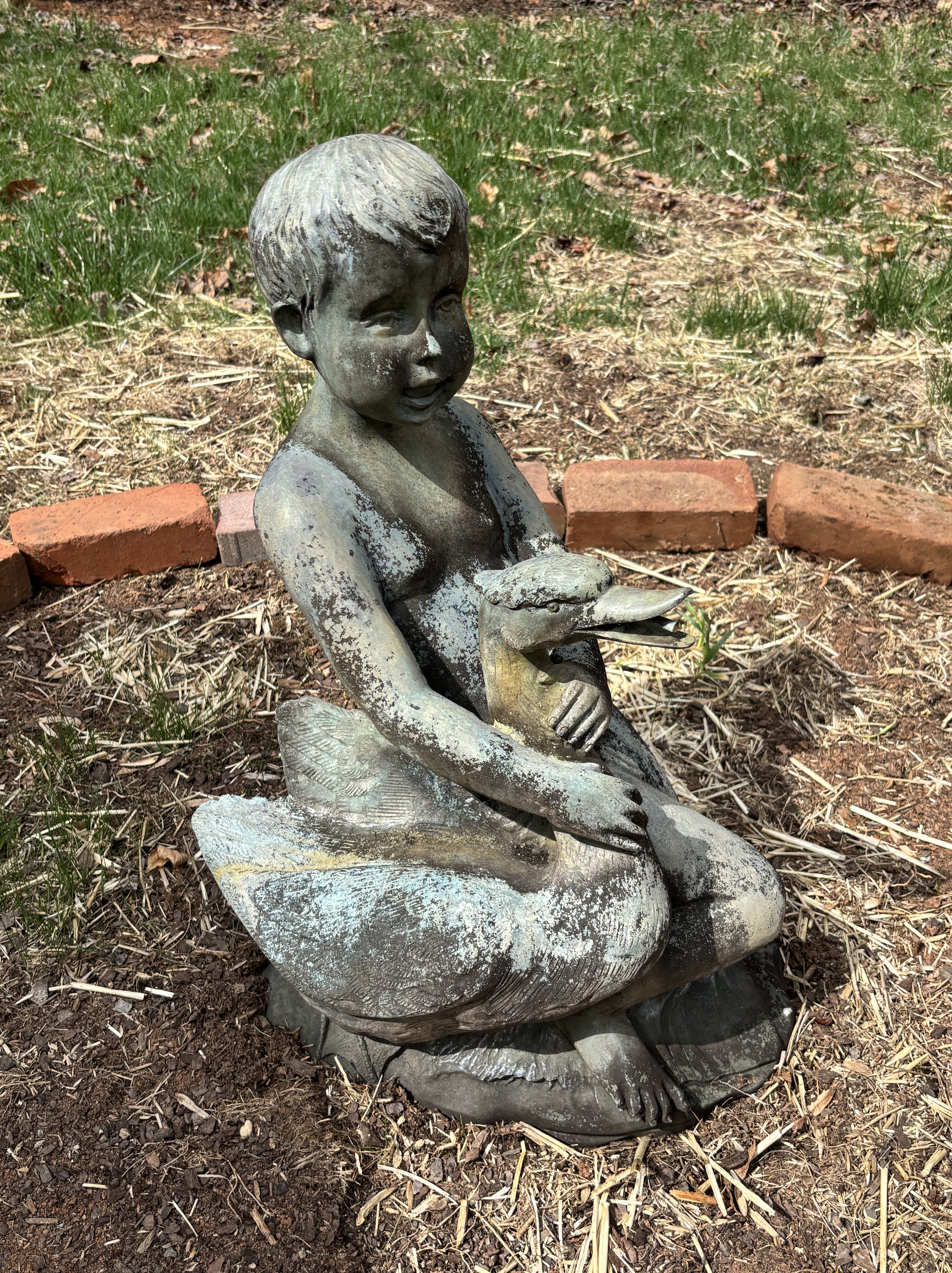
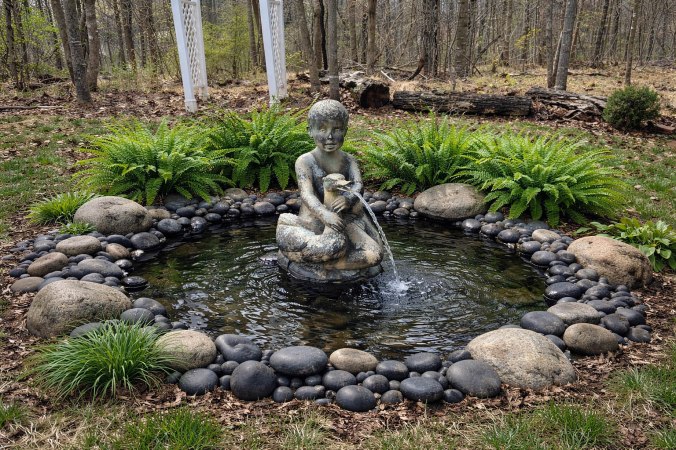
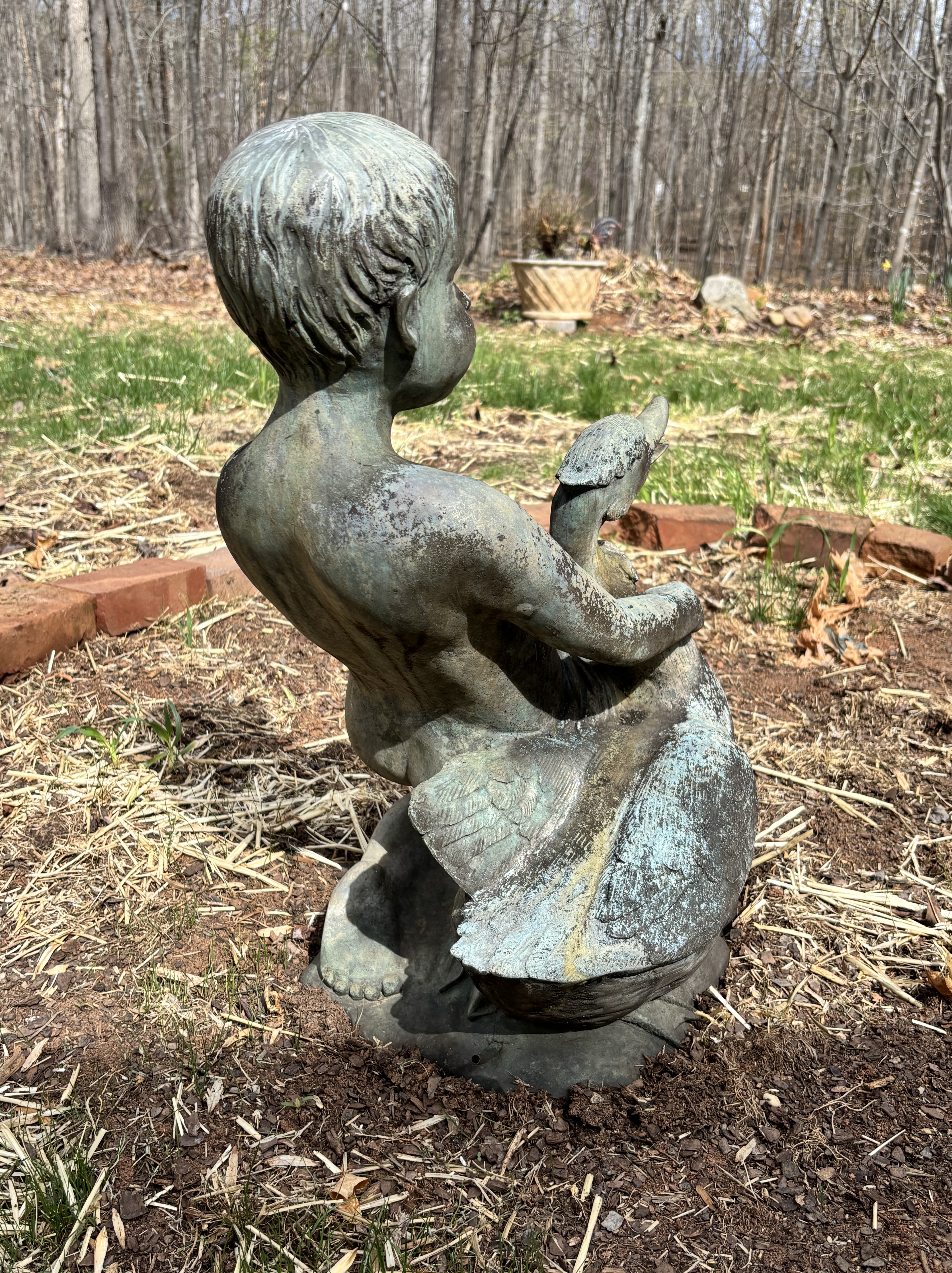
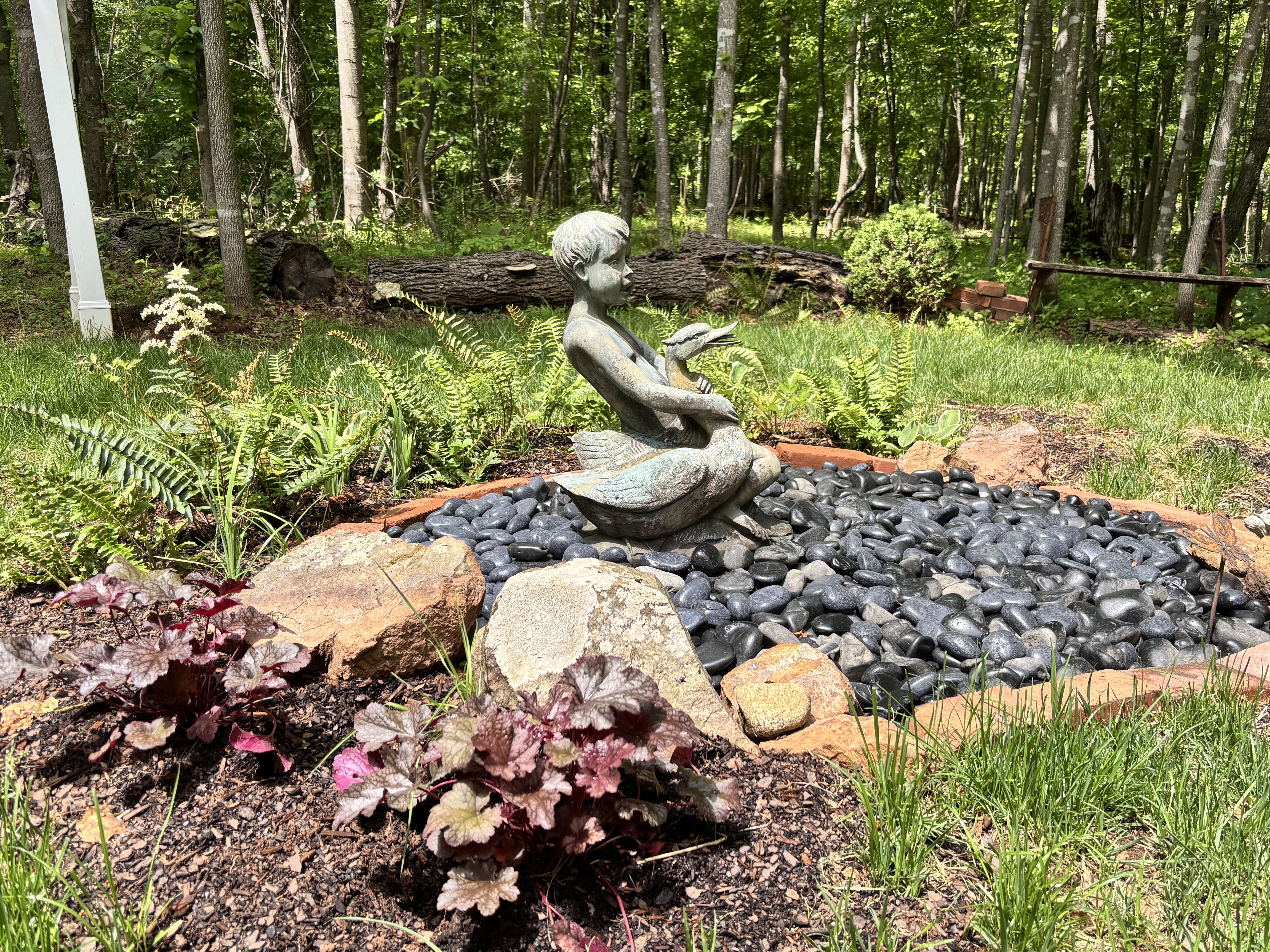
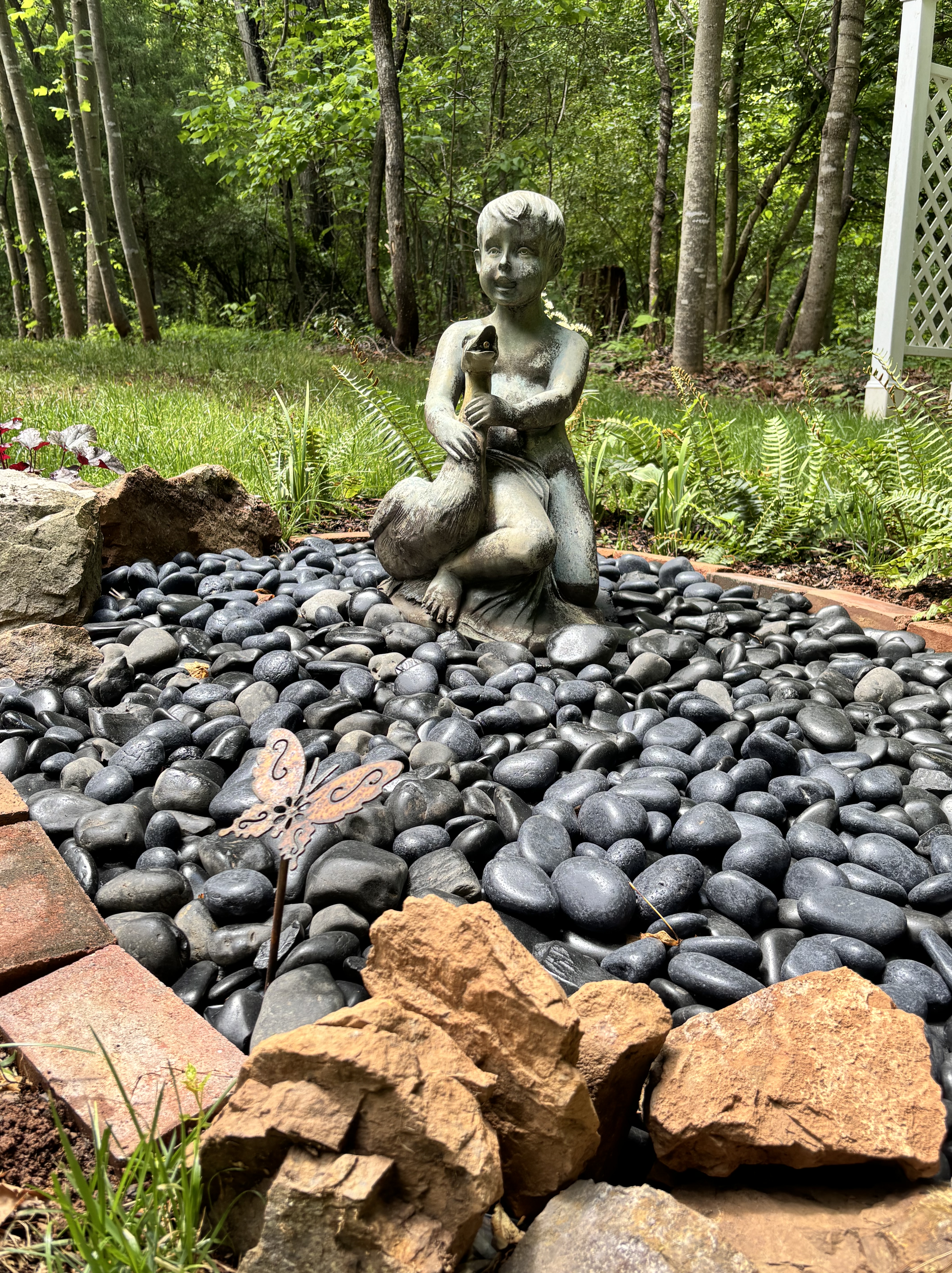
Boy with Goose Fountain

The original Boy and Goose sculpture is a 2nd-century CE Roman copy based on a Hellenistic Greek original (circa 2nd Century BCE) often attributed to Boethos of Chalcedon. It is a well-known motif depicting a seated boy with a goose or duck, with various versions housed in museums like the Louvre and Galleria Borghese. When this particular fountain sculpture came up for auction I knew it was going to fit in beautifully with the pond I envisioned for our backyard.

We have an area of the yard that can’t seem to grow grass: well, it can grow grass, it just has a hard time sustaining it. It could be grubs, it could be the poor condition of the soil, it could even be that it doesn’t really get enough hours of sunlight to grow a lush green carpet of grass. Whatever the reasons, I’ve become convinced that a rock garden or pond would look great in that area and certainly require less upkeep. When I’ve planted grass seed, the forces of nature are definitely working against me!

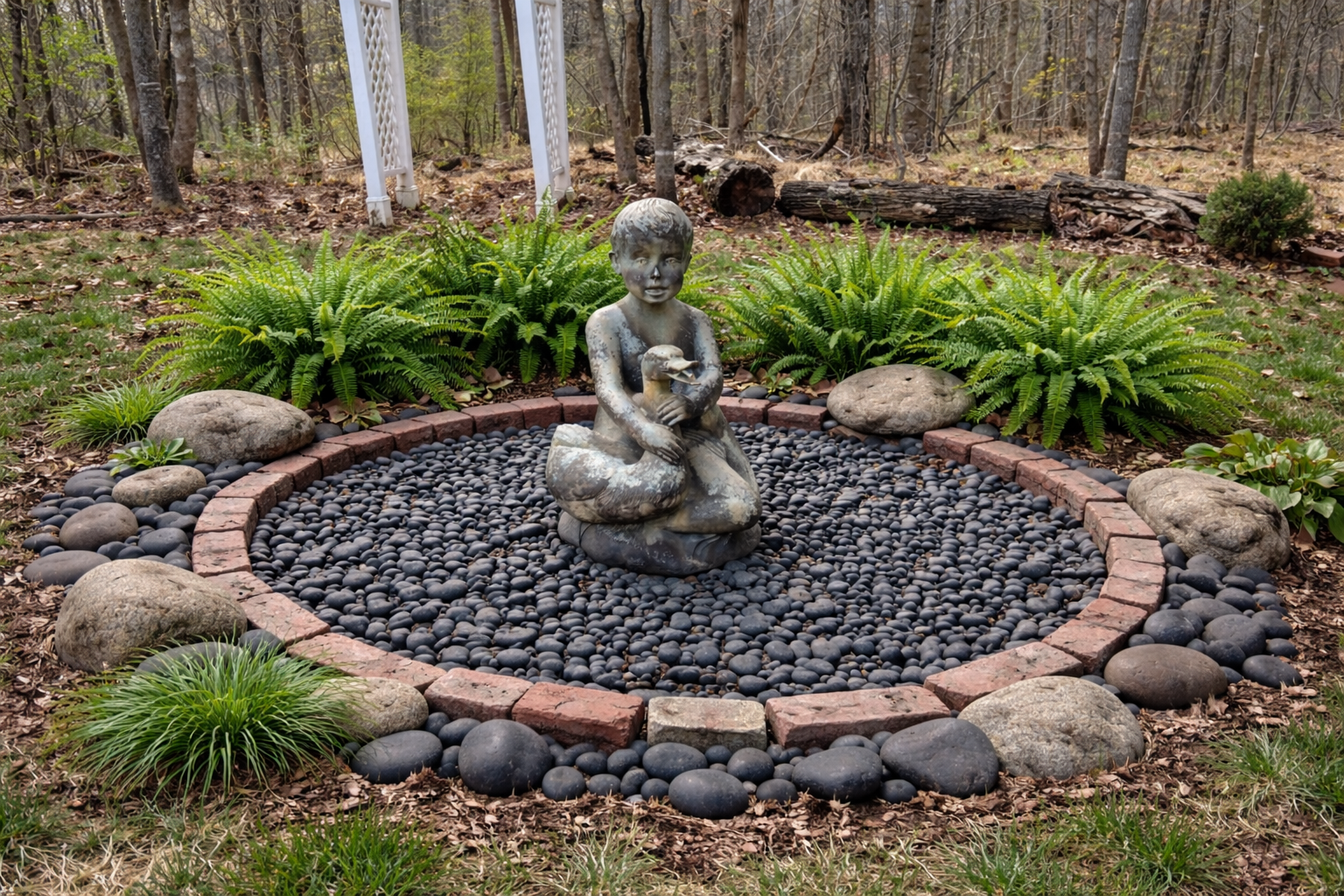
With the help of an online planner I decided to pivot from a field of grass to something smaller and more engaging. A wet or dry pond, each had certain advantages though different design requirements.

Here’s the full concept narrative:

The idea — the island is read as a dry pond, roughly oval, about 2–3 metres across. The black river pebbles give it a still, reflective quality that plays beautifully against the weathered stone of your sculpture. The boy with the goose becomes the “source” — as if he’s sitting in the middle of a pond he’s claimed.

Sculpture placement — position the boy slightly north of centre so that when viewed from the house or a main seating area, he sits in the sweet spot of the composition. Raise him on a flat irregular stone or small concrete plinth so his base is just above the pebble line — this separates him from the ground and gives him presence.

The pebble bed — lay a weed-suppressing membrane first, then 5–8cm depth of black river pebbles. This depth keeps them from migrating and gives a solid, finished look. The contrast between the dark pebbles and the greenery around the edge is what makes the “pond” illusion work.

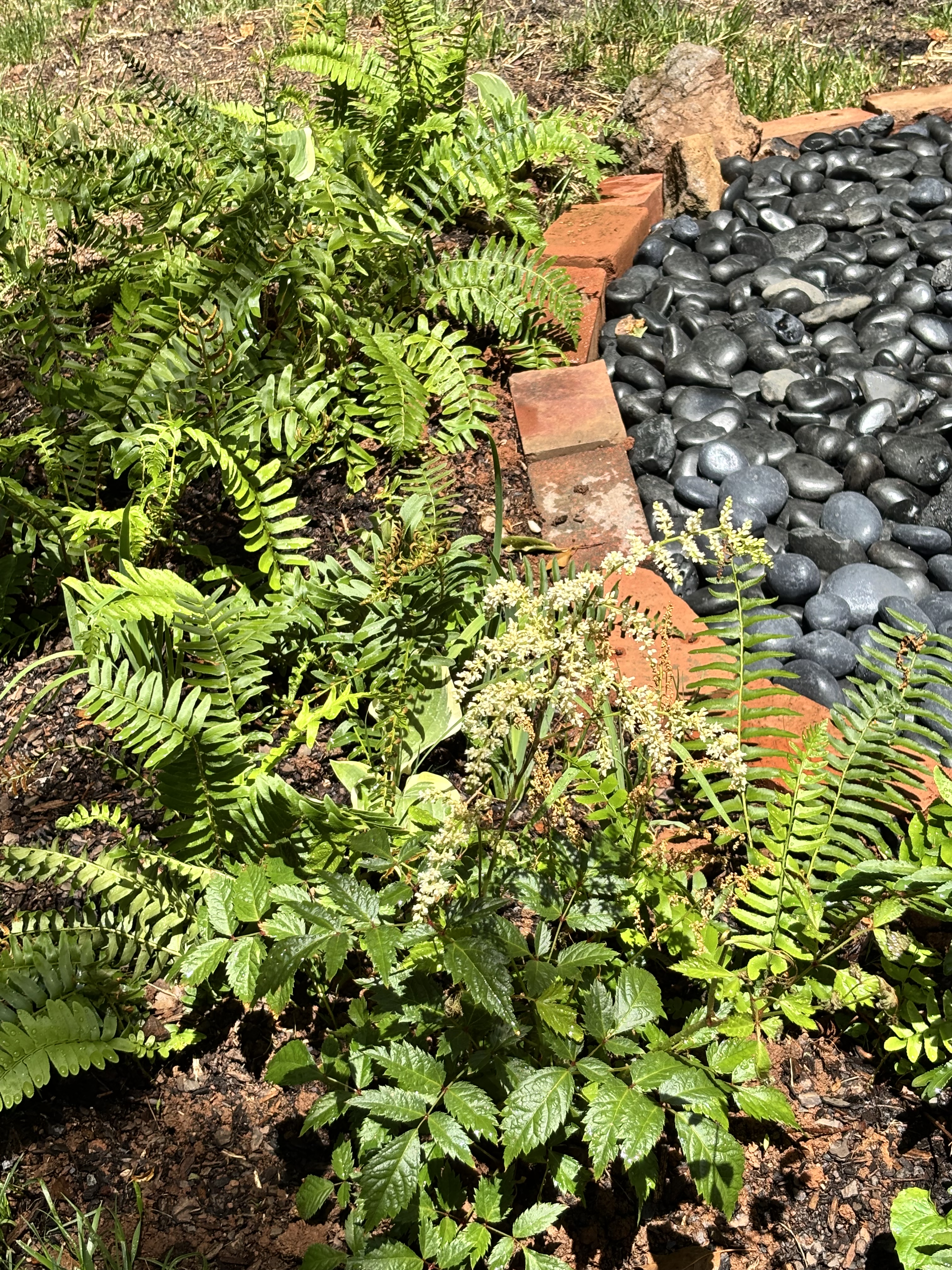
Ferns around the edge — use soft, arching varieties like Dryopteris erythrosora (with its warm coppery new fronds) or Polystichum setiferum for a lacy look. Plant them so they droop slightly over the pebble edge, softening the boundary between “water” and “land.”

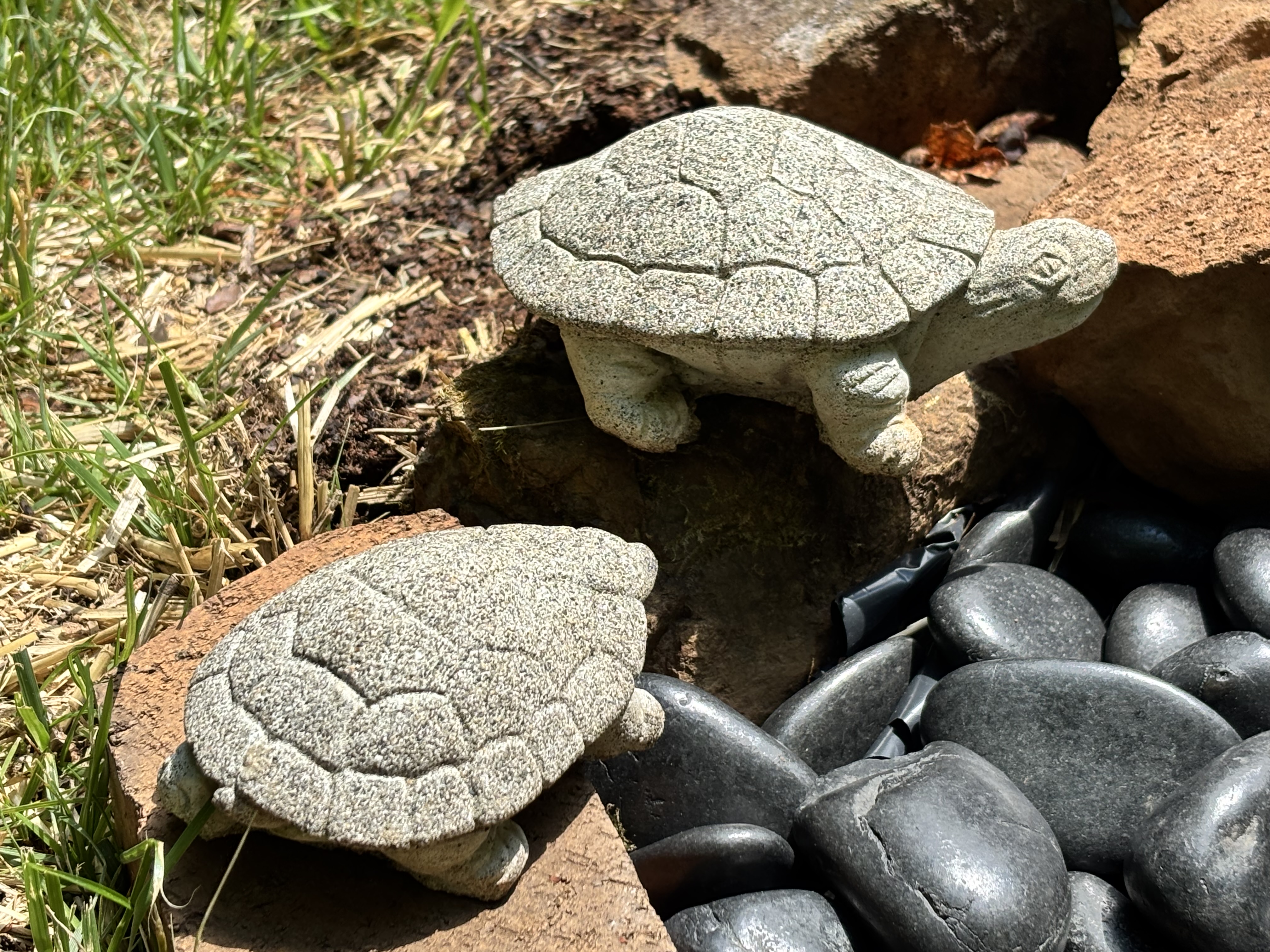
A finishing touch — consider one or two rounded mossy stones tucked among the ferns at the edge. At that point the whole garden reads less like a planted bed and more like a scene discovered in nature — exactly the mood your sculpture deserves.

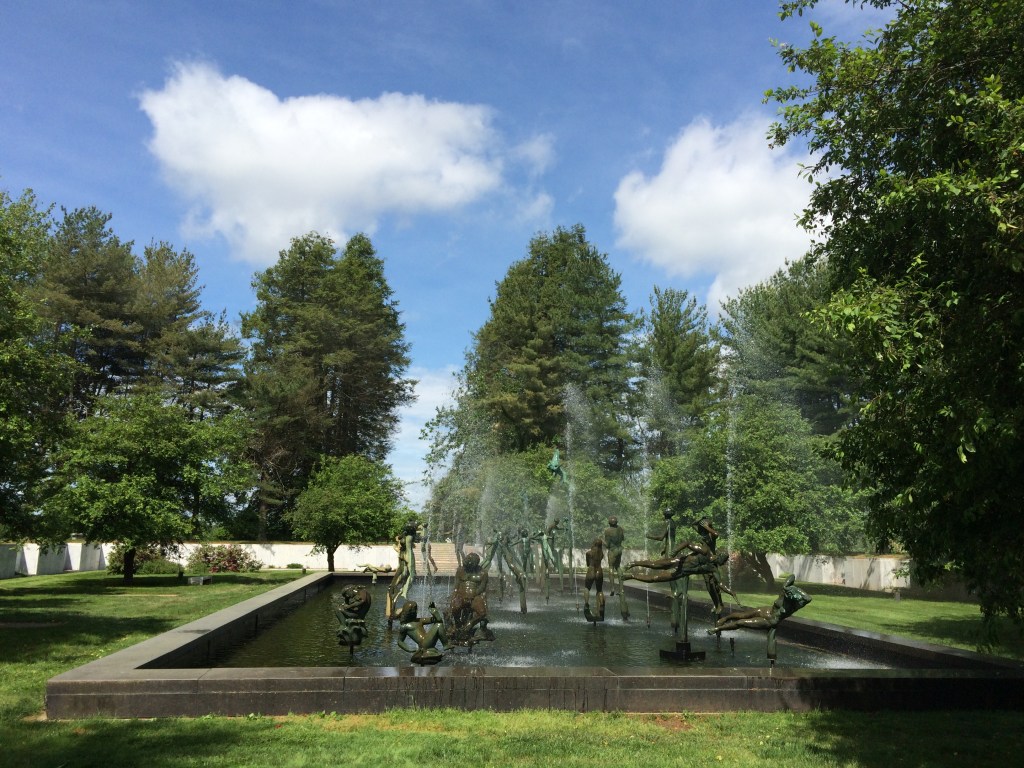
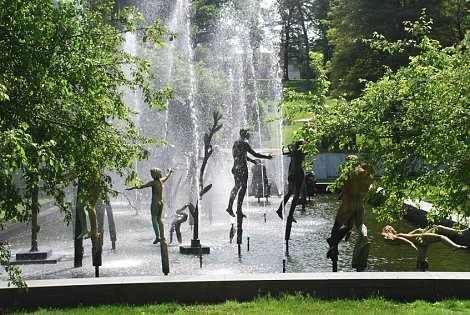
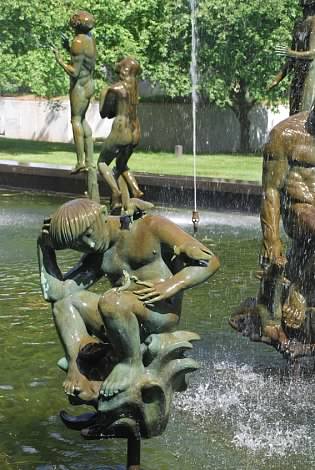
I might add that the garden water feature I had in mind is one that I had seen at the National Memorial Park in Fairfax VA. The Fountain of Faith, sited in the National Memorial Park in Fairfax VA was created by Swedish sculptor Carl Milles and dedicated in 1952 after having taken 12 years to complete. The fountain sits in a large courtyard and consists of 37 figures. The figure of a young boy with a bird on his shoulder and arm was especially moving for our family and we used the image in a poster at the memorial service of our nephew who is buried there. The sculptor was a prolific artist and taught at Cranbrook Academy of Art for twenty years here in the States, 1931-1951. You can read more about him and his art here.

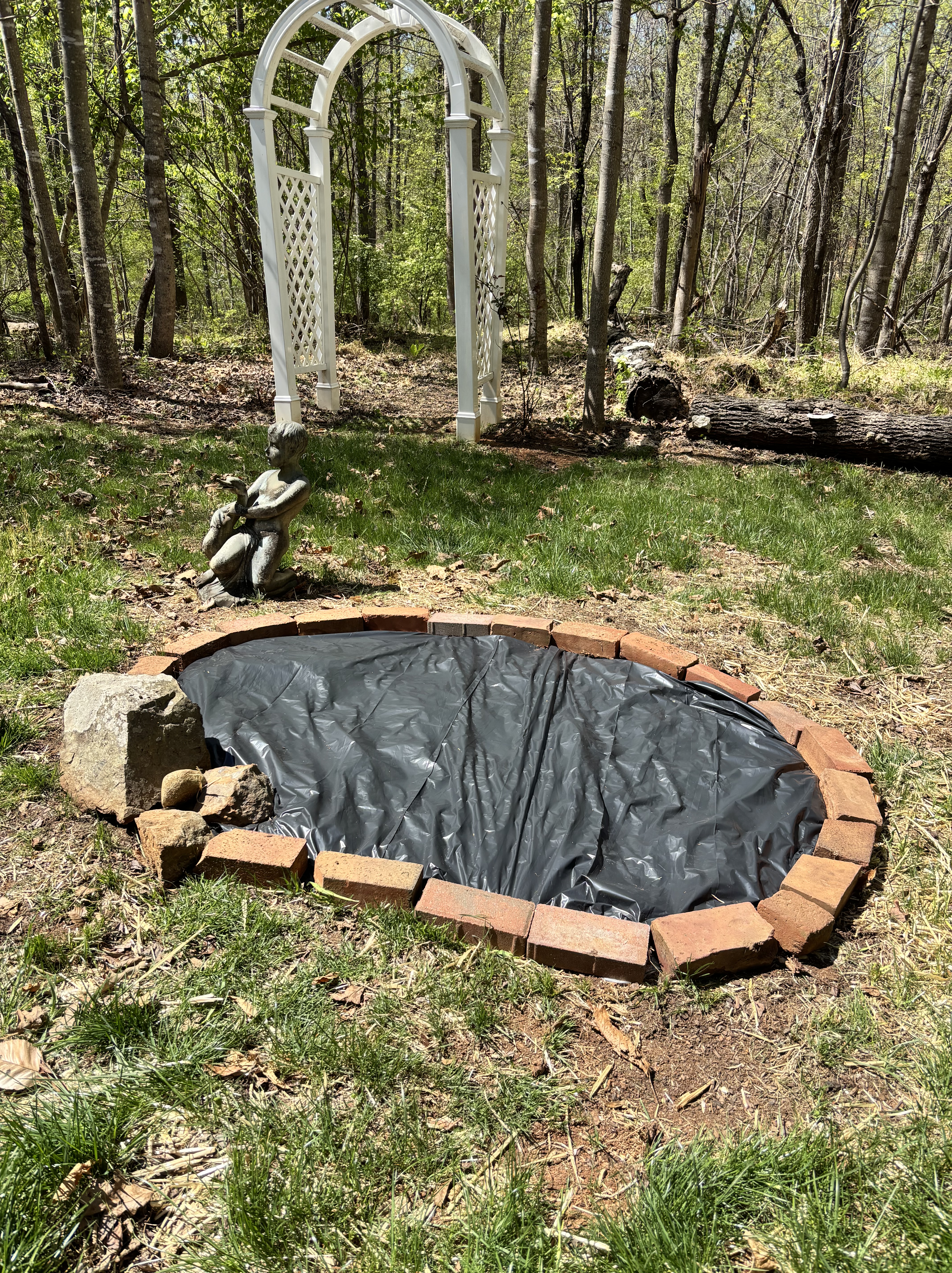
We’ve been working on our pond for the past several weekends. With a plan in mind, I’ve tried to source most of the accent pieces from our property. The border of the pond was created from odd-sized bricks we’ve found lying throughout the woods, discarded from the remnants of a brick pathway and possibly a patio in the former owner’s backyard. The rocks and ferns are from the woods that surround us. The initial design was created through AI; a version of a wet pond was gorgeous but truthfully would have required too much effort to create and maintain, hence the river-rocks version.

Hopefully the garden pond will help to create an area of quiet respite, maybe we’ll add a bench or seating area close by for reflection and comtemplation.

The finished pond looks very much like the AI-generated concept. Our plants have some growing to do before they start to fill in, but the ferns, astilbe, huchera, and Siberian irises that I’ve planted are really starting to look good. And there is less grass to mow! I love it.