Zoom Hacks

By now, I think we all know what is working for us on Zoom. Or at least we know what hasn’t worked for us. I opened a Zoom account March 18 to lead our Wednesday night small group Bible study as an online discussion group. What I thought would last for a few weeks, at the most a month or two, has continued on thru October with no plans for stopping any time in the immediate future.

At first we used our iPad propped up on a few books on a table as our only device to log in and connect with friends. That worked fine until I knocked it over a few times reaching for my coffee. So that has lead us to a continual improvement mode and our own list of Zoom Hacks.

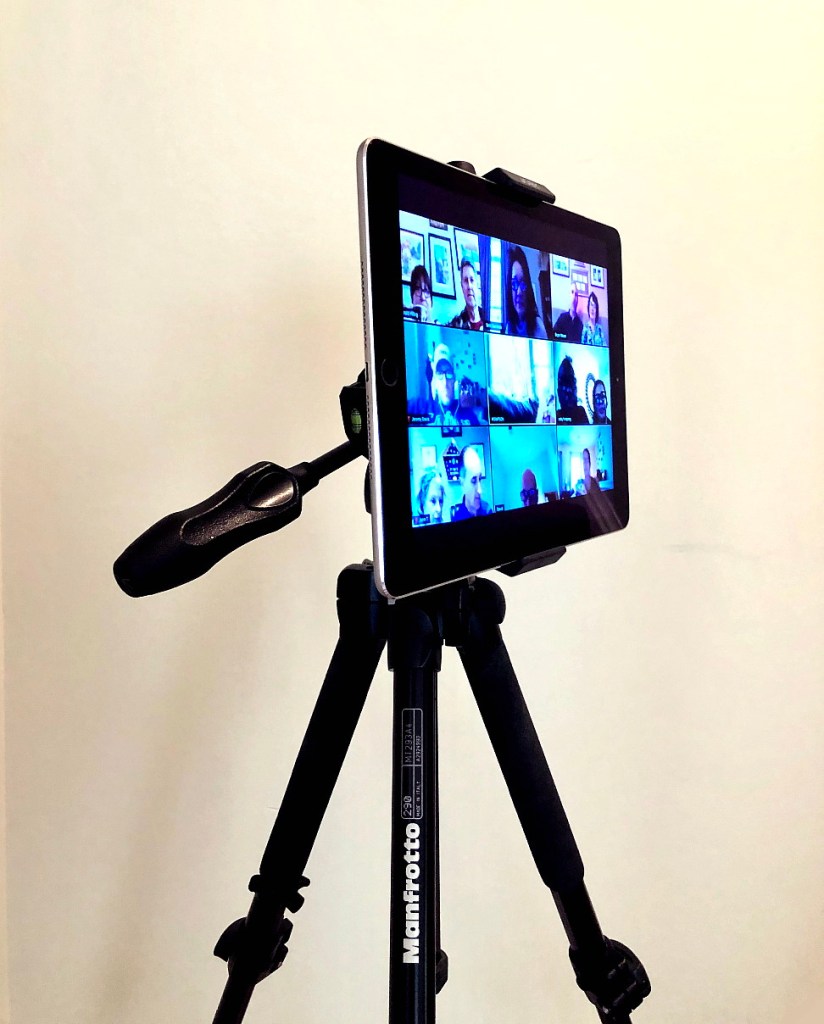
  1. Tripod: We bought a Joby iPad holder to attach the iPad to my camera tripod. Now we were always in the frame without looking for a stack of books to prop up the iPad.
  2. Lighting: The lighting in our living room is nice, but not what you would consider studio quality. Quite often we were silhouettes against the lighter background, or you couldn’t see us at all. I found an inexpensive LED studio umbrella light on Amazon that has worked great. It’s lightweight and is easily stored when not in use.
  3. Webcam and Microphone: the iPad worked great for a time but when we hosted a meeting for friends IRL and online, we needed a better solution than the iPad’s built in camera and microphone. A recommendation from a friend out in Oregon (who also demonstrated his for me) lead to purchasing a webcam with two microphones suitable for picking up the voices from people spread out in a classroom.
  4. External Speaker: the tinny sound from our Mac book wasn’t adequate for the folks in our classroom to hear the comments from our online participants. So we bought a portable Bluetooth speaker. Great sound, small investment.
  5. Lazy Susan Turntable: With a large group sitting six feet apart, it was impossible for the camera to pick up everyone. So we placed the web cam on a small tripod and set it on a turntable in the middle of the table. Now we just spin it around towards whoever is speaking. Problem solved.


If this keeps up for much longer, I’m sure we will come up with a few more improvements to our portable home Zoom Kit. The biggest improvement has been the best hack of all. 

It only took one Zoom meting for us to realize that I am terrible at multitasking. I would forget to admit people who were in the meeting room, or forget to read the comments in the chat room while we were meeting. So from that first meeting, my wife has graciously served as our online host while I lead the discussion. She monitors the online participants, replies to messages in the chat room, and operates our swivel camera/microphone setup ensuring that the online participants can at least see who is speaking and not getting a view of the ceiling or the back wall of the classroom. AND participates in the discussion, proving to be a great multitasker!

We have accepted the idea that some routines just won’t be going back to the old normal. And that’s OK. In the past, if you couldn’t be physically present for a meeting, a study or group discussion, Too Bad. Your Loss. Now we are seeing even greater participation, often from members who are on travel, logging in to take part and offer their voice to the discussion. Modern technology has offered more, affordable ways to stay in touch than ever before. Whether a cellphone or a laptop, and iPad or a desktop computer, it’s easy to stay connected and not miss out. Not quite like being in the room, but close.


Here is a list of the products we found helpful; you can find them all on Amazon.

  • DOSS SoundBox Touch Portable Wireless Bluetooth Speakers
  • Victure Webcam with Dual Microphones, 1080P Full HD Streaming Webcam for PC, MAC, Desktop & Laptop
  • JOBY GripTight PRO Mount for Tablets
  • ESDDI Softbox Lighting Kit Photo Studio Light
Holidays on Zoom

Really? Are we actually thinking of doing our upcoming holidays on Zoom? 

For years, like many families I’m sure, we have spent Thanksgiving and Christmas with extended family. Whether potluck buffet-style or sit down dinner for a few, we have enjoyed Thanksgiving in a group setting, too many people around a small table. 

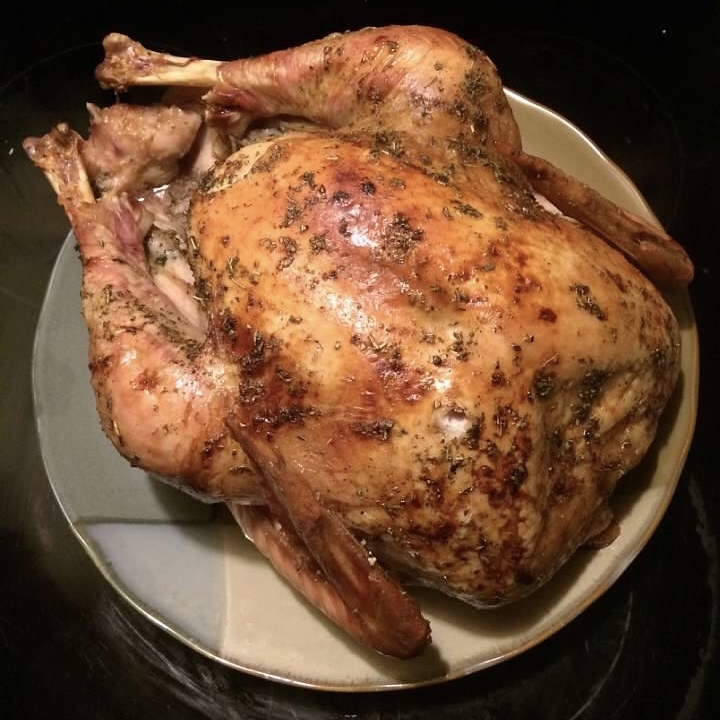
Small or large, Thanksgiving means turkey, except when it doesn’t.
What do you serve for the holiday?

Though one year’s Thanksgiving main course ended up with an oven fire, and an overzealous use of the fire  extinguisher (sheepishly raises hand), we all have memories of holiday meals that didn’t go quite as planned. Our Hallmark-movie-Martha-Stewart-Instagram-perfect table setting might not have made the cover of Southern Living Magazine. Our signature dessert might have suffered irreparable harm on its way to the table or an excitable dog might have crashed the side table. Every family has a holiday memory that, years later has grown with the telling.
My brother shocked me one year with the confession that his wife had cooked two turkeys. And a ham. Along with the usual panoply of side dishes. And rice and kimchi. As a Korean-American, cooking an American-style Thanksgiving dinner had been a new experience for her. But like everything else she sets her hand to, she excelled at it. Why so much food? Dave said that he never knows how many have been invited, or who all eventually shows up. But it’s always a crowd.

Which brings us back to this year’s holiday preparations. We just finished celebrating my Mother’s 92nd birthday over Zoom with the family last month. We’ve attended church online for months now and attended countless Zoom meetings, studies, and social events. We’ve even become somewhat proficient at hosting live Bible study with members participating in person and online.

But I’m not sure if I’m ready to wave a turkey leg at family members sitting across from us at a table, toasting with a glass of wine, sharing that second slice of pie…on Zoom. I know the CDC has offered guidelines for attending and hosting holiday events (see here). But I do know, like those early Americans celebrating their first holiday of Thanksgiving, that we will be thankful for our many blessings, regardless of who shows up. And for the record, I have a fire extinguisher in the kitchen. Just for emergencies. You do want to be prepared.

Celebrating 100 Years of Rodeo

Last summer we flew out to Las Vegas and drove out to visit the Grand Canyon. On February 26, 2019, the Grand Canyon National Park celebrated 100 years since it’s designation as a national park with events and activities scheduled all year long. When I discovered this year that 2019 was also the centennial of the Reno Rodeo, I nearly had a heart attack. We could have celebrated two centennials in one year! It wasn’t until this year, long after we had canceled plans to visit Reno, that I found an online article outlining last year’s events for the centennial of the Reno Rodeo.

It was over the July 4th weekend, July 3-5, 1919 that local promoters had scheduled the first Reno Round-up. The community celebration was led by the Commercial Club at the time, which merged with the Reno Business League in 1919 to form the Reno Chamber of Commerce. 

Nevada Round-up, from The Yerington Times, Yerington NV 1919

In 1937 the Reno Rodeo and Livestock Association was formed to manage the event. In 1987, they celebrated their 50th anniversary and reorganized as the Reno Rodeo Association. Reno Rodeo Association has led this signature event which has grown into a 10-day romp entertaining 140,000 fans each year. https://renorodeo.com/about/history/

But going back to the beginning of it all, The Silver State newspaper of Winnemucca, NV published an article in July of 1919 in which they mentioned that the Round-up would “mark the first representative gathering of Wild West riders, buckaroos and range experts since the beginning of the war nearly five years ago.” 

The first rodeo advertised $5000 in prize money. During last year’s rodeo, June 21 thru June 29, contestants were expecting to  compete for their chance at nearly $500,000 in prize money. Wow. That’s some growth!

The annual rodeo was a major event when I grew up in Reno. My pals and I attended as much for the adjacent carnival as we did to watch the bull riding and calf roping events. But it’s been decades since I’ve seen a rodeo in person. 

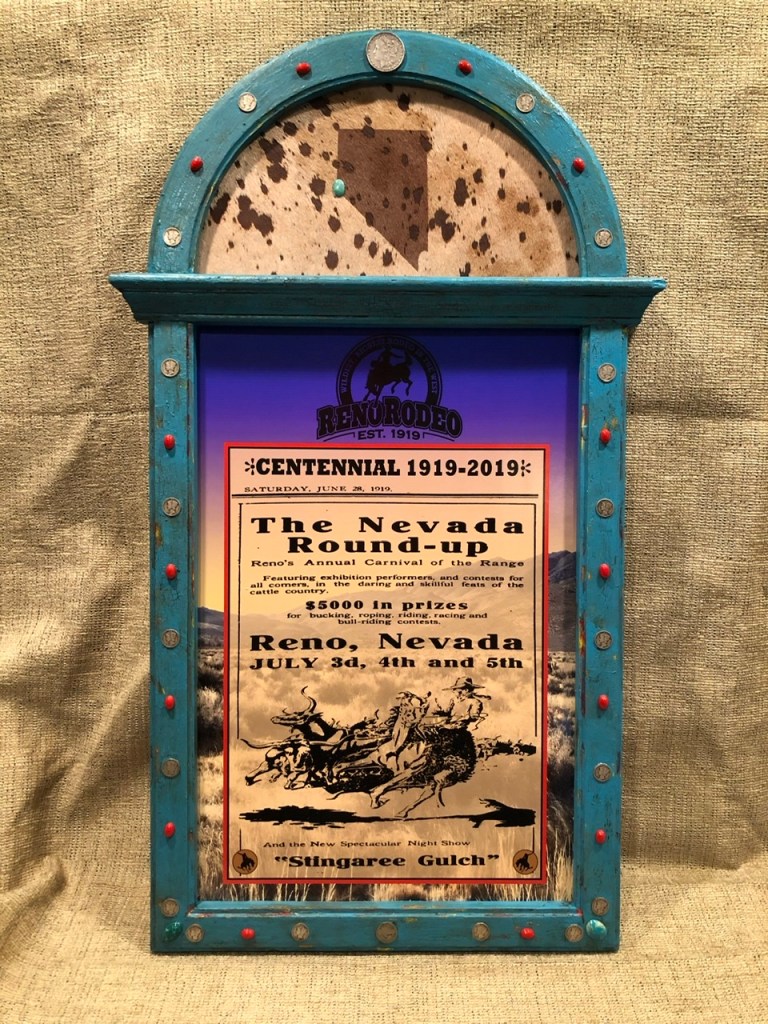
When I learned that last year was the centennial, I decided to create my own commemorative poster. That, and the hand painted frame to showcase my Nevada roots, became my most recent project.

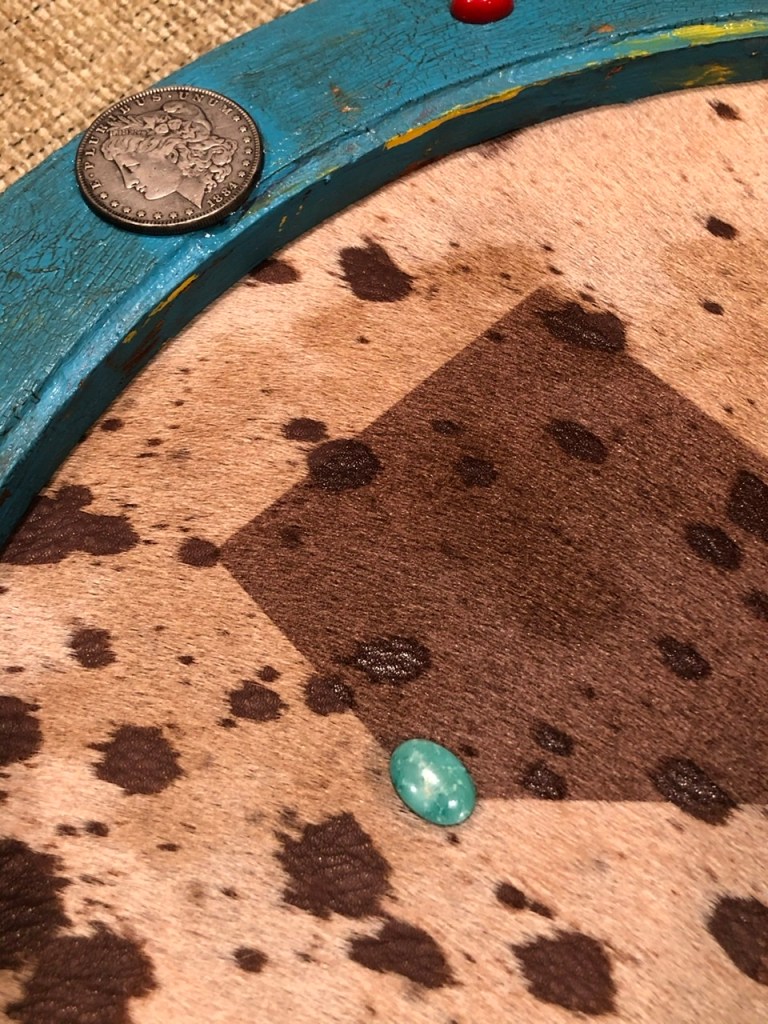
A vintage frame, a silver dollar and two bucks in mercury dimes from my Dad’s estate, turquoise cabochons I cut back in my college years, red coral cabochons I found on Etsy along with cowhide from an outlet in Texas to serve as a backdrop for my state: all found there way into my mini memorial. An Ode to Cowboys!

I was given a vintage picture frame several years ago and have waited to find just the right project to use it on. I decided to go with a whimsical western-style frame decked out in red coral cabochons, silver to commemorate Nevada’s position as the Silver State, and several of the turquoise gemstones I’ve had stashed away in a box for the past 40-some-odd years.

One of the outstanding features of Nevada, at least to those in the Northern part of the state, are the beautiful high-mountain waters of Lake Tahoe. Using another piece of turquoise to represent the lake, it is set on a cowhide background featuring the silhouette of Nevada.

The completed project will find it’s home in our guest bedroom along with a number of other graphics, books on the area, and memorabilia I’ve collected thru the years. I might have missed out on last year’s celebration, but I’ve at least got my own souvenir of the celebration, and it’s definitely one of a kind!

Home Means Nevada!

Backroads

Several weeks ago we took a long weekend to get out of Northern Virginia and see some of the beautiful countryside that surrounds us. We ended up in Western Maryland, but rather than take the Interstate (US 15 to I 70, head west) we decided to take the more scenic route. Passing thru Strasbourg, we drove along US 48 thru farm land and on thru the rising foothills of West Virginia. 

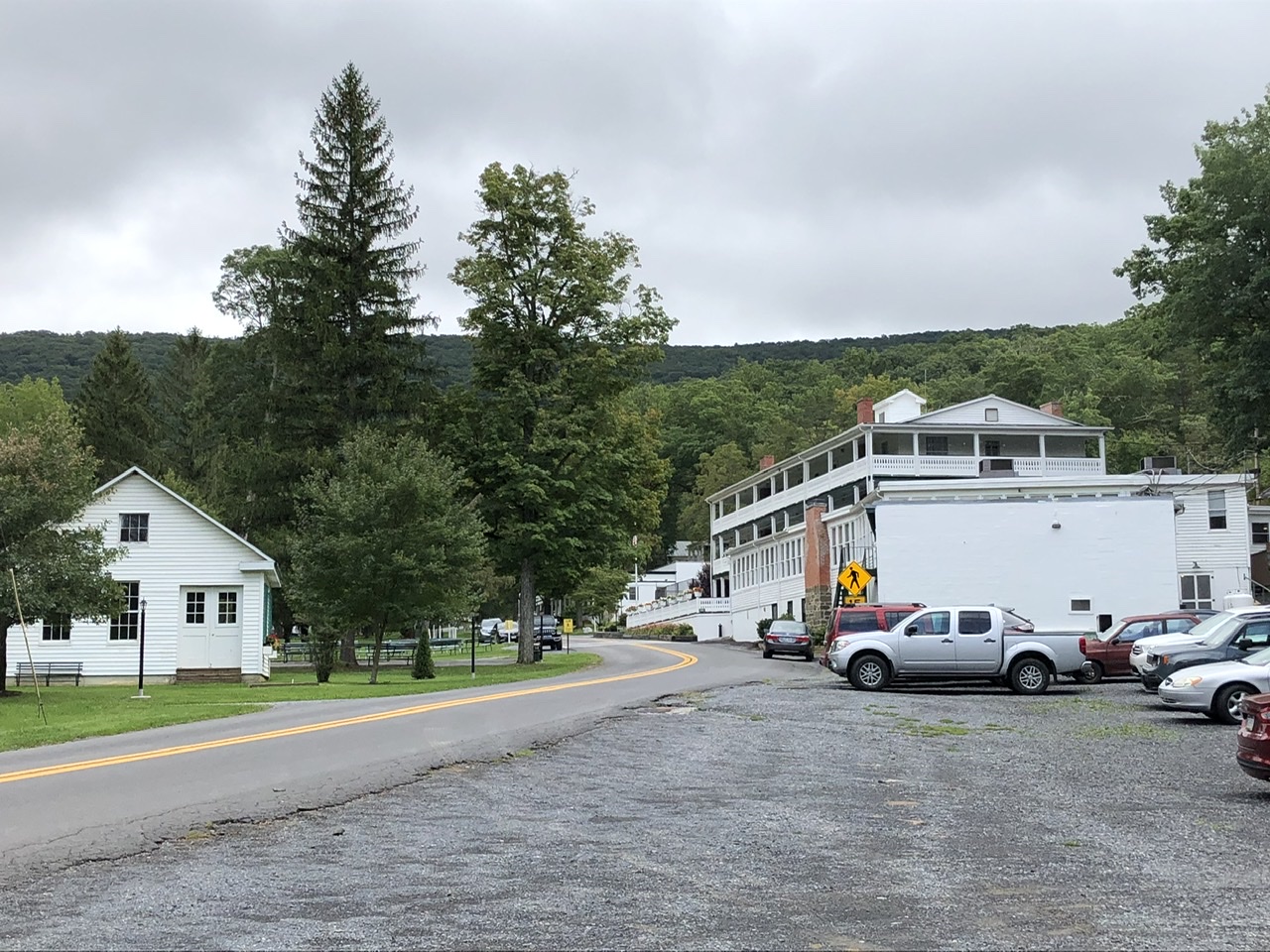
A side trip along Capon Springs Road dropped us off at Capon Springs and Farms, a family resort begun in the 19th century. The bandstand out in a landscaped park looked like it might have been the site of many evening concerts in the past, entertaining guests at this charming old-style resort. Definitely a place to check out in the future. The Main House, which was originally called the Annex, was constructed in 1887 under the proprietorship of a Captain William Sale. The Pavilion once housed thirty-two soaking baths during the late 1800’s and early 1900’s, being transformed into guest rooms during the 1930s.

Driving on, we came to Carpers Pike and cruised along in the pick up until we stopped at the Visitors Center in Wardensville, rejoining US Route 48. 

The Visitors Center appeared to have originally been a school building and the older couple, who evidently were the caretakers, confirmed our guess. Perhaps we were the only visitors they had seen that day, or maybe that generation just likes to talk. Whatever, they were happy to share about their efforts to have the school building preserved as a Visitor Center. At 84 years young, he was a talkative docent, giving us the local history while she argued with someone on the phone about the poor internet connection, or the reasons why the WiFi was down last week. Sounds just like at home.

When I asked if there were a place in town we could get a cup of coffee, he suggested the place across the street, “If you want to pay four dollahs for a cup a’ coffee.”

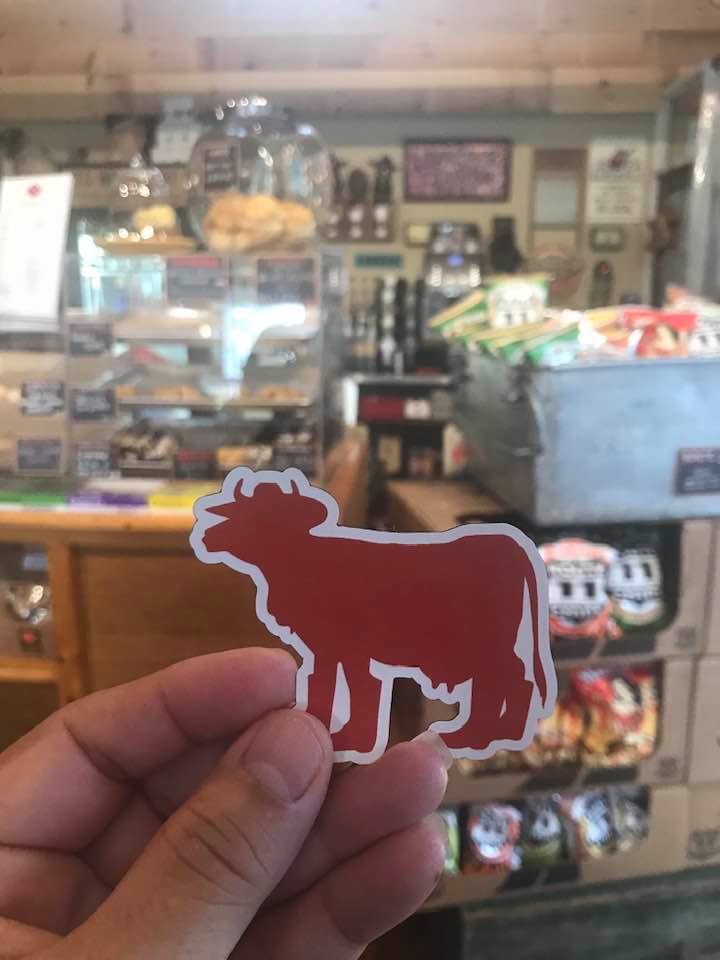
So we tried it out, The Lost River Trading Post, which seemed to be a mash up of a Starbucks, artisans outlet, and a retail store. We had a couple of lattes (large vanilla latte, $4.75) and commemorated the visit with the purchase of a boots-wearing-cow magnet. The shop did seem out of place for a very small town in West Virginia, though with its mix of handmade soaps, vintage kitchen ware, and framed artwork it must feel right at home for visitors from Northern Virginia.

One final stop before we reached our destination, a quick pullover to snap pictures of the ridgetop wind turbines we had seen for miles as we drove thru the mountains. The Fourmile Ridge Wind Farm has 16 turbines and has been operational since 2015. They are quite a sight to see, and whether or not they will eventually begin to replace fossil fuels power plants on an economically feasible basis remains to be seen. They are visually striking, but after seeing them at a distance for miles, and then up close, I fully sympathize with the “Not In My Backyard” sentiment.

The Interstate Highway System has been a mixed blessing, I’m sure. Wikipedia reports that “After Dwight D. Eisenhower became president in 1953, his administration developed a proposal for an interstate highway system, eventually resulting in the passage of the Federal Aid Highway Act of 1956. Construction of the Interstate Highway System was proclaimed complete in 1992. The cost of construction of the Interstate Highway System was approximately $114 billion (equivalent to $530 billion in 2019).

But the highway system has left behind many smaller towns and communities, completely bypassed as we motor along those smooth roadways. As I’ve gotten older, I really do try and make the effort, remembering that The Journey can often be more rewarding than The Destination. 

Yurt Life, Part Two

From luxury accommodations to real-world portable homes, the yurt (or ger as it is known in Mongolia) has provided shelter and a sustainable way of life for thousands of years. While the construction materials may differ from those used here in the United States, the shape and suitability of these portable structures are very similar to the one in which we recently stayed.

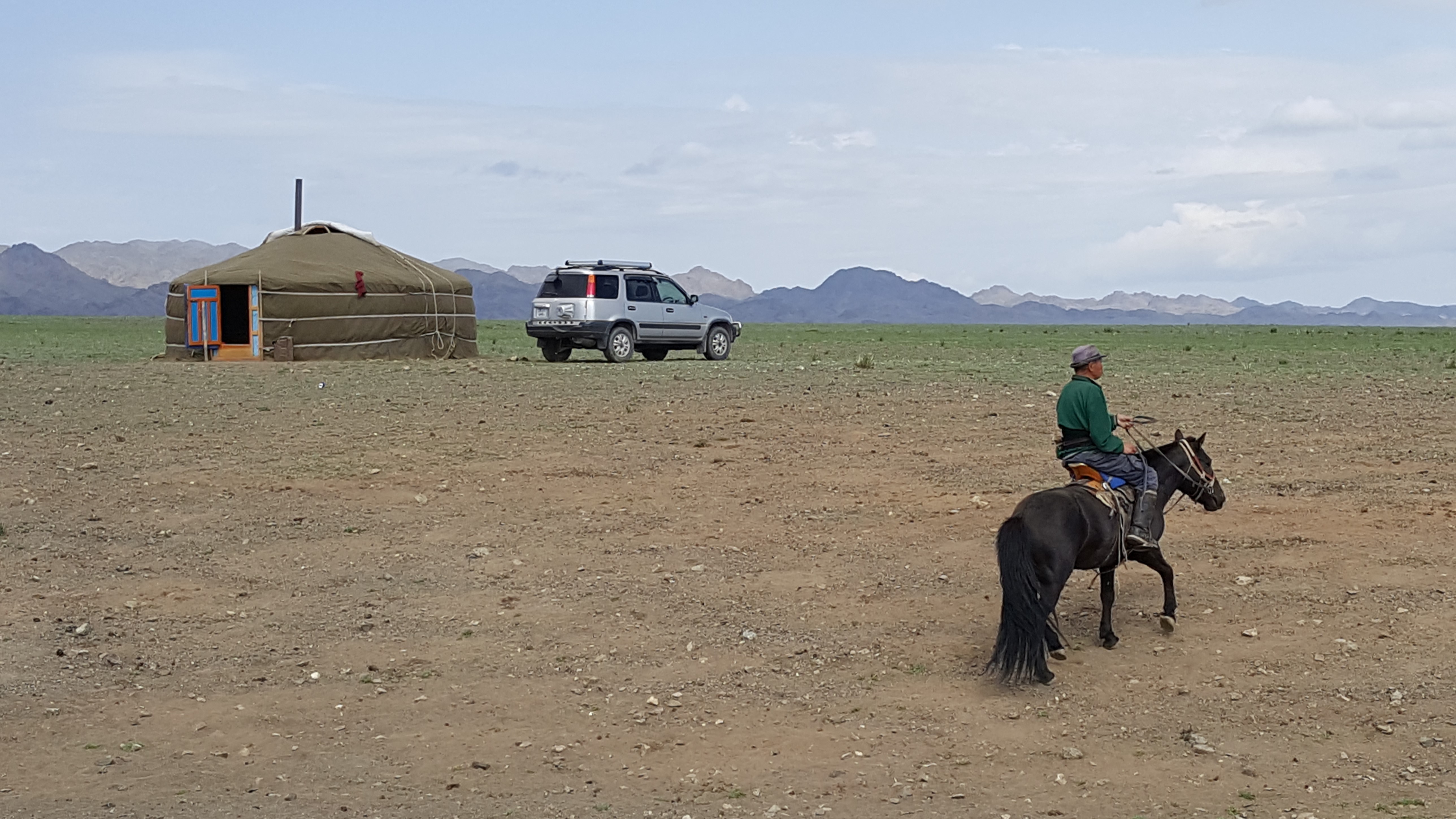
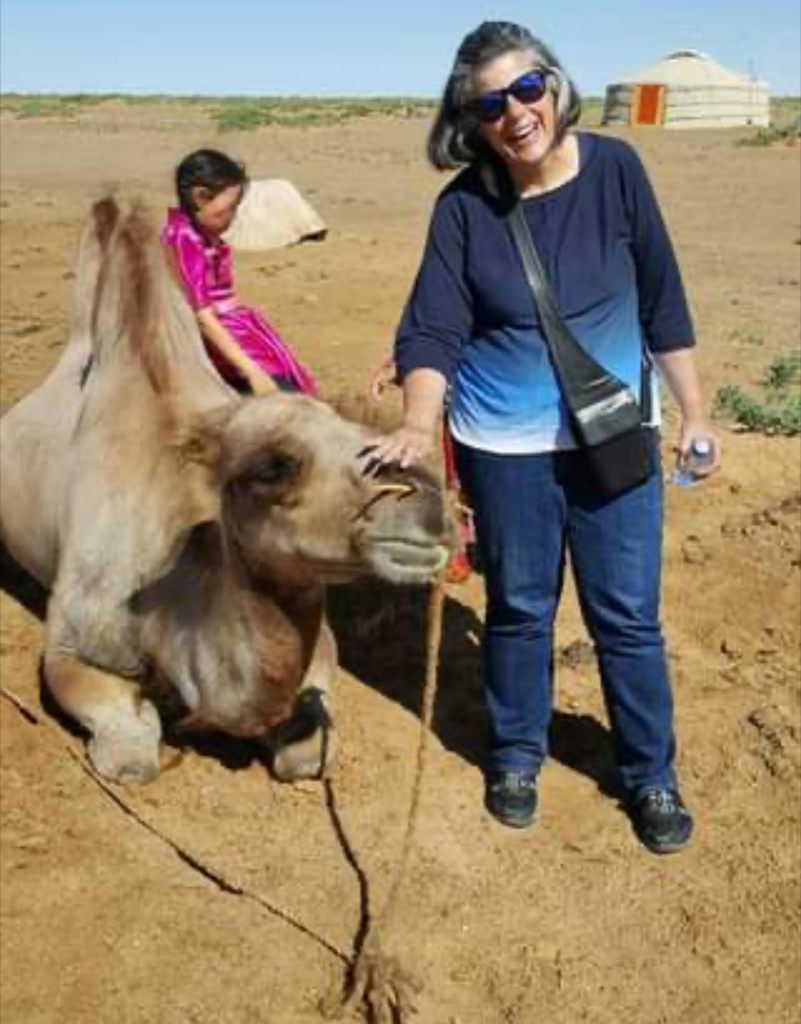
Several years ago, Julie Stoll and her daughter Jean had the opportunity of a lifetime, traveling and experiencing a bit of the nomadic life on a visit to Mongolia. While there, they visited with camel herders and sheep shearers, seeing a way of life that included solar panels and satellite dish antennas as a means to stay connected with the rest of the world. Modern technology accompanies these families as they travel across the vast landscapes of their homeland, carrying their homes with them. 

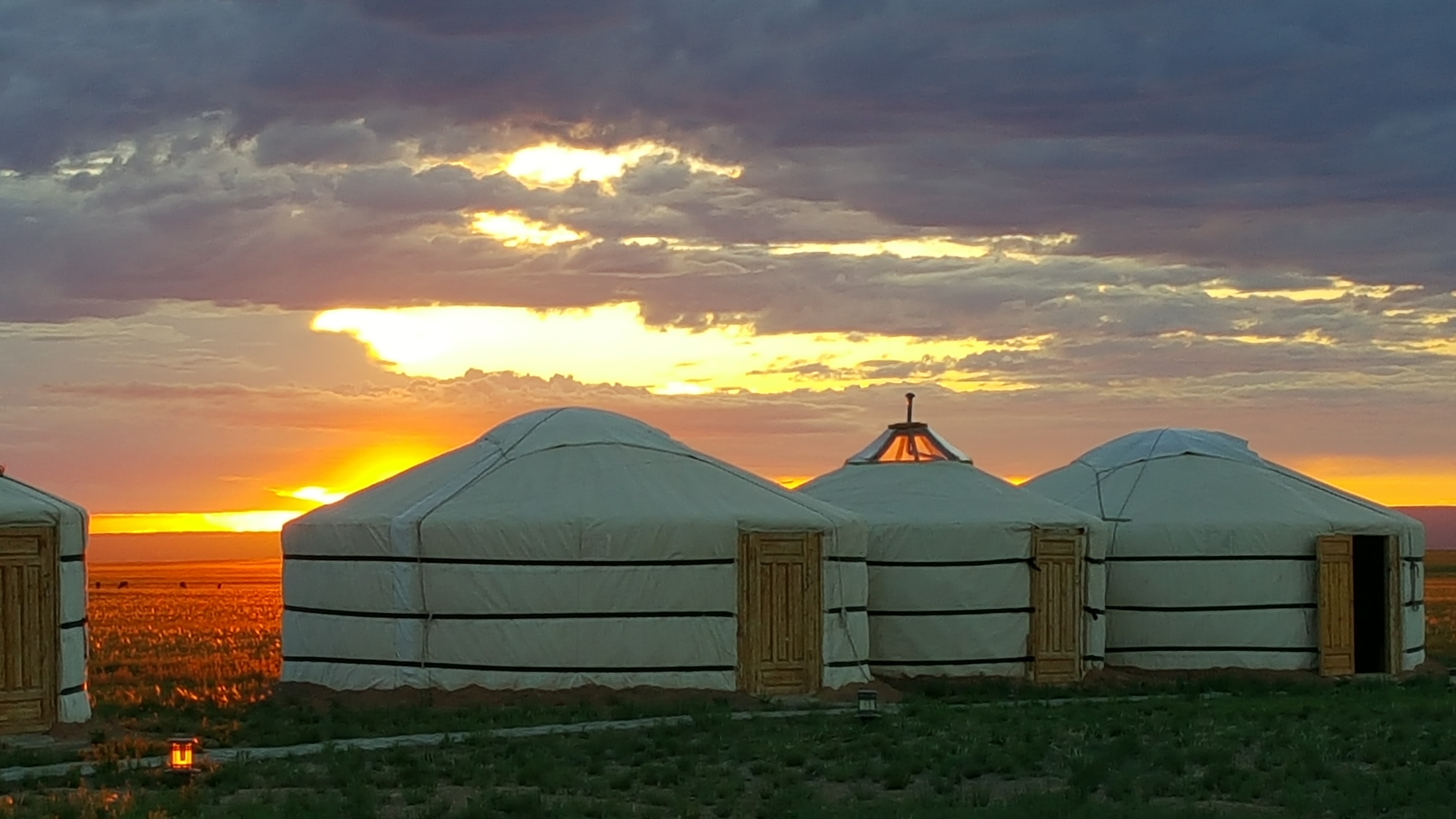
I spoke with Julie via Zoom this week as we both shared our “glamping tent experience”, her’s at the Gorkhi-Terkel National Park in Mongolia, mine at the Savage River Lodge in western Maryland. Separated by thousands of miles and different cultures, these structures are essentially the same: a cylindrical tent featuring a conical roof, either with a central tent pole in large structures, or without one in the smaller tents. But interior furnishings, decoration, and even the presence (or absence in their case) of windows puts them worlds apart.

The Gers are round enclosures made from wood and wool felt, usually hand made by the family. A central hole in the roof allows both light in and smoke from the cooking stove to vent. Whether lavishly decorated, with embroidered fabrics and bed quilts, or the more rustic homes with small wood burning stoves for heat, these structures all have a single door and no windows. The wood latticework supporting the walls help to make the entire construction easily collapsible for transport. Rugs cover the interior floor and allow seating anywhere. 

Traveling for a couple of weeks in this remote country, there were many cultural events to experience. Julie had hoped to attend the Naadam Festival in Mongolia. The popular festival showcases traditional sports including wrestling, horseracing, and archery. Julie and Jean were able to attend a local event during their stay and saw much of the athletic ability for which the Mongolian people are known. A performance of throat singing made a great impression on these two.

Julie Stoll recorded this performance of Mongolian throat singing during her 2016 visit to that country.

The Smithsonian website has an informative write up on this mysterious vocal technique. Throat-singing, a guttural style of singing or chanting, is one of the world’s oldest forms of music. For those who think the human voice can produce only one note at a time, the resonant harmonies of throat-singing are surprising. In throat-singing, a singer can produce two or more notes simultaneously through specialized vocalization technique taking advantage of the throat’s resonance characteristics.

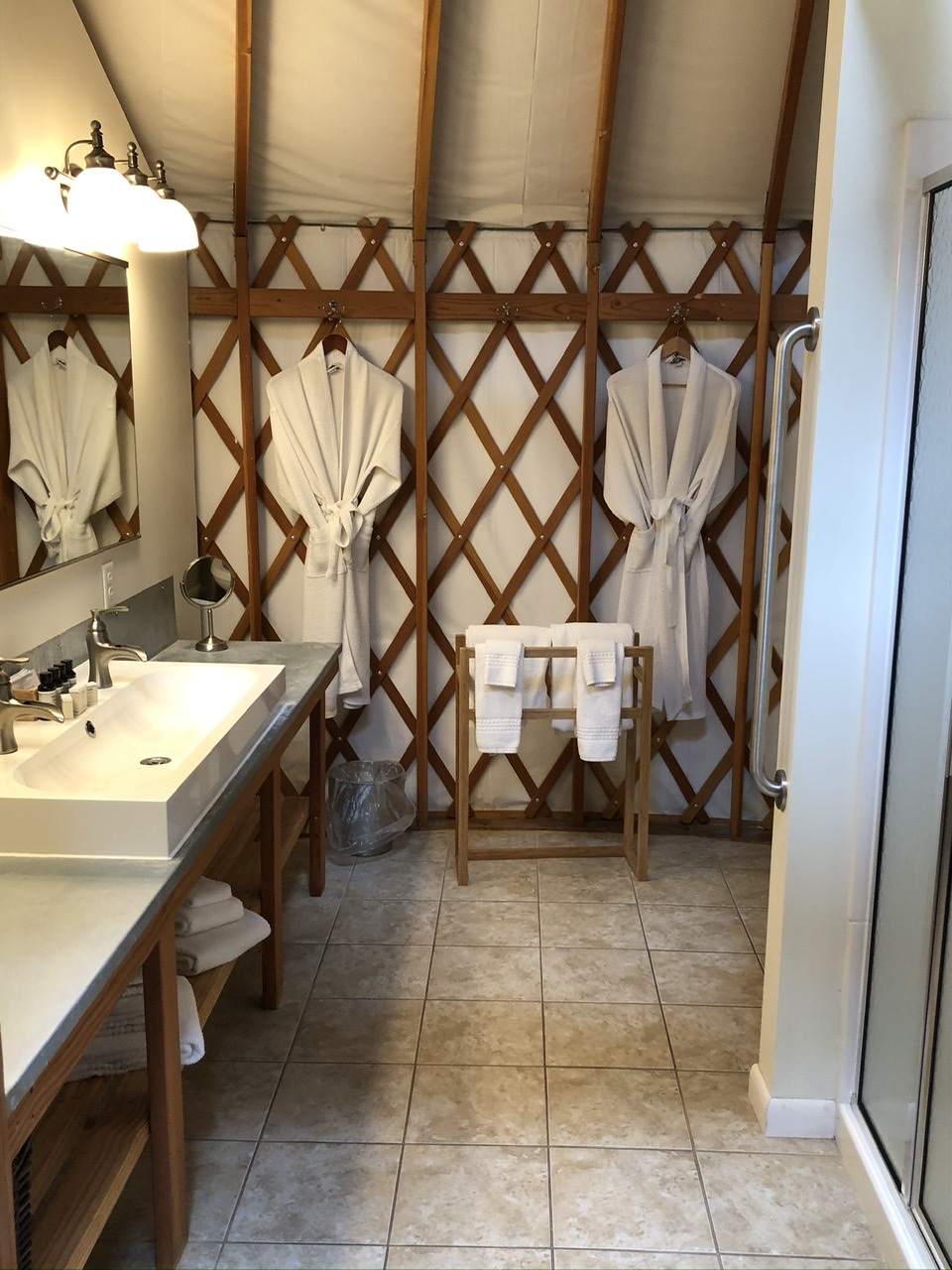
Our yurt was made with vinyl covered canvas, had hardwood floors and radiant heat, a tiled bathroom, two doors, windows and air conditioning. The gers Julie experienced were designed for portability, one door, few furnishings, a small wooden stove for heating and cooking. Yet it’s a remarkable aspect of adaptability that the same structure, with only slight modifications, has become a popular and trendy vacation option here in the States. There is a lot to be said for that type of design simplicity.


All photos courtesy Julie Stoll. Julie reports that they traveled with Dream Mongolia (dreammongolia.com). Private tours…they organized great guides and accommodations. Julie and I first met when we taught ESL at Immanuel Bible Church in Springfield, VA a number of years ago.

It’s a Yurt

Shortly after we were married, we tried camping in a tent. Sleeping bags on an air mattress. Cook stove. Bathroom and showers a short walk thru the woods. Needless to say, we didn’t do it again. Sometime later, my son and I slept out in the tent one night on our deck; years later, I can’t remember if we stayed the entire night. I think we gave the tent away.

Through the years we’ve tried a number of different destinations to celebrate our anniversary. Whether a cruise or a resort, the brief two or three days in January we’ve spent have been a great opportunity to get away during one of the less-traveled seasons, and an opportunity to try new adventures.

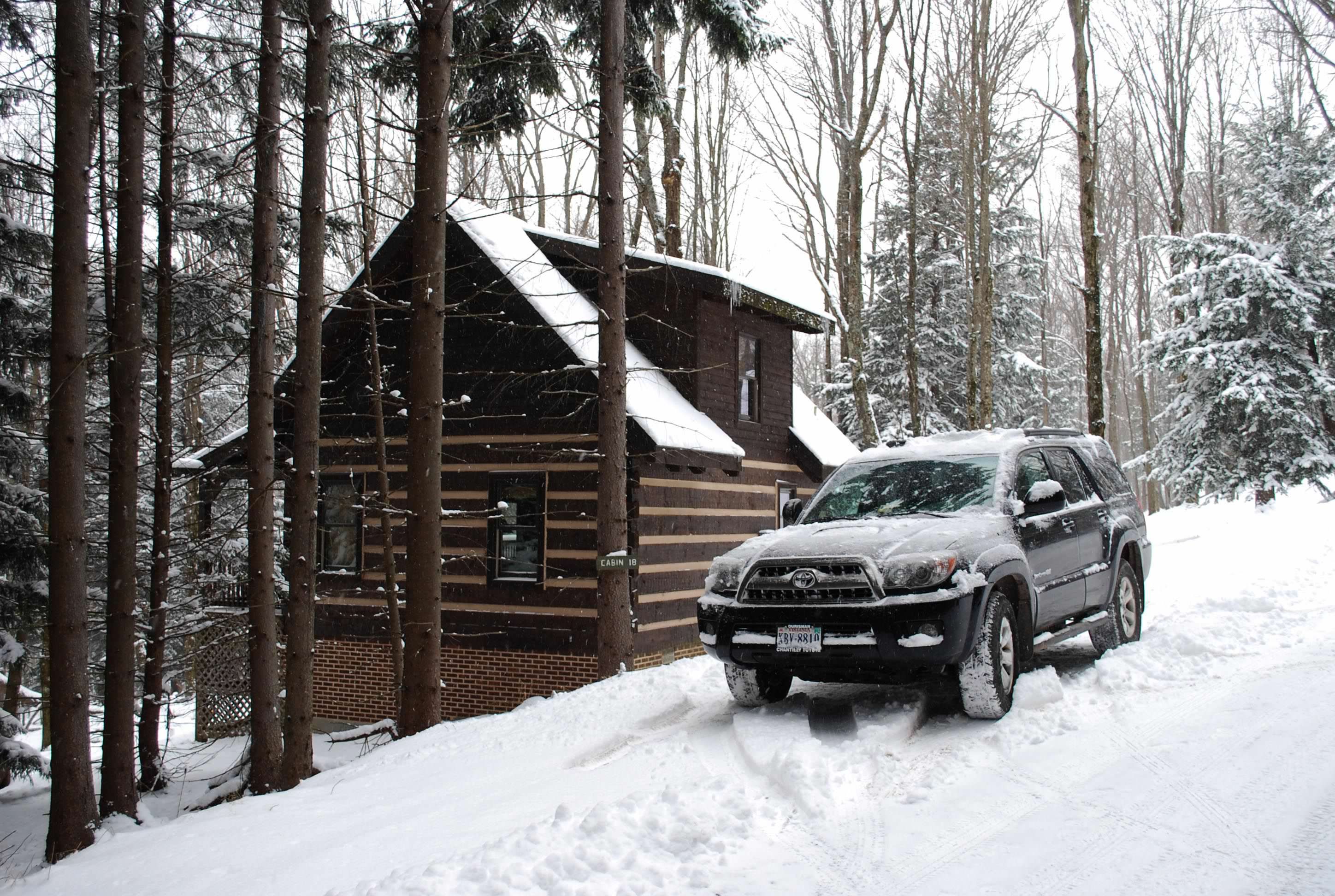
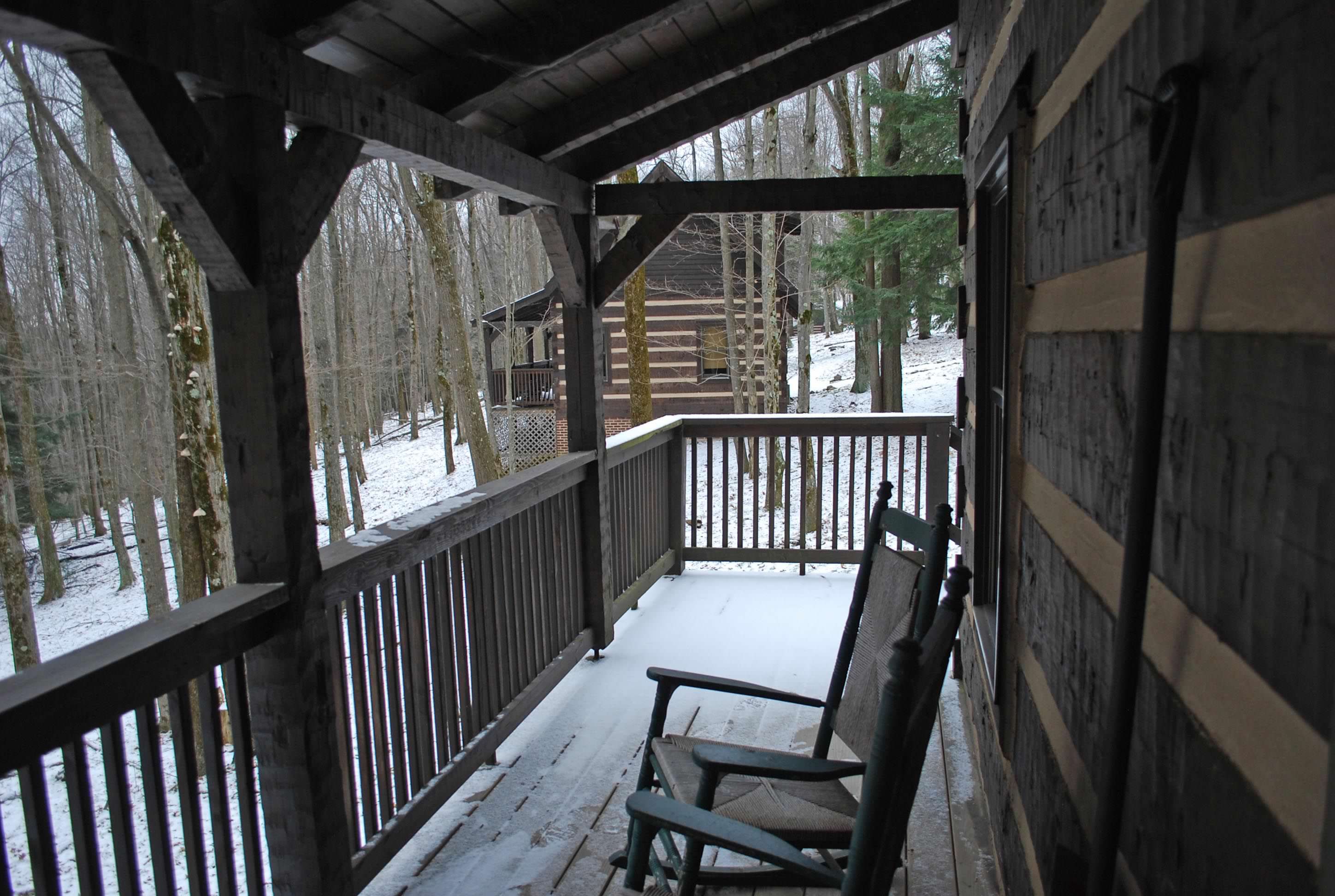
The first time we stayed at the Savage River Lodge in the mountains of western Maryland, it was at the recommendation of friends. The log cabins were advertised as luxury accommodations and a welcome “unplugged” getaway (no TVs). King-size beds, luxe linens, breakfast muffins and juice delivered in a basket to our door in the morning, all wonderful. It seemed we had the best of both worlds, a camping experience without the sleeping bag. Or having to erect a tent on uneven rocky ground. And the snow that fell that January evening before we left was gorgeous, ensuring that we would return to this hidden gem.

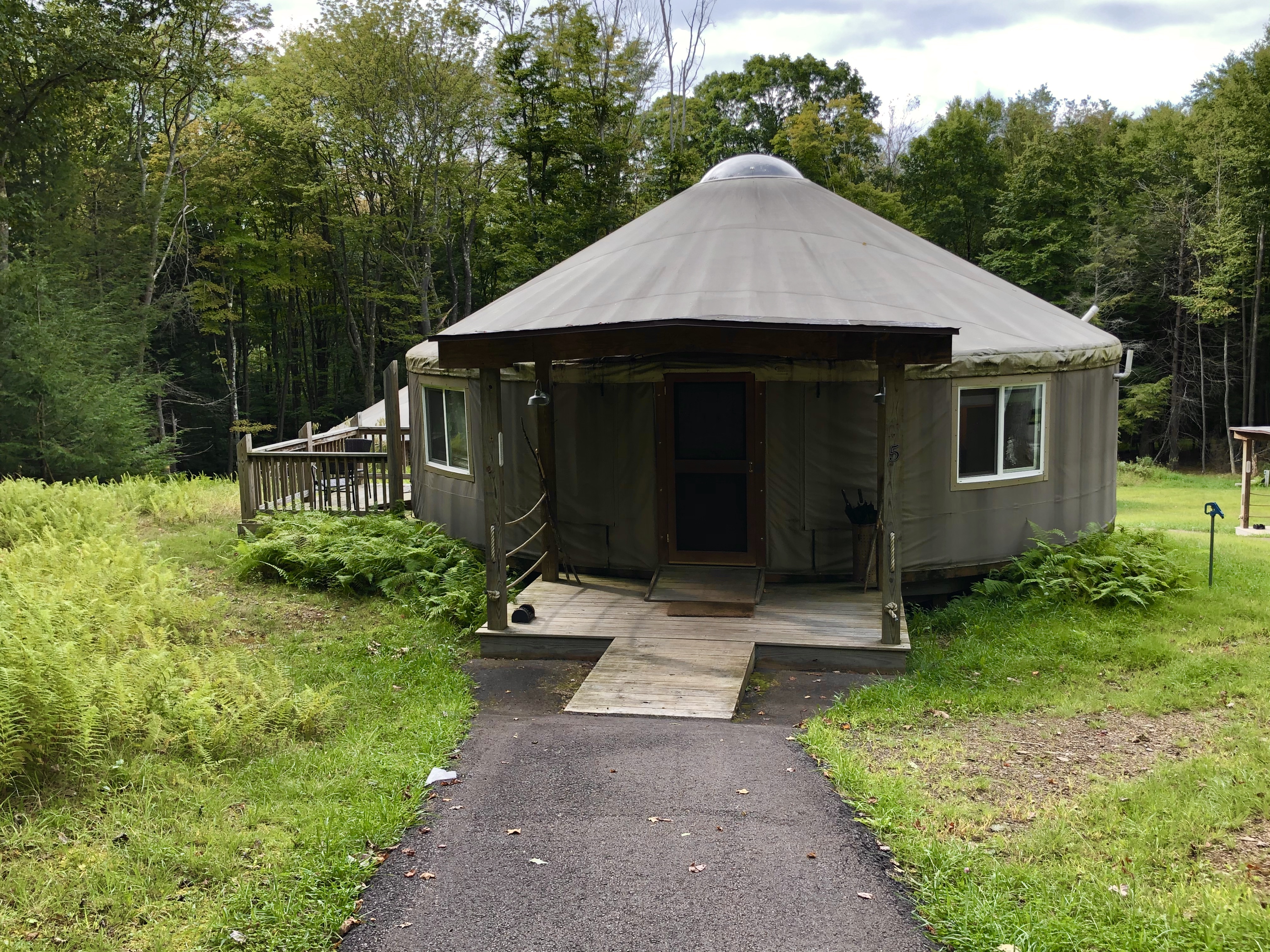
It was several years later, and a different season, that we were finally able to try the Lodge again. Only this time we reserved a yurt. 

A yurt. I didn’t know what it was, but I wanted to try it. A vague recollection of a long forgotten movie, horsemen riding across the steppes, round…tents? 

Our yurt awaits.

But a yurt at Savage River Lodge, well that held the promise of comfortable bedding, an indoor bathroom with hot showers, and would certainly not be like our earlier tent experience.

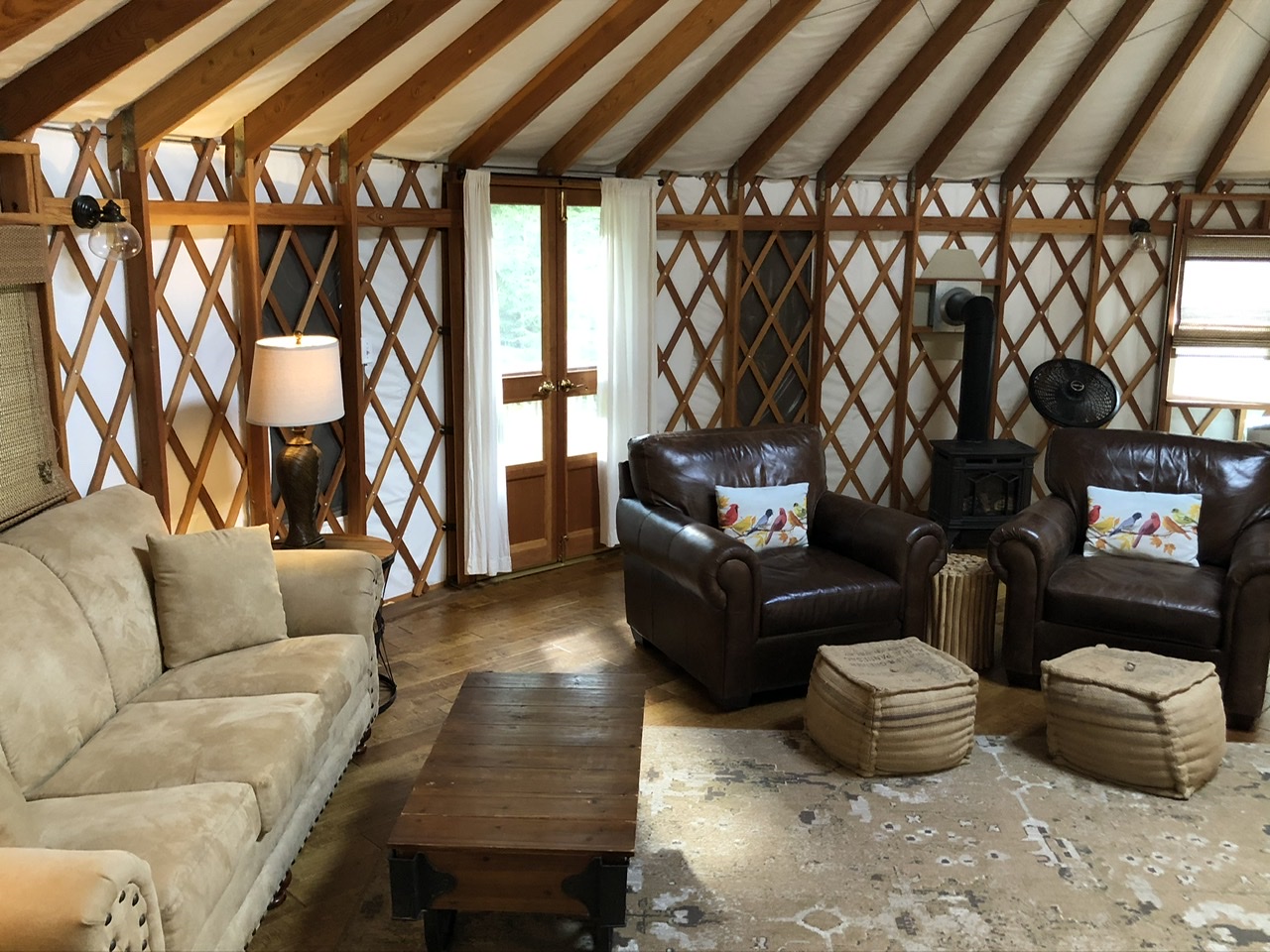
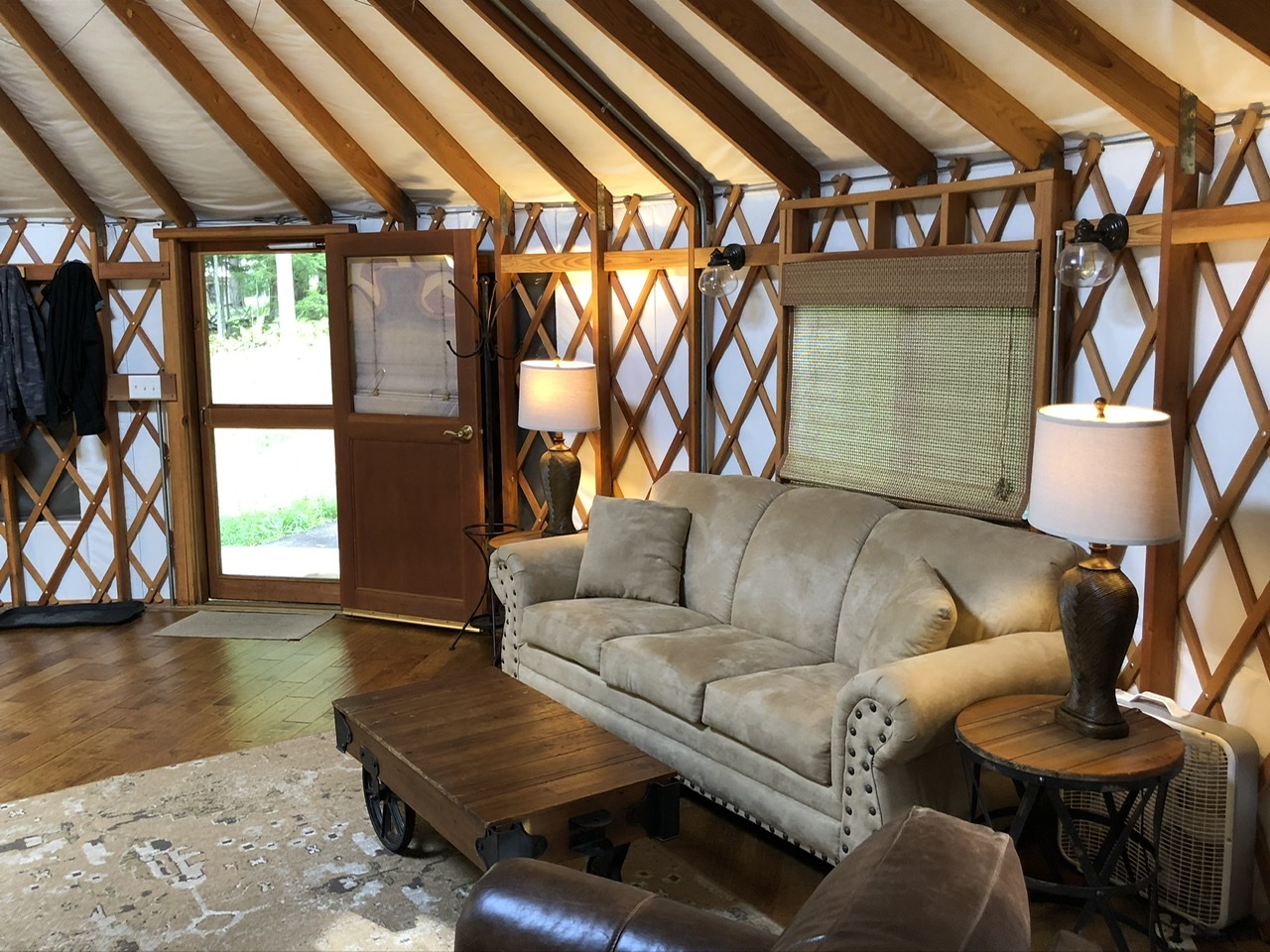
Our yurt was made by Pacific Yurts of Oregon. And SRL has taken the experience up quite a notch: hard wood flooring with radiant heat, a tiled floor bathroom featuring on demand hot water shower, a gas log fire place along with a portable air conditioner for climate control, and luxury micro-fiber bed linens which were incredibly soft. We walked in and were simply amazed. 

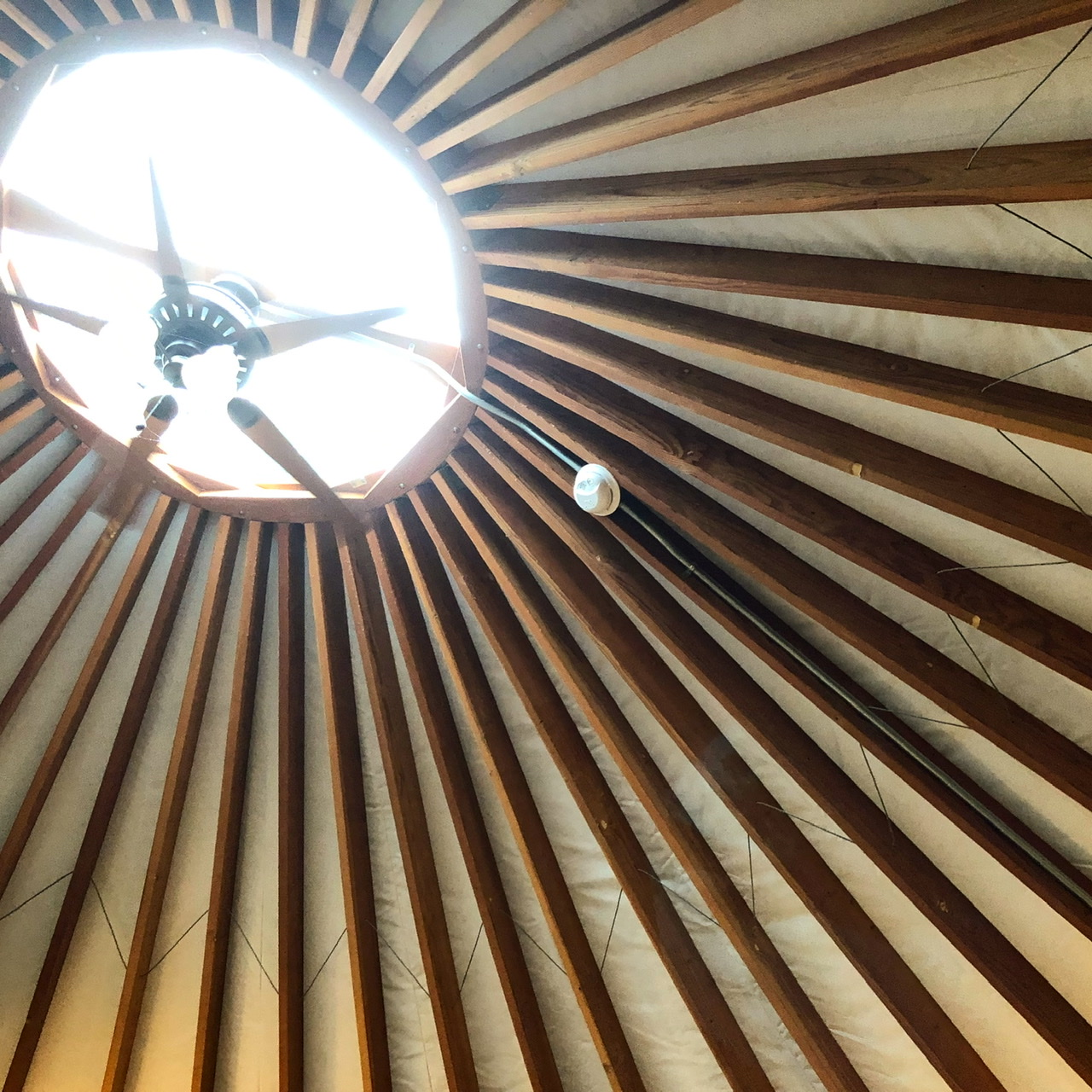
At 30 foot diameter, these open floor plan “tents” are seemingly immense. A high ceiling without a center tent pole helps to create a more spacious and open feel than the two story cabins on the property. French doors open onto a private deck with seating and a view of the forest. Our enclave consisted of four yurts (eight in total) set in an open glade of ferns, across from another four yurts set further back from the road.

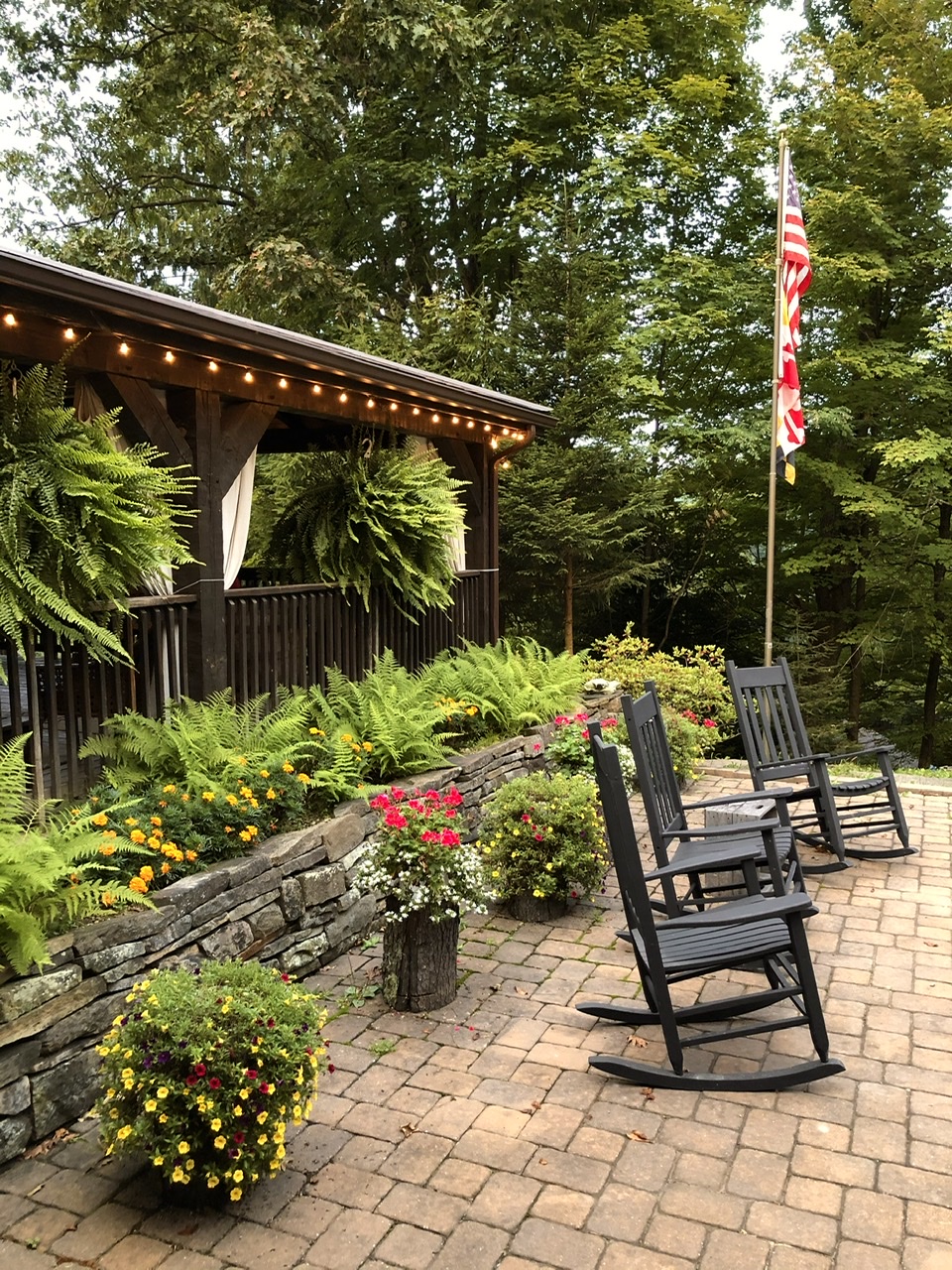
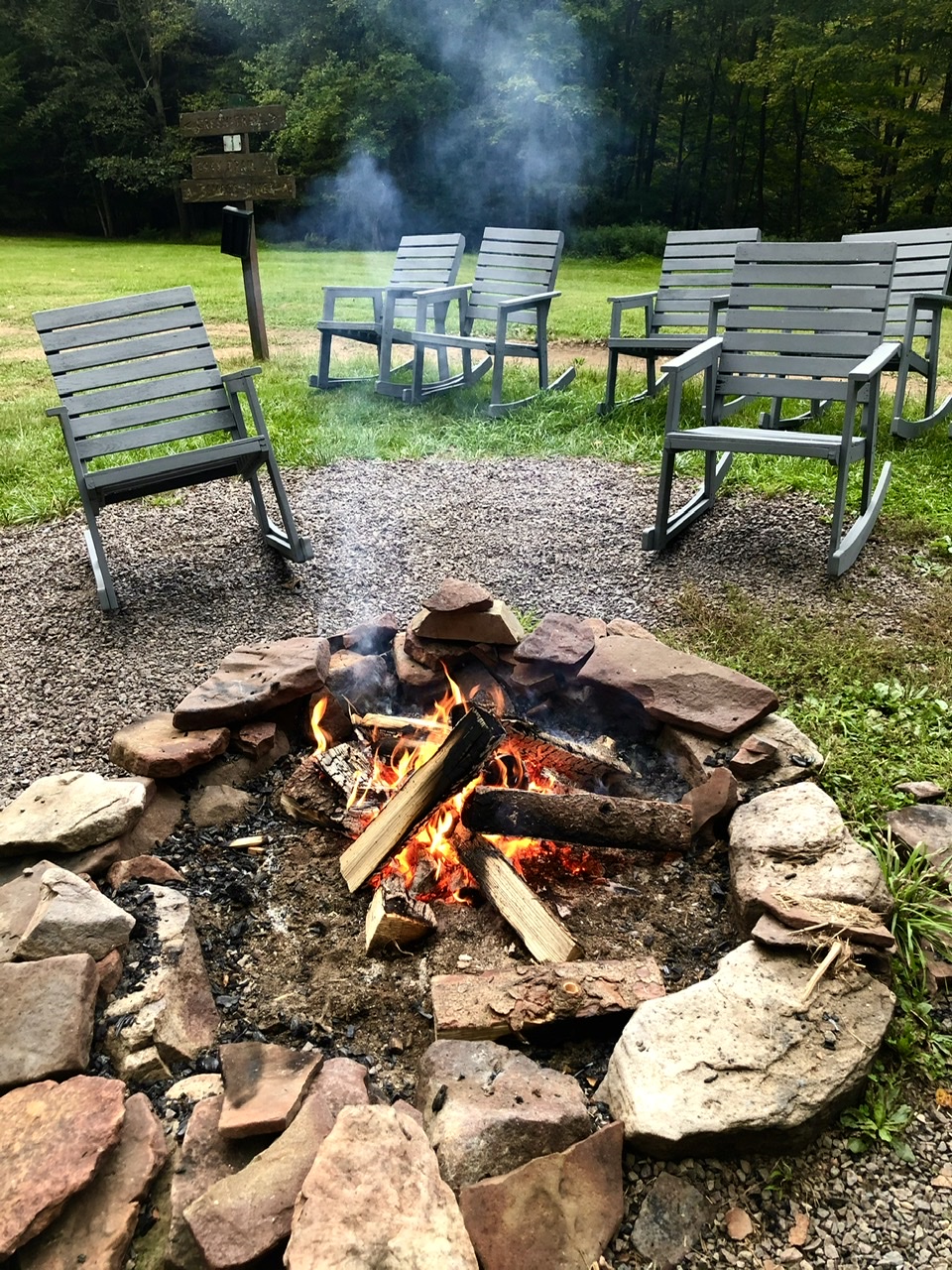
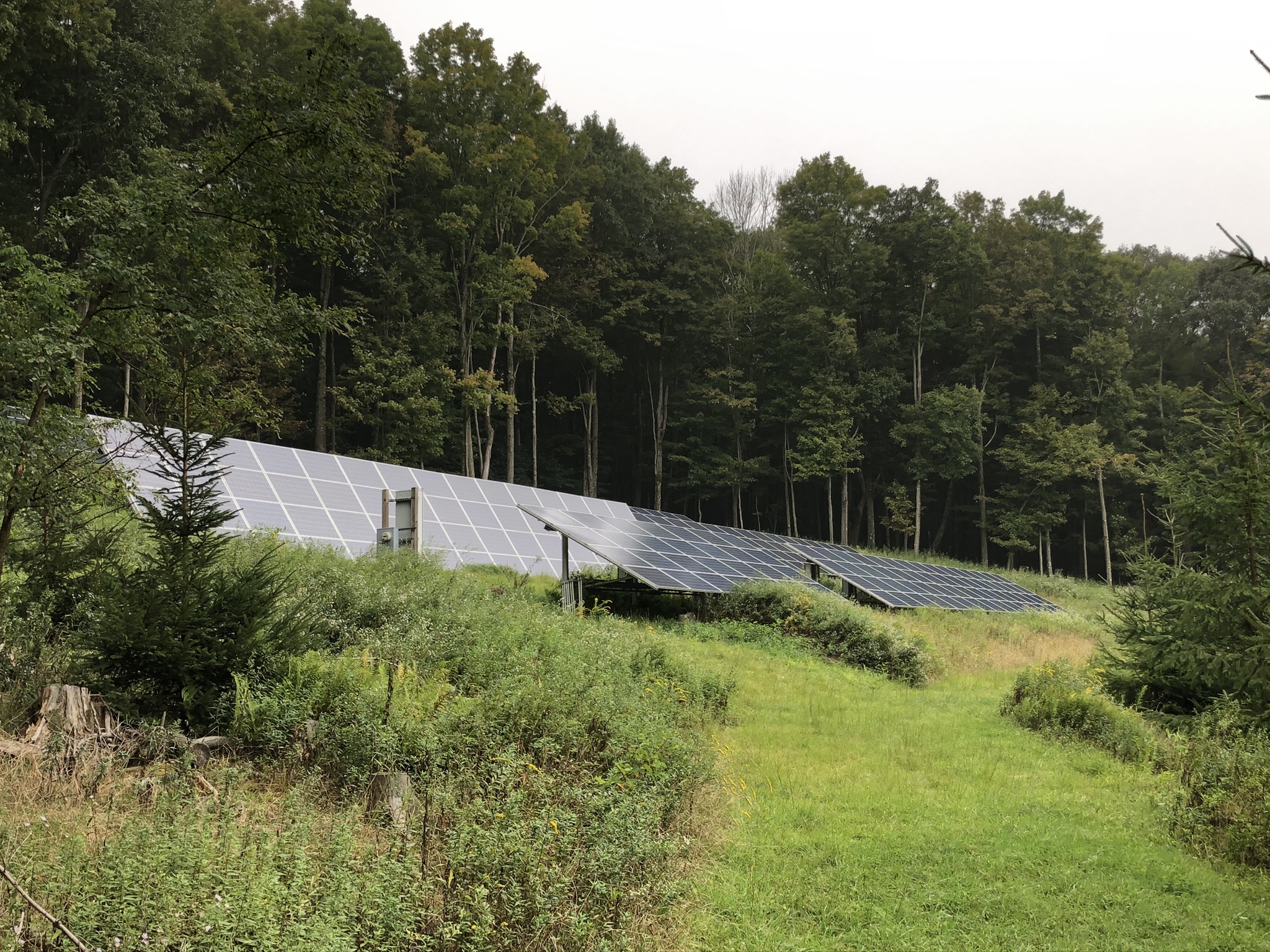
A short walk up to the Lodge revealed several seating areas on the patio and deck surrounded by flowers and views of deer in the meadow below. We found a seat at the fire pit in the evening and met several of the other guests. All of us were impressed with our hosts’ commitment to striving for an eco-friendly resort: 65% of the electricity used is supplied by 325 solar panels on the property.

When I spoke with owner Mike Dreisbach, one of the things that stood out to me was his commitment to repurposing and using local sources. He mentioned that the timber frames and lumber for their Cornucopia Cafe in Grantsville MD used materials from a 130-year-old barn. The huge boulders that were being placed in the current landscaping project are sourced from a quarry nearby.

If you are interested in any of their other green initiatives, or considering where you might “go green” in your own home, they have a list on their website here.

The tent experience was certainly unlike any other I have ever had. Hardly a tent, our “glamping weekend” has me thinking of similar ideas for weekend getaways. We’ve stayed at a lighthouse in Puerto Rico, a seaside cottage and a mountain lodge; perhaps a treehouse might be our next experience. We are looking forward to trying something else in the New Year. What about you? trying something different this coming year?

More Rocks, Large and Small

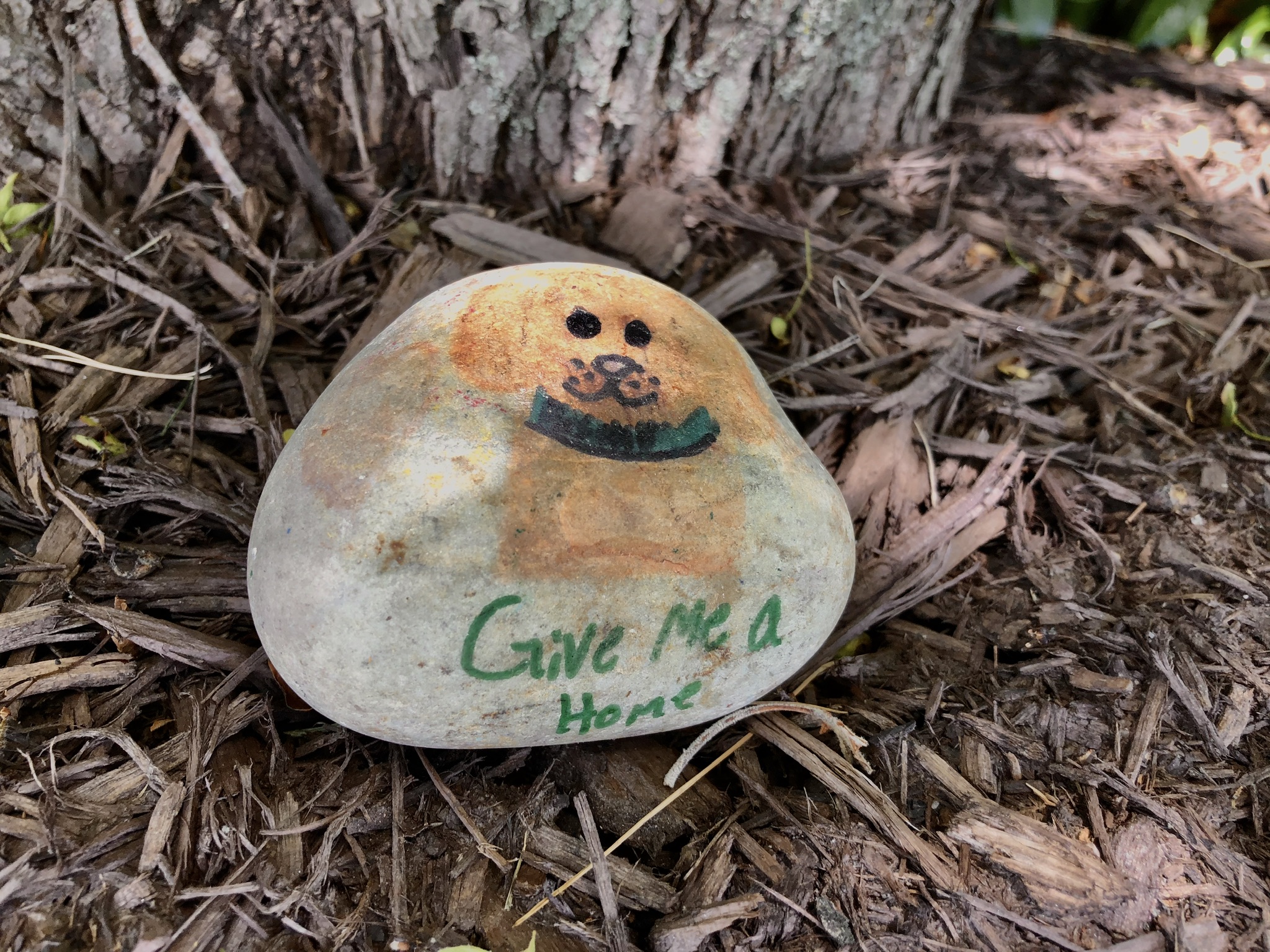
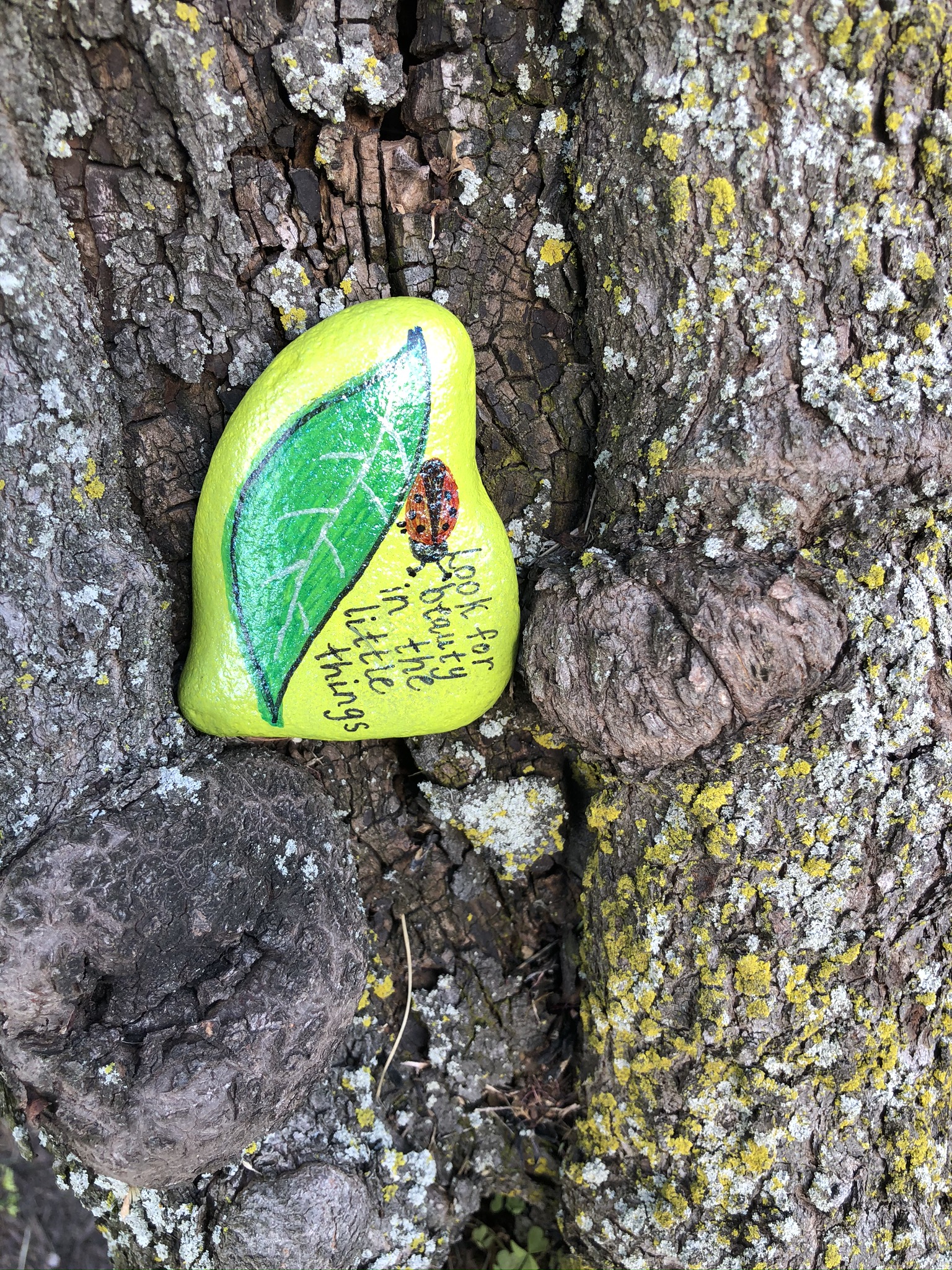
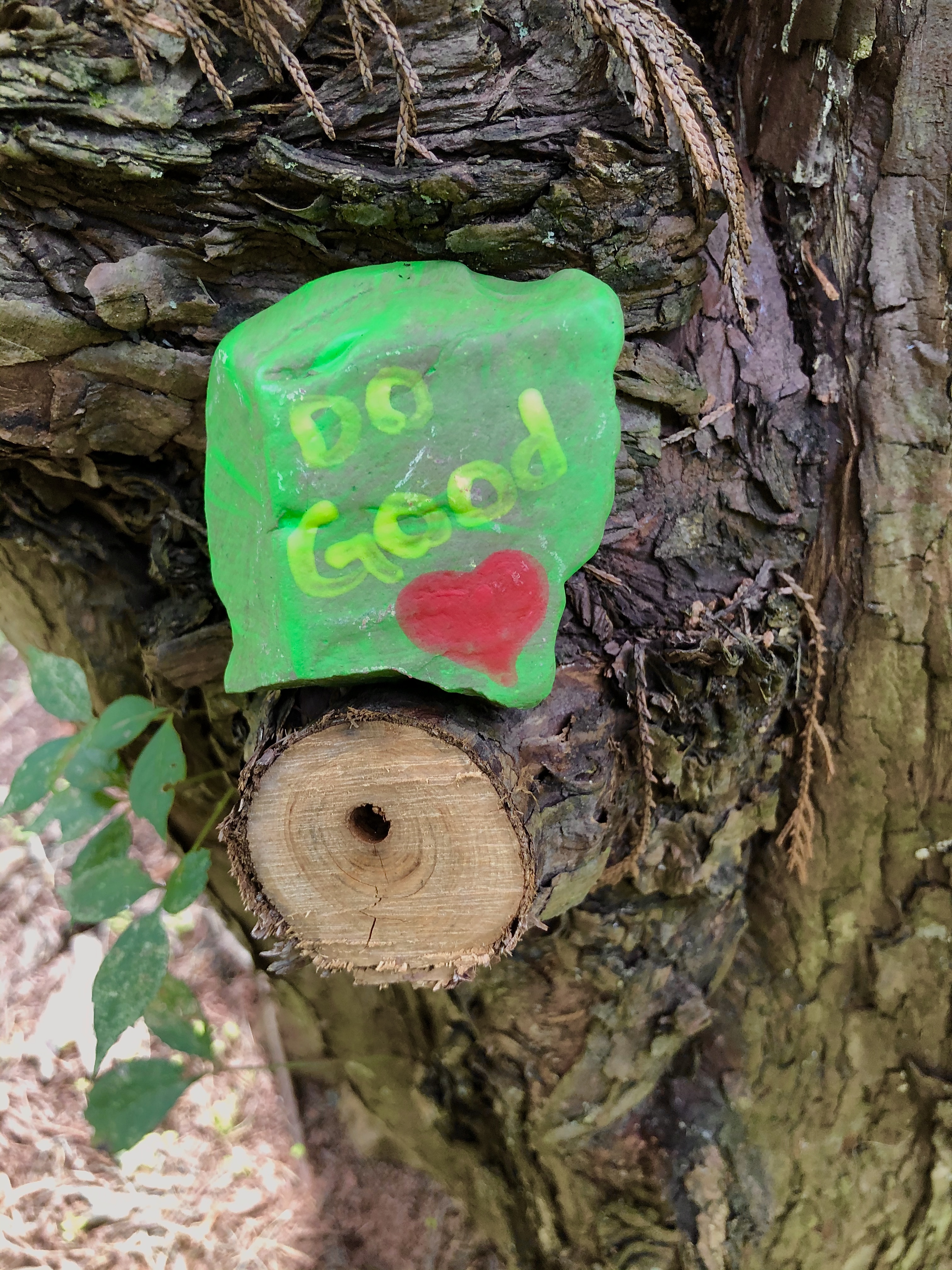
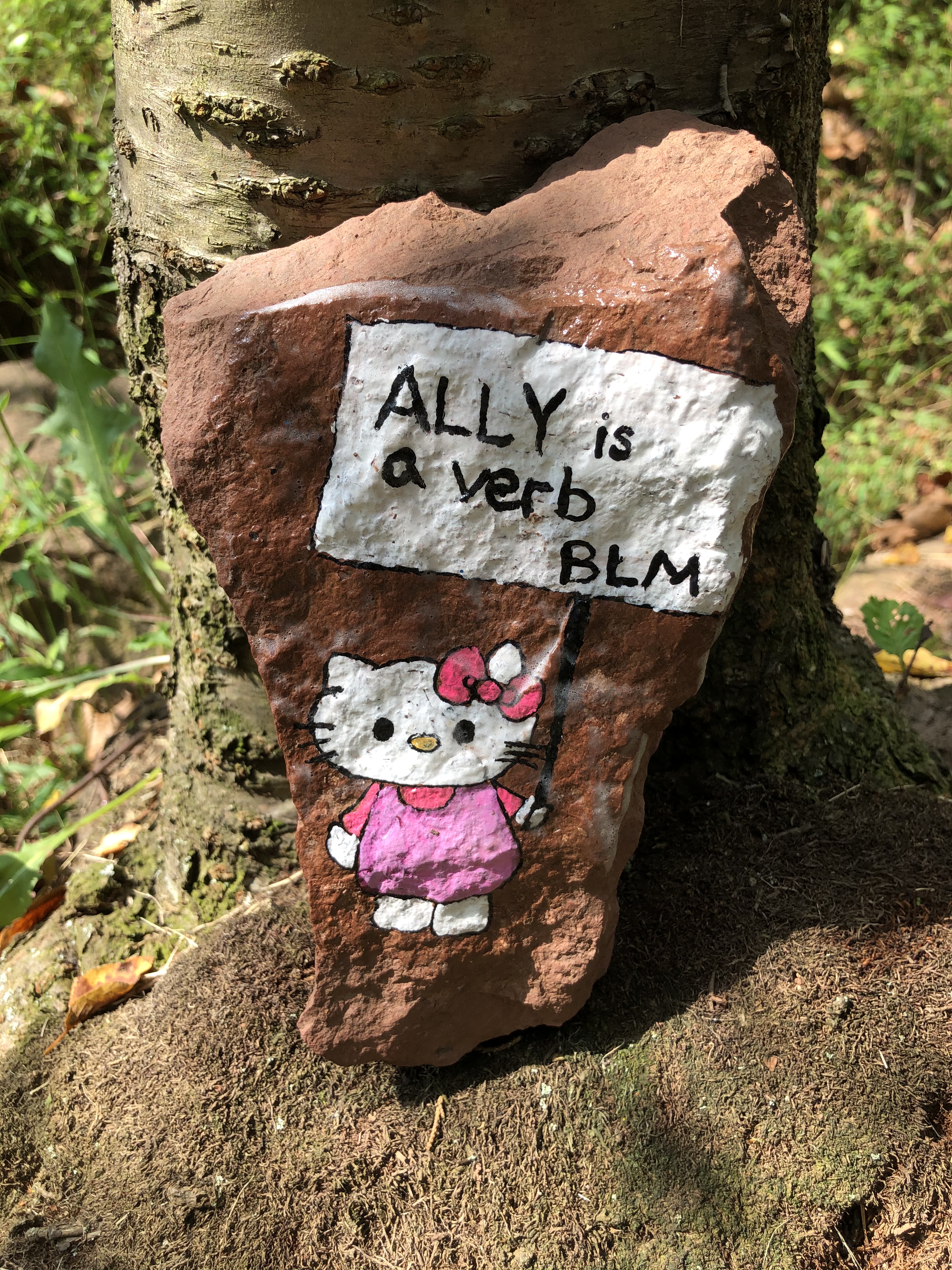
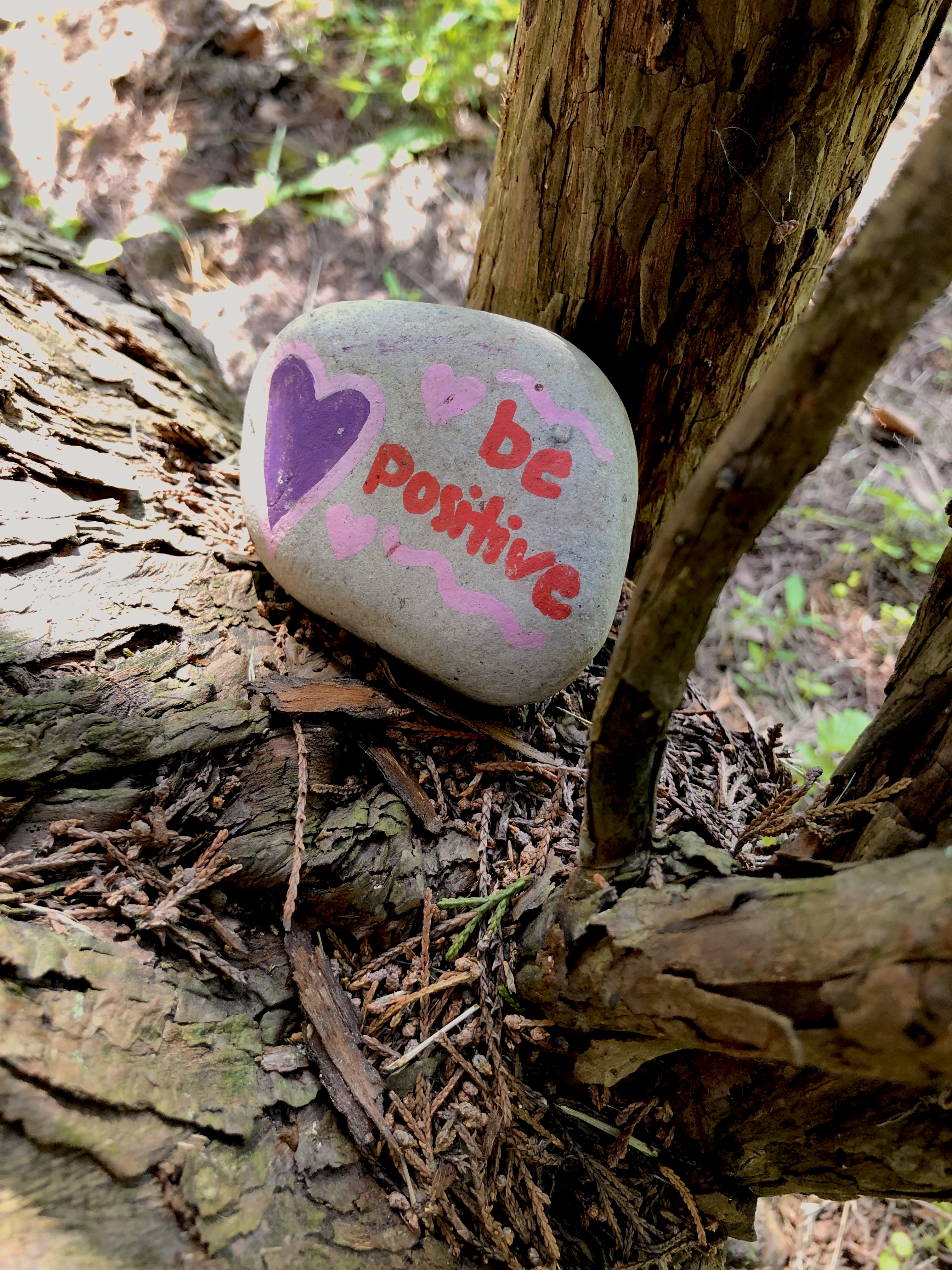
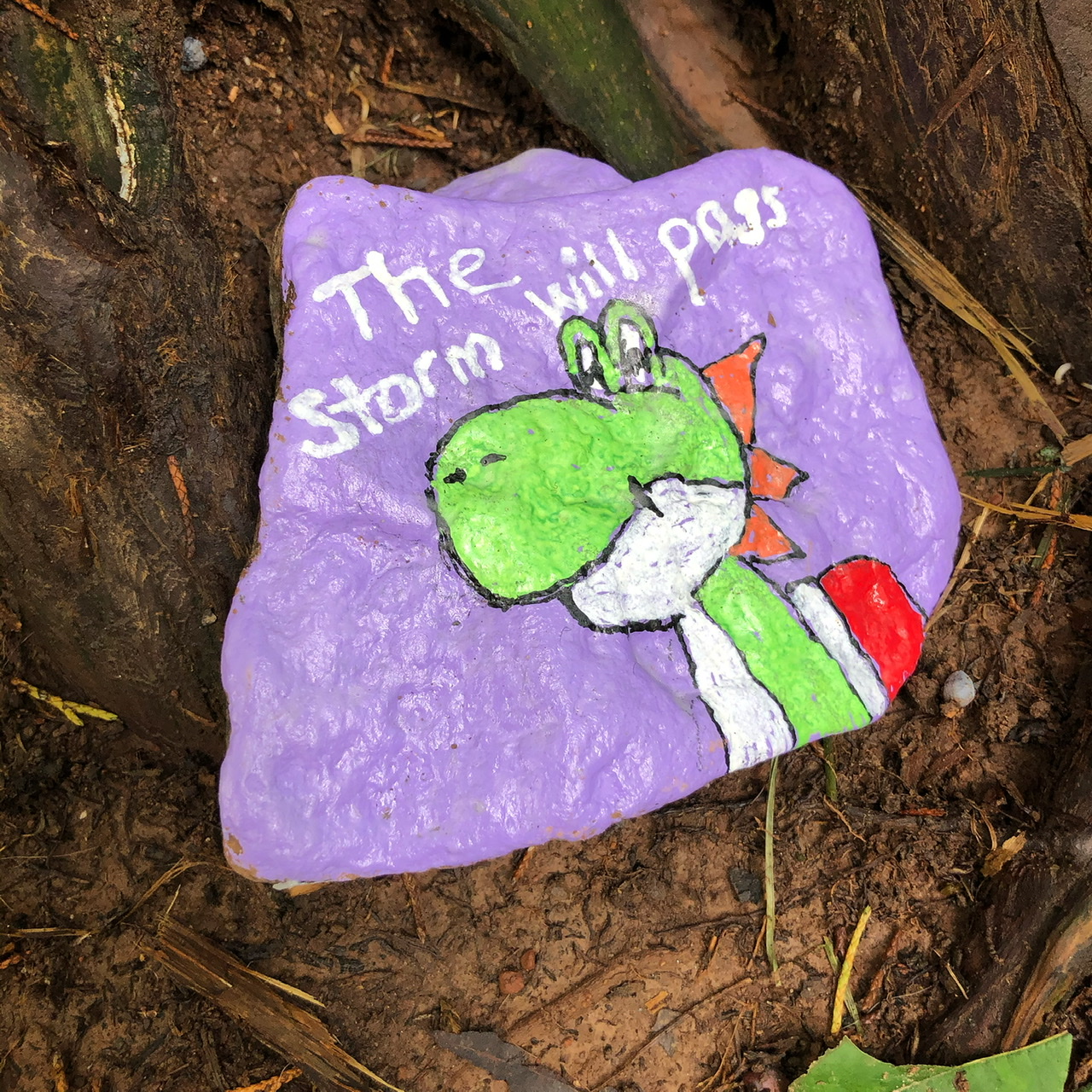
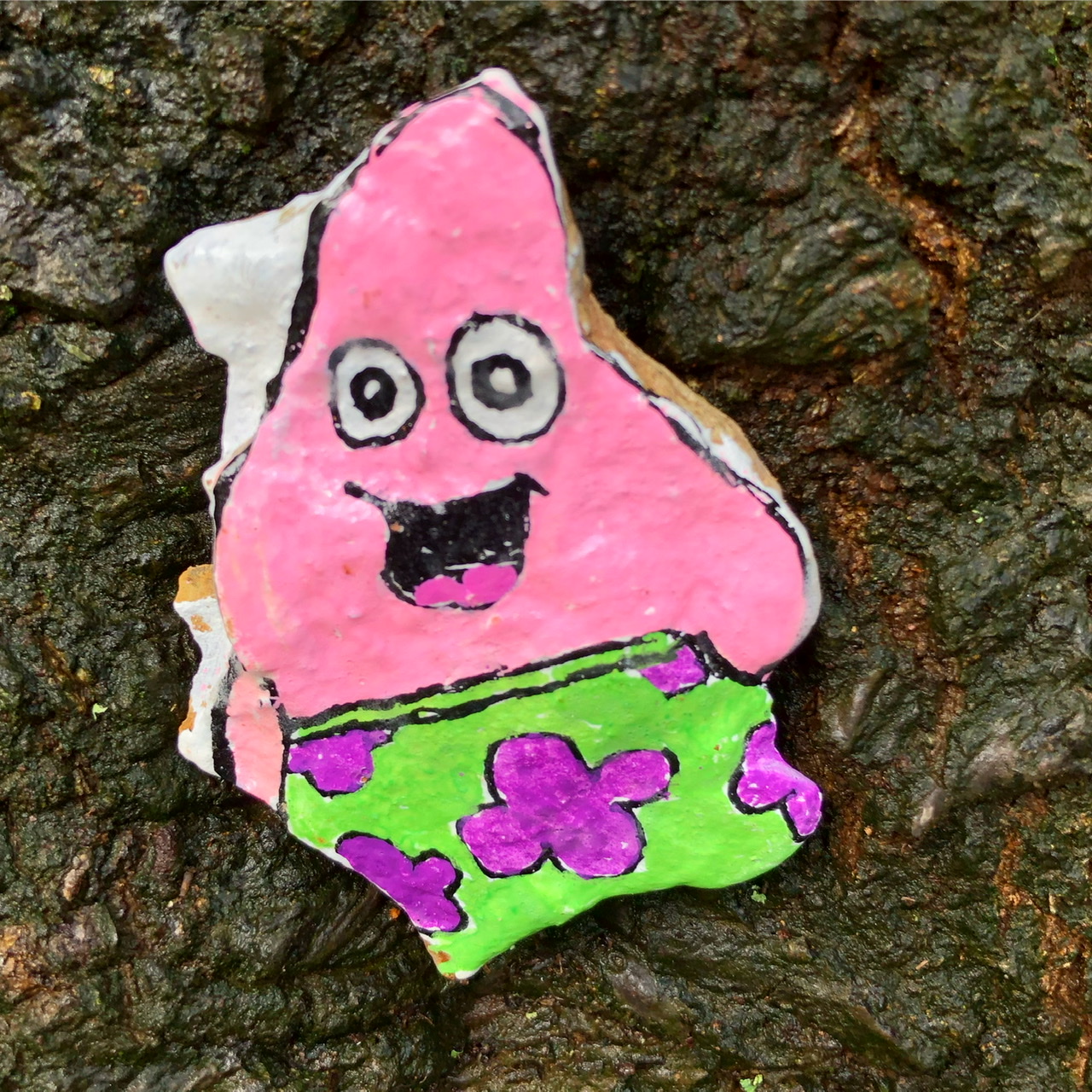
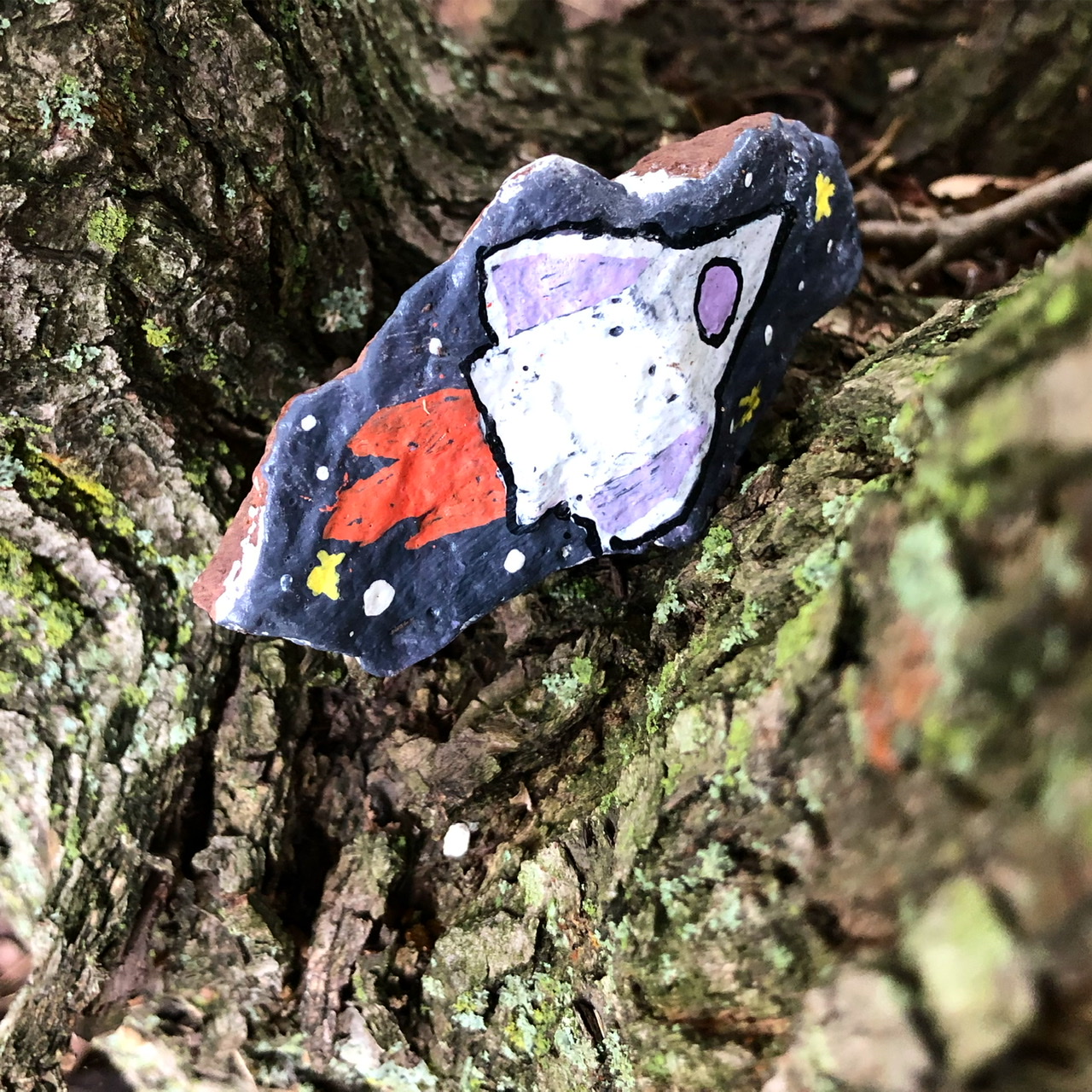
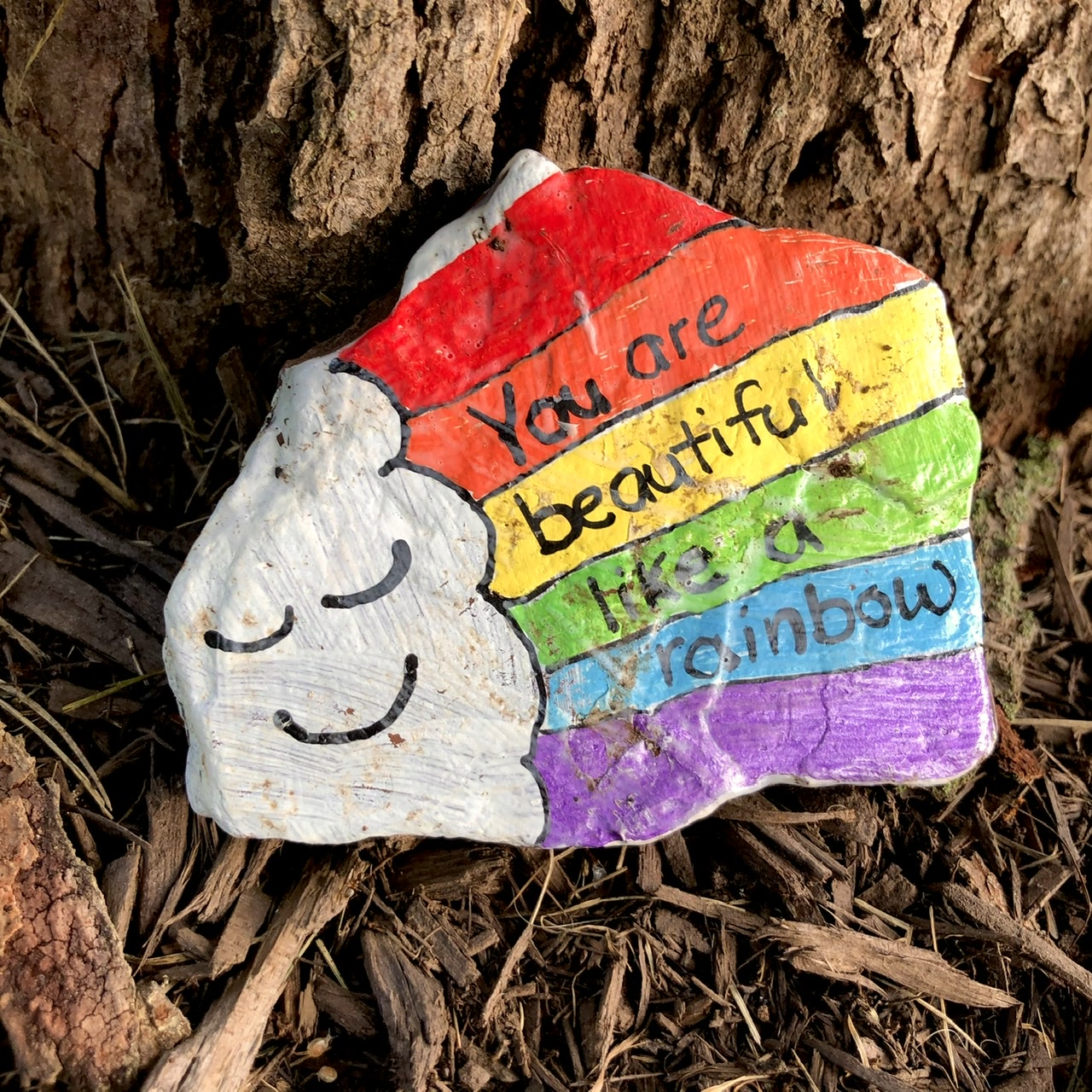
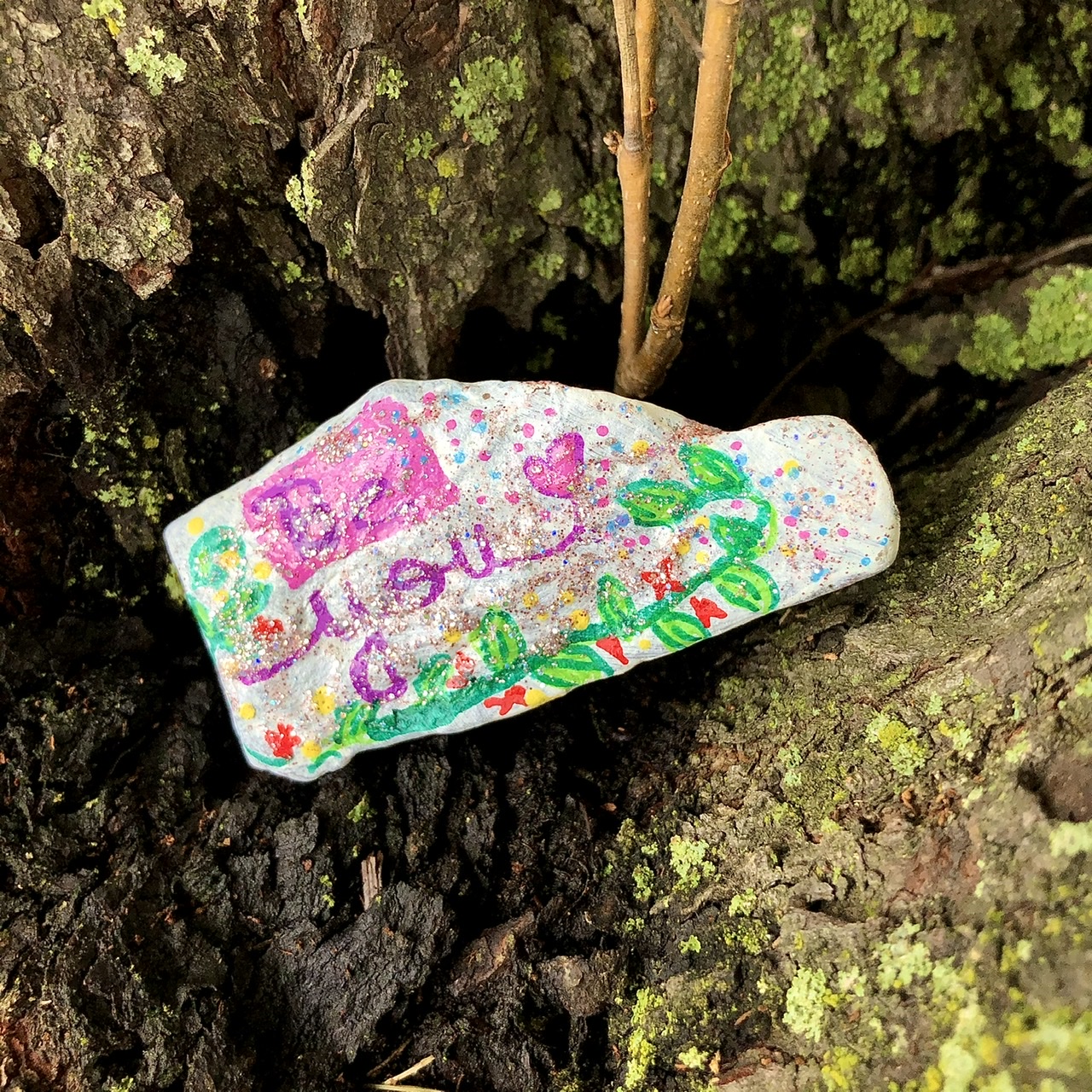
I had thought we were pretty much through with the whole “summer rocks” thing, at least the number of painted rocks in our neighborhood found along our walking paths has diminished. But still, with the close of summer and the promise of fall waiting to be revealed, I have found a few more of these graphic stones worth sharing.

If you follow me on Instagram, I’ve posted as many of the better-painted ones that I could. Lately, however, there has been a resurgence of interest in them, or at least it seems like it. Perhaps a new artist has moved into the area and has taken up creating these small nuggets of encouragement.

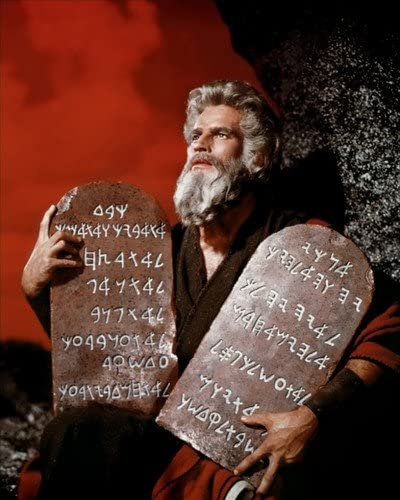
Charleton Heston, from a publicity image for the movie “The Ten Commandments.”
Image from Amazon

Which got me to thinking about our desire to preserve words on stone. 
For many, perhaps the first image to come to mind might be Charlton Heston in the role of Moses, walking down from Mount Sinai brandishing tablets of stone with the Ten Commandments inscribed upon them.

Another stone of great historical importance would be the Code of Hammurabi. A great black pillar of diorite standing more than seven feet tall, the Babylonian king had it inscribed with 282 laws which are one of the earliest and most complete written legal codes from ancient times. It was found in 1901 at the site of Susa in Iran.

Stele of the Code of Hammurabi, Image from Wikipedia
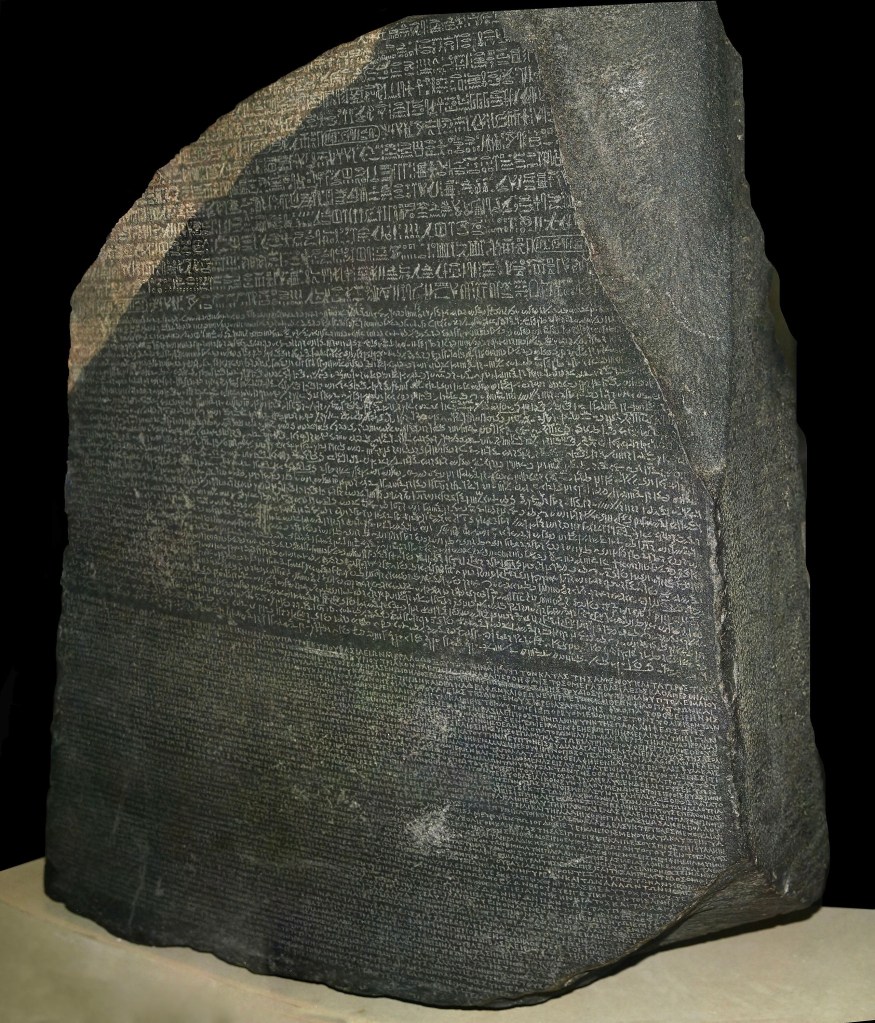
Rosetta Stone, image from Wikipedia

The Rosetta Stone is another quite famous piece of granite.

While the top and middle groupings of text are Egyptian using hieroglyphic and Demotic scripts respectively, the bottom is in Ancient Greek. It was discovered in 1799 by the French during the Napoleonic Campaign in Egypt and became the key to deciphering Egyptian hieroglyphs.

In Washington DC, I would say that the text inscribed on the limestone walls of the Lincoln Memorial from Lincoln’s Gettysburg Address powerfully capture the man’s heart for generations to read. 

“Four score and seven years ago our fathers brought forth on this continent a new nation, conceived in Liberty, and dedicated to the proposition that all men are created equal.”

And not faraway, these words on Martin Luther Kings’s massive statue, caved out of pink granite, ring out: “Out of the mountain of despair, a stone of hope.” According to the official National Park Service brochure for the Memorial, the fourteen inscriptions that were chosen to be placed on the inscription wall “stress four primary messages of Dr. King: justice, democracy, hope, and love.”

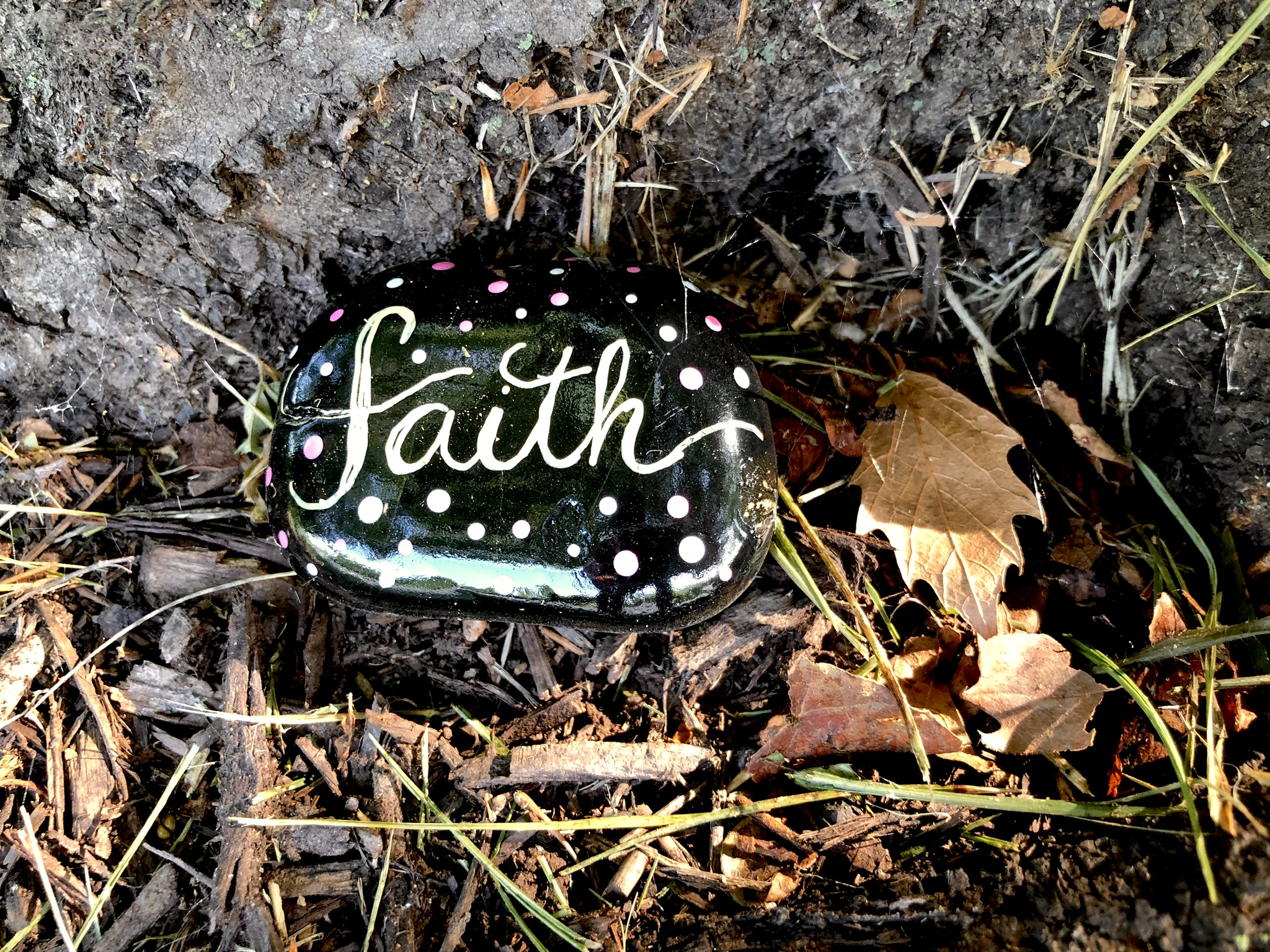
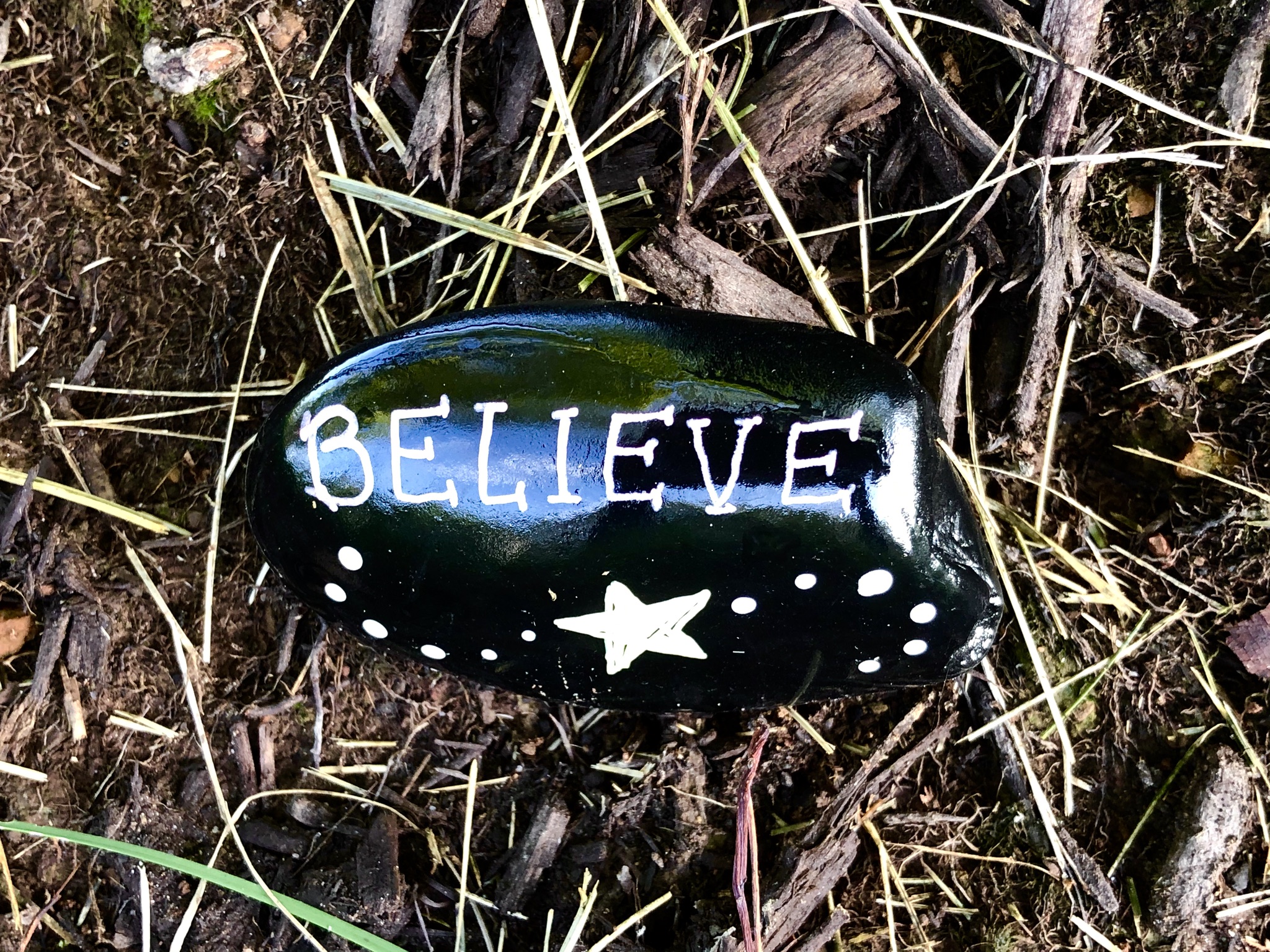
While hardly on the scale of these mighty stones of remembrance, the small rocks found in our neighborhood serve many of the same purposes, hoping to encourage, uplift, or remind us of timeless messages. Faith. Hope. Love. Be True. Be Steadfast. Be kind. Smile. You are terrific!  Have a nice day!

Living Between the Rocks

The Summer of COVID has brought uncountable change to our lives. Weddings, graduations, reunions, church services, movie theater closings, bars and restaurants pivoting to curbside pickup: our daily routines have been upended in ways too numerous to catalog. While news reports continue to make note of the ever increasing numbers of “test positives”, the shear number of lives lost these past six months has gone past shocking. We become less sensitive, perhaps, to the backbeat of daily reminders of the fragility, and temporal nature of our lives.

Between a Rock and a Hard Place

phrase [PHRASE after verb] If you are caught between a rock and a hard place, you are in a difficult situation where you have to choose between two equally unpleasant courses of action.

I’ve challenged myself to get out and walk the neighborhood these last few months of summer. The road back from my knee surgery has been a slow one, and I’m reconciled to the thought that I will likely never run a 10 kilometer race again. But I hope to gradually build up to walking six miles a day.

The last visit with my surgeon, I proudly reported that I was up to walking 3-4 miles during the week, in one half to three quarter mile increments. Chest puffed out, I was pretty proud of my accomplishment. I had set a goal of eventually walking a mile, and finally I achieved it. 

But that larger goal still lies before me. Like some great rock in the distance, the challenge of moving towards it motivates me to continue.  If I could walk one mile, would it be possible to increase that to maybe, one and a half? Perhaps even…two miles? 

I’ve been living between these two rocks: behind me, the misplaced fear of slow deterioration, ahead the unachievable goal of remembered youthful accomplishment. However, I’m finding exploring our new neighborhood at my admittedly slower pace, has given me a greater appreciation for the world around me and my place in it.

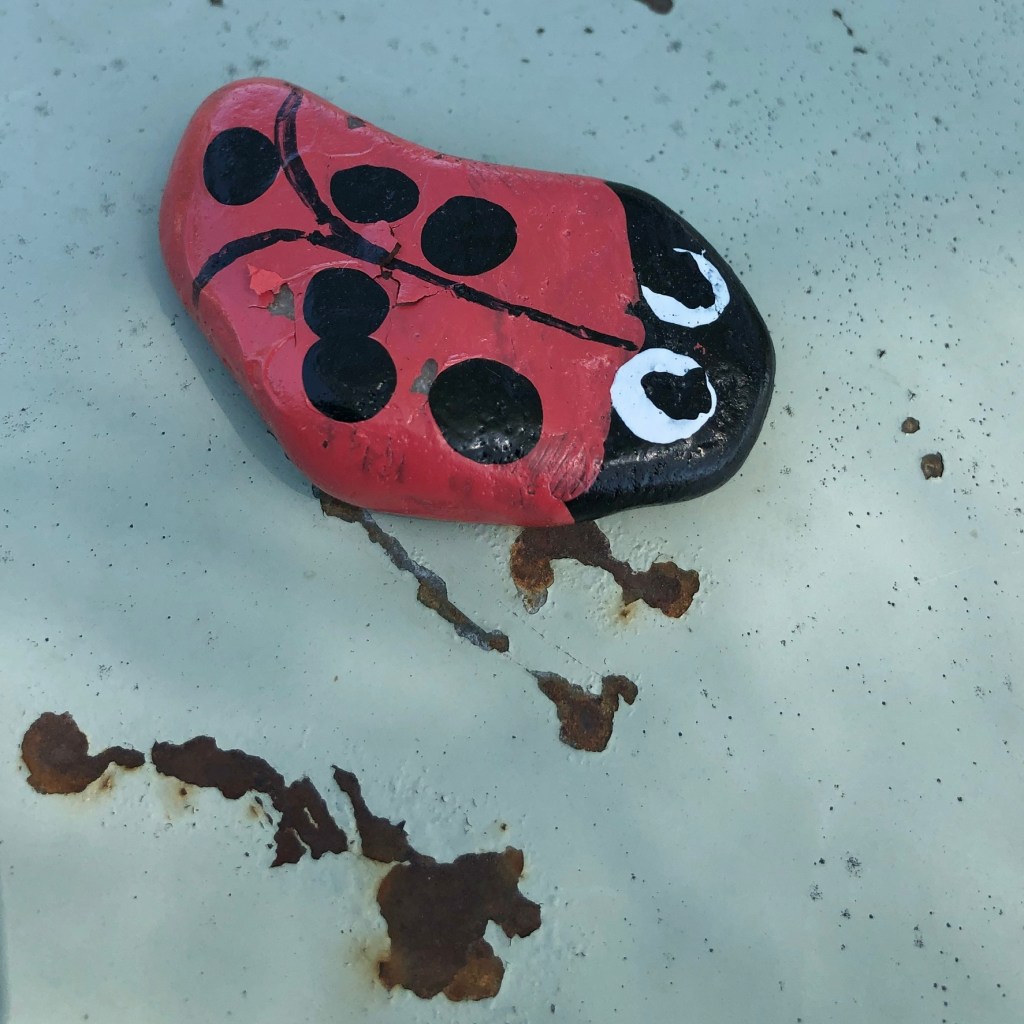
Along the walking paths in our neighborhood we continue to find painted rocks, small stones of encouragement left for walkers to discover. My granddaughter and I have left a few of our own creations as well. 

There seemed to be more rocks discovered during the first few weeks of our quarantine. Lately, not so many, perhaps a jewel-toned design or a smiley face left in the notch of a tree, but now usually nothing on my daily walk. 

This past week I found three, likely by the same artist, rock-solid encouragement as we walk the path before us. “And now these three remain: faith, hope and love. But the greatest of these is love.” Those are trustworthy rocks.