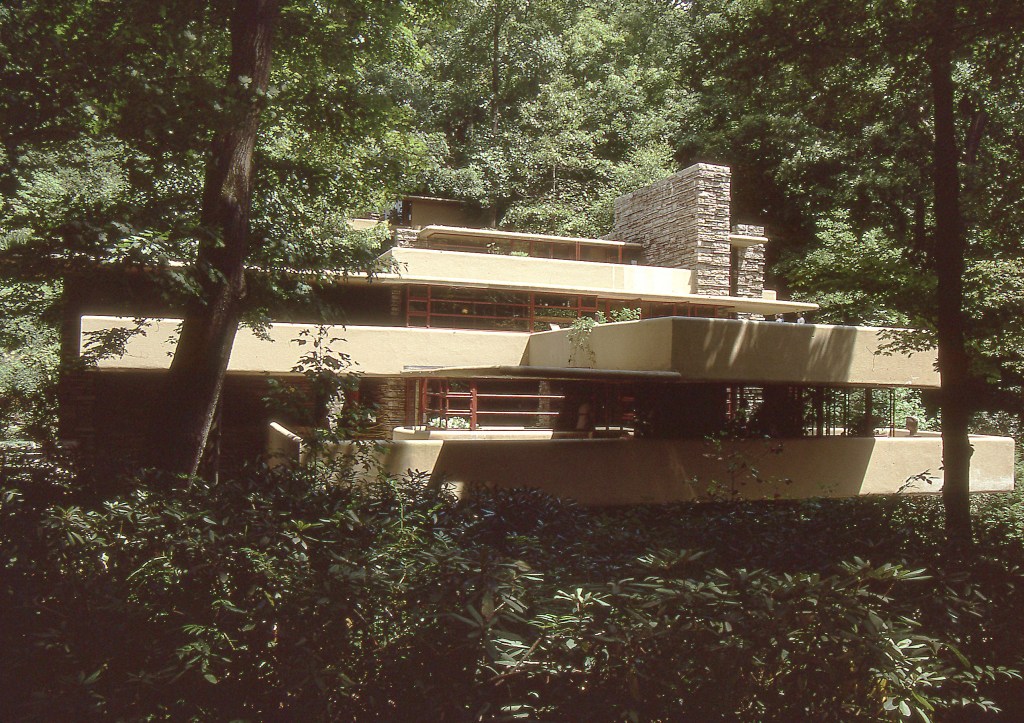
I’ve always appreciated the singular artistic vision of architect Frank Lloyd Wright. After looking through examples of his early work, primarily residences in the Midwest, I was struck by his embrace of modernism over then contemporary building styles. I had toured Fallingwater, the 1937 iconic summer retreat of Edgar and Liliane Kaufmann at Bear Run in Pennsylvania many years ago. Built in 1937, Fallingwater is perhaps one of the best examples of Wright’s mature style and his desire to merge the built environment with nature.


The summer home of Grand Rapids businessman Meyer May and his wife Sophie that he designed and built in 1908-09 is a great example of Wright’s style as it transitioned during the early part of the 20th century. Settled into the community on a street corner, surrounded by other grand homes in the prevailing Victorian and Italian revival styles, his brick prairie-style home, nearly devoid of exterior ornamentation, seems peculiarly out of place. And indeed, our tour docent recounted how his children felt picked upon because they “lived in the weird house.”
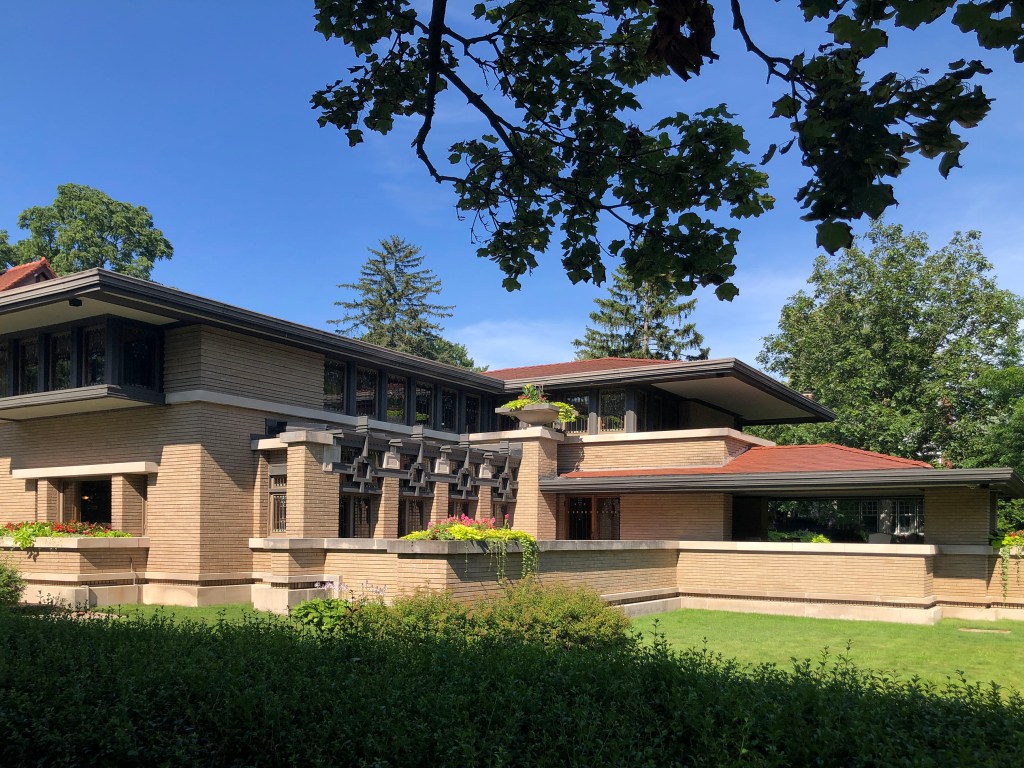

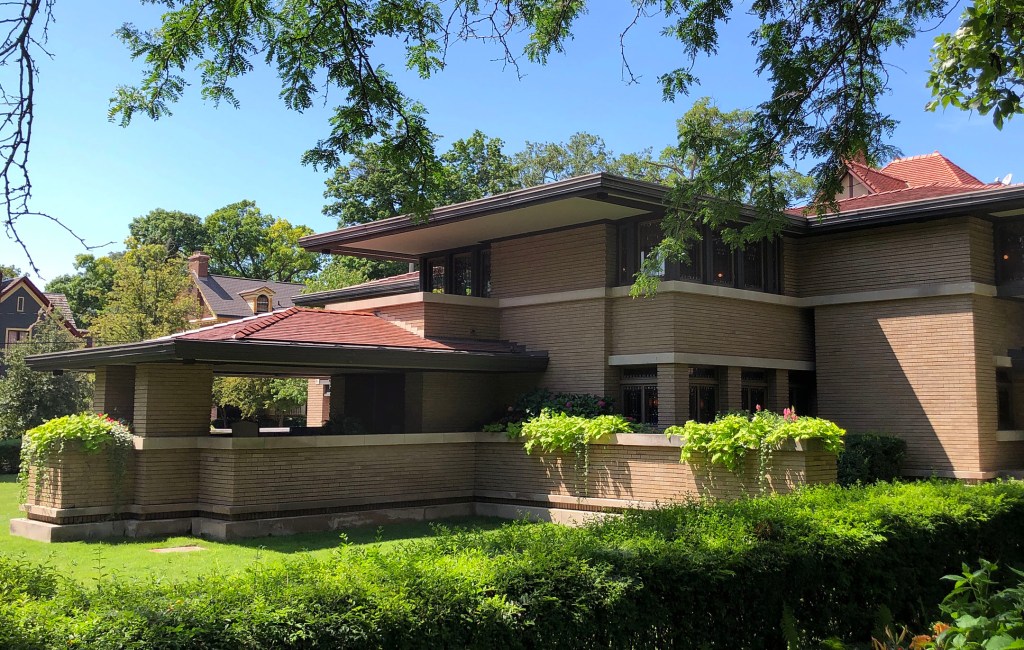





The home is a grouping of rectangular volumes and piers, with low pitched roofing and deep overhangs. Unlike the red metalwork of Fallingwater, the copper metal trim work here is a dark brown color throughout that contrasts with the sand-colored brick and limestone. Though perceptably a minimalist structure, it seems to me that the exterior moldings, especially those over the dining room windows, recall Japanese motifs. The overhang on the eaves bears a similar appearance to Japanese pagoda rooflines. Wright had visited Japan in 1905 and his love of Japanese woodblock prints is well documented. According to one website, he first visited the country in 1905 and created an extensive photographic record. No doubt some aspects of his designs going forward incorporated those interests.
While the Arts and Crafts Movement of the late 1800, early 20th Century anchored his initial designs, it seems that his stripped down mimimalism and incorporation of Asian design motifs (not to mention Native American) really took hold after 1910s Frederick C. Robie House in Oak Park. Again the long, stacked verandas recall the beautiful cantilevered trays of Fallingwater though constructed from brick rather than concrete. Each design features enclosed spaces, whether grand or intimate, that open up from or are connected with other spaces. The effect is a dynamic of seclusion and revelation.
From the Frank Lloyd Wright Trust, “In his design (of the Oak Park Unity Temple), Wright abandoned the use of traditional church features of tower, steeple, and nave, creating a “noble room” in which man could reflect upon God.” This approach to ecclesiastical design has had a profound influence on modern church design, for example the church we attend here in Northern Virginia and built 115 years after Unity Temple.
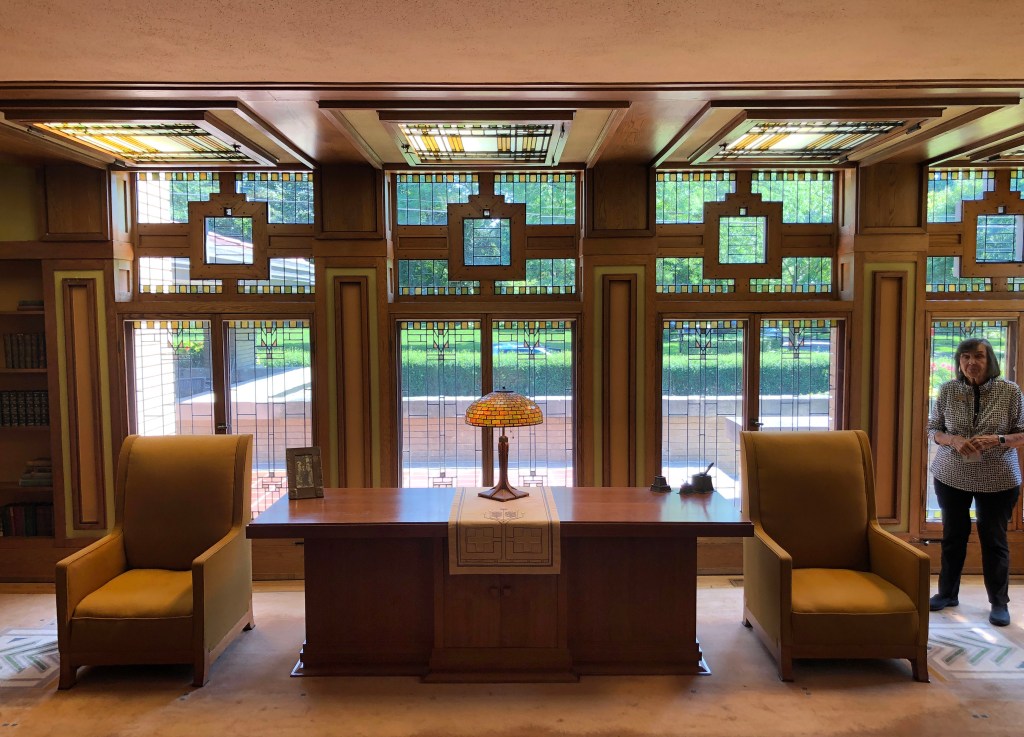
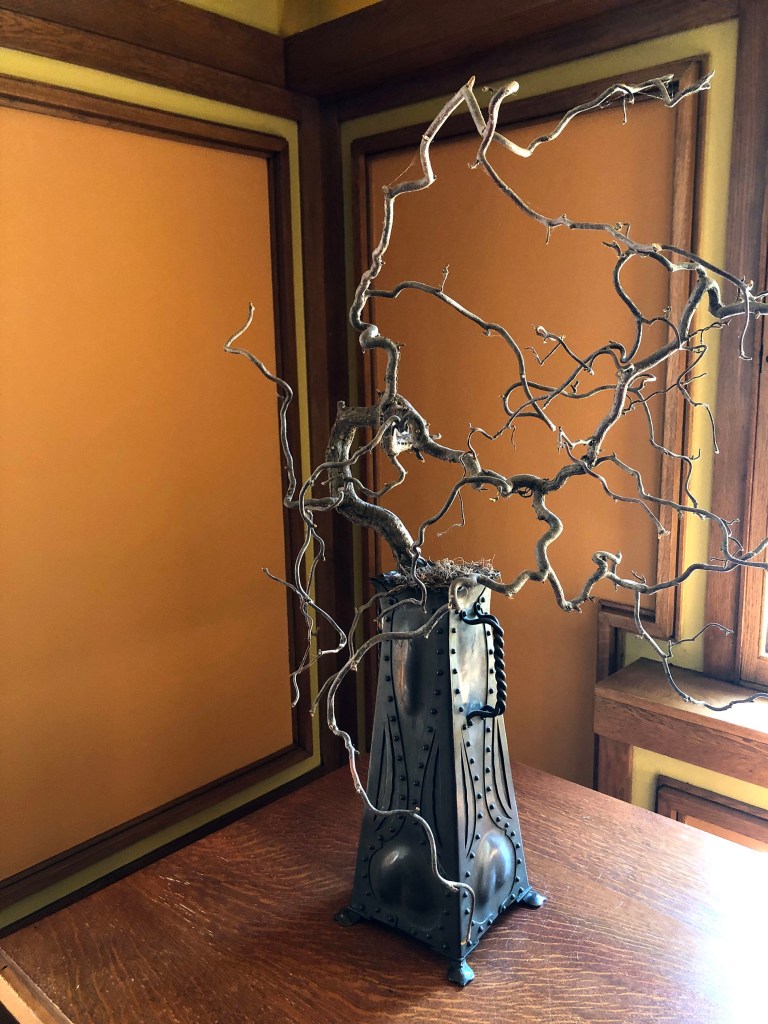
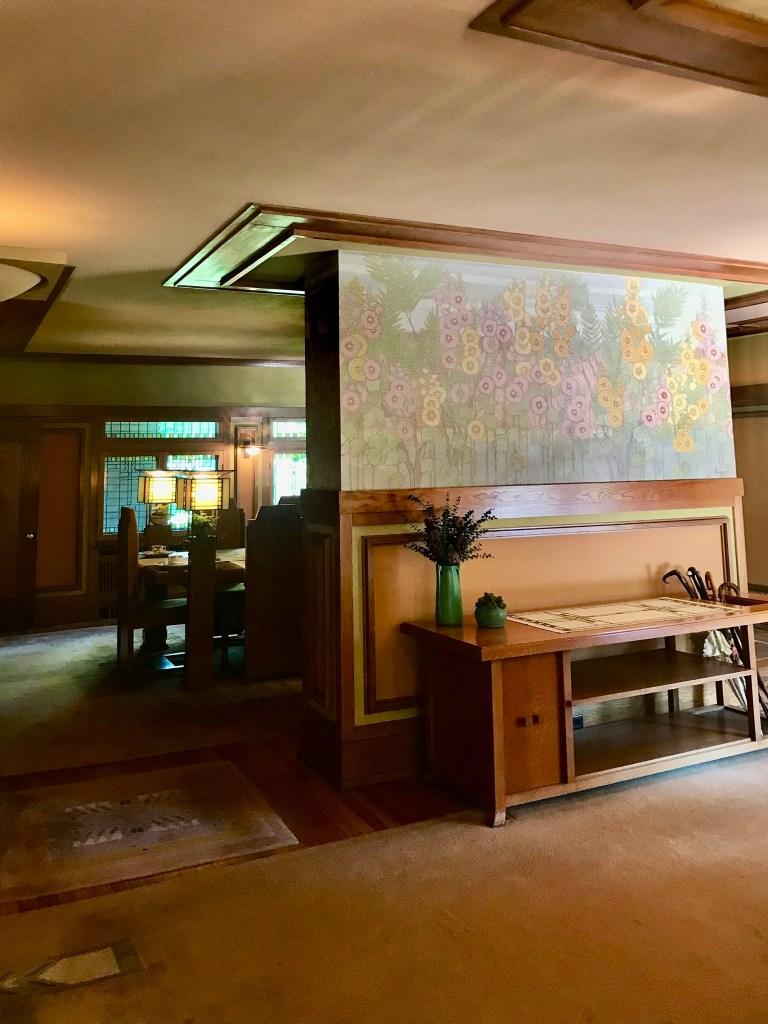
Wright’s pursuit of harmony: exteriors and interiors, ornamentation and furnishings all working together represents an individual who gave attention to details as well as the grand vision. While I personally felt that the Meyer May house showcased too much of the designer and virtually nothing of the home’s owners, his cohesive design can’t be ignored. Everything from carpets to wall colors, woodwork to windows complements each other. Motifs and materials are repeated throughout the building and nothing is placed by accident or without regard to the overall design scheme.
In 1987 Steelcase, the present owner of the Meyer May property, restored the home to it’s original design (along with removing a later building addition) and sourced either original or replicated furnishings of the time period. It remains a stunning example of one man’s creative vision, though I saw only a few photographs and personal possessions reminding us of the family who had lived there for 27 years. We browsed the gift shop before leaving, of course, and brought home a pair of FLW decorative mugs to commemorate our visit, a tribute to one man’s genius.

 My Retired Life