Route 66, running from Chicago to Santa Monica, California, turns 100 years old this year. It’s iconic in a way that few other American roads are—so much so that a television series was created around it. Route 66 is probably unique in combining all of these things: a famous name, a clear beginning and end, and a mythology built around freedom, Depression-era migration, postwar family vacations, roadside architecture, and, eventually, nostalgia.
Known as The Mother Road, Route 66 was officially established on November 11, 1926, when federal and state officials approved its famous number as part of the new U.S. Highway System. Road signs were installed in 1927, but the full 2,448-mile route from Chicago to California was not completely paved until 1938.
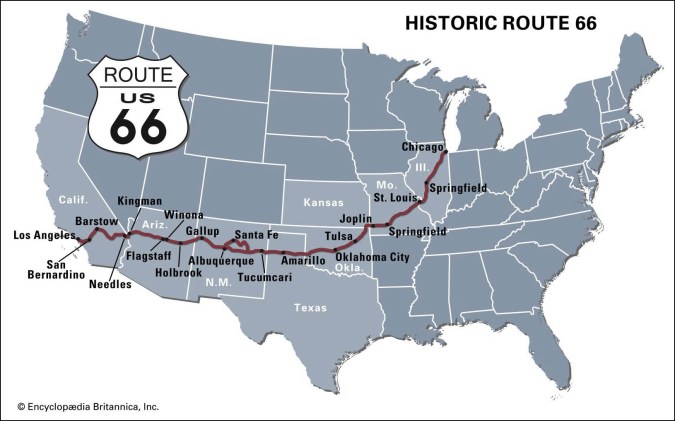
In Southern California, the highway followed much of the earlier National Old Trails Road. That route crossed the Mojave Desert from Needles on the Arizona border through Barstow and San Bernardino before ending at the Pacific Ocean in Santa Monica.
I think three American highways reward exploration more than any others:
- Route 66 — the story of twentieth-century America.
- The Lincoln Highway — the story of the birth of the automobile age.
- The Blue Ridge Parkway — the story of the American landscape and conservation.
Taken together, these three highways tell different chapters of the American experience: how we first learned to drive across a continent, how the automobile reshaped the nation, and how we came to preserve some of its most beautiful landscapes.
I’ve traveled all three. Living in Virginia, with the Blue Ridge Parkway winding through the nearby Shenandoah Mountains, I’ve enjoyed countless drives along its ridges. I’ve also driven portions of Route 66. Yet it is my own family’s story that connects me most directly to that highway’s history and to the larger story of the Great Depression.
During the 1930s, Route 66 carried thousands of families west in search of opportunity. After World War II, it became the highway of family vacations, lined with neon motels, diners, and roadside attractions. Then, as the Interstate Highway System bypassed town after town, Route 66 was transformed almost overnight into a symbol of a disappearing America. Few highways have experienced such a complete journey—from necessity, to prosperity, to nostalgia.
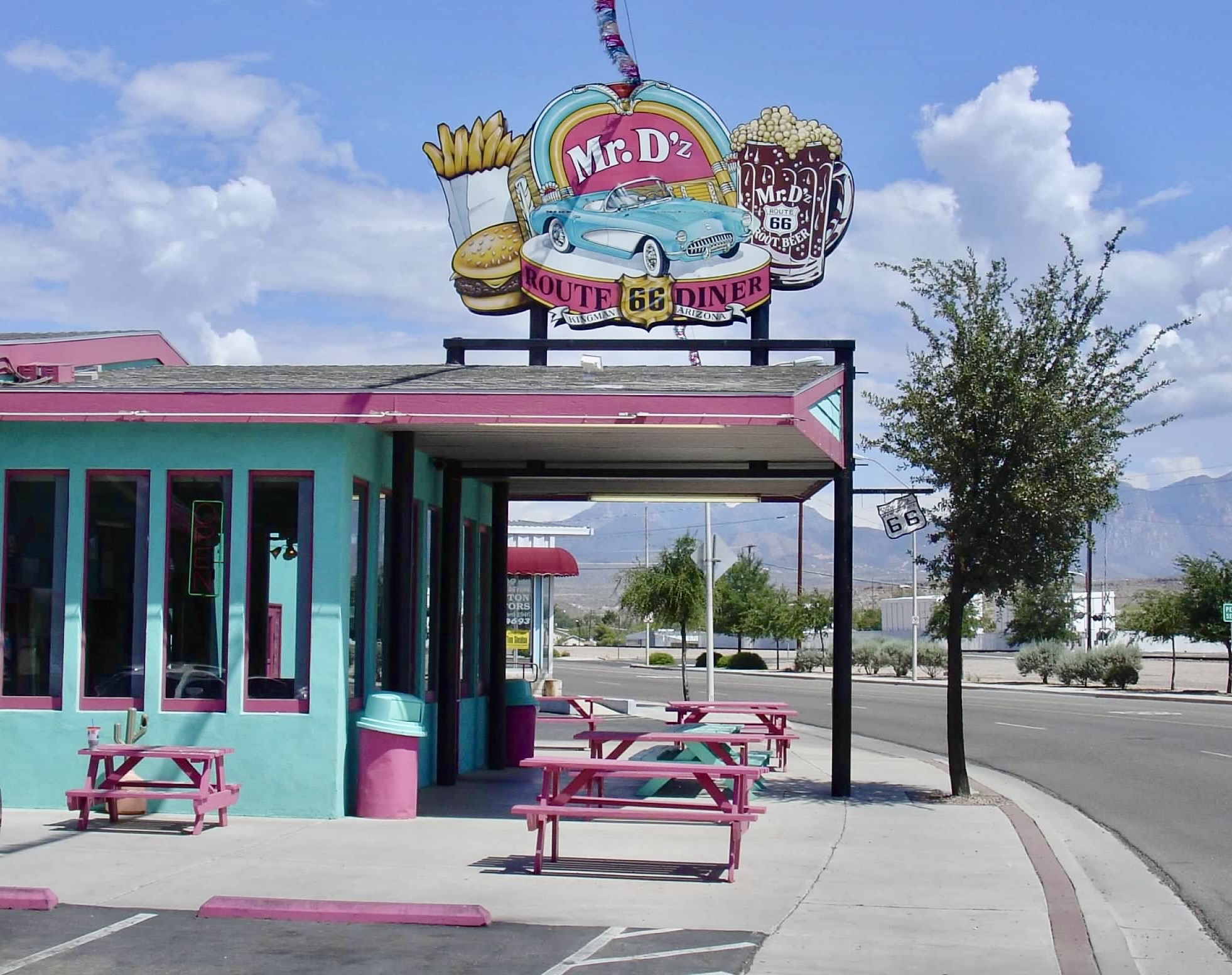
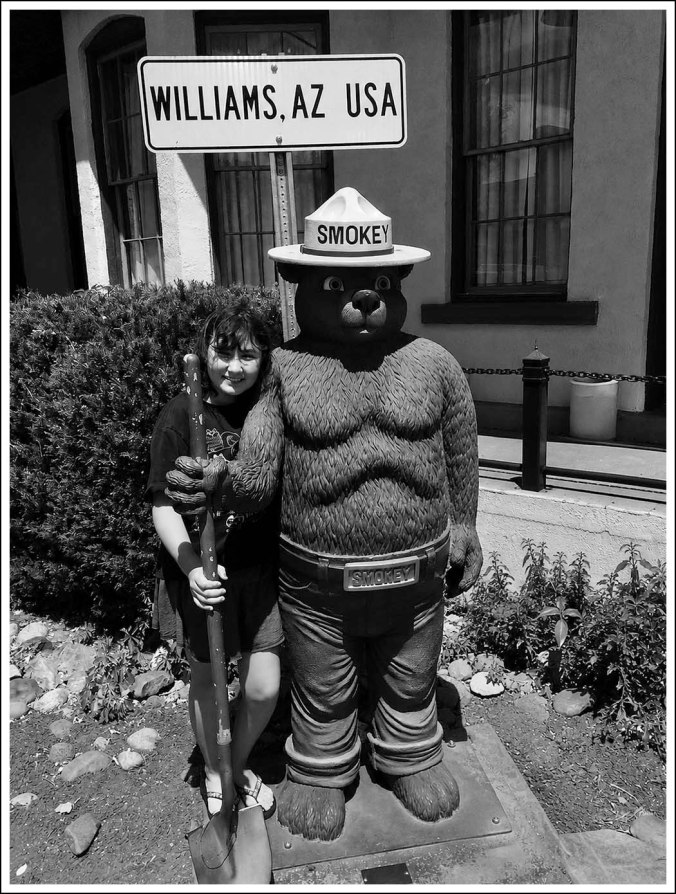
Several years ago, my wife, granddaughter, and I drove from Las Vegas to Williams, Arizona, on our way to the Grand Canyon. Along the way we stopped in several Route 66 towns, hoping to experience The Mother Road as it might once have been—or perhaps more accurately, as it has been lovingly remembered and recreated.
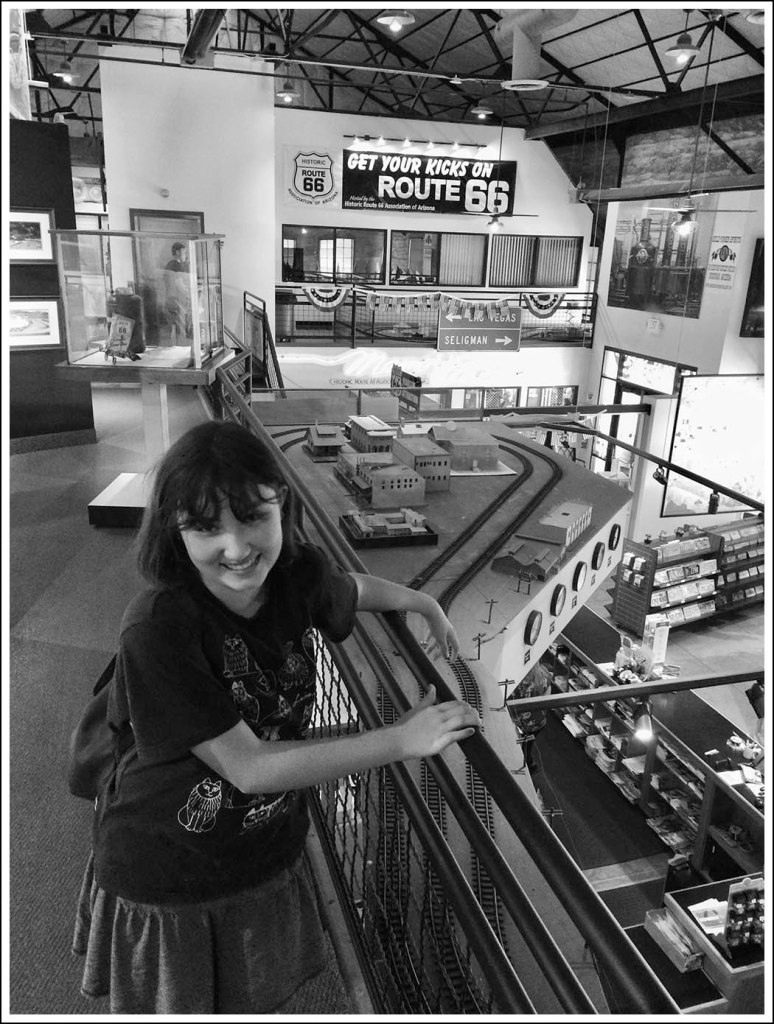
A roadside diner painted in turquoise and pink, a museum filled with vintage signs and memorabilia, small coffee shops, and family-run motels all helped sketch the outline of what traveling this highway must have felt like before today’s interstates quietly sidelined so many of these towns.
But my family’s connection to Route 66 reaches back much earlier.
In 1933, the California section of Route 66 had only recently been rerouted and fully paved. My grandparents happened to be traveling that highway at precisely the right—or perhaps wrong—moment. What began as a cross-country move ended with a baby being born in the middle of the Mojave Desert.
That unexpected stop tells a story of resilience, determination, and adventure.
An Emergency Stop at Wayside Camp
By April 1933, the newly paved Route 66 directed nearly all desert traffic through the tiny community of Essex, California. The Wayside Camp was the only formal roadside stop there at the time. It consisted of a handful of simple wood-frame tourist cabins, a modest café, a general store, and a service garage.
The buildings were captured in a postcard from the 1940s. I imagine they looked much the same when my mother’s family arrived on April 5, 1933, traveling from Colorado Springs to San Bernardino.
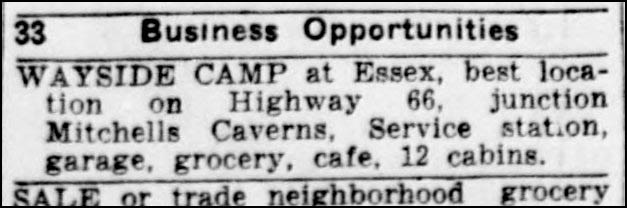
An Ad in the San Bernardino Sun from May 3, 1935.
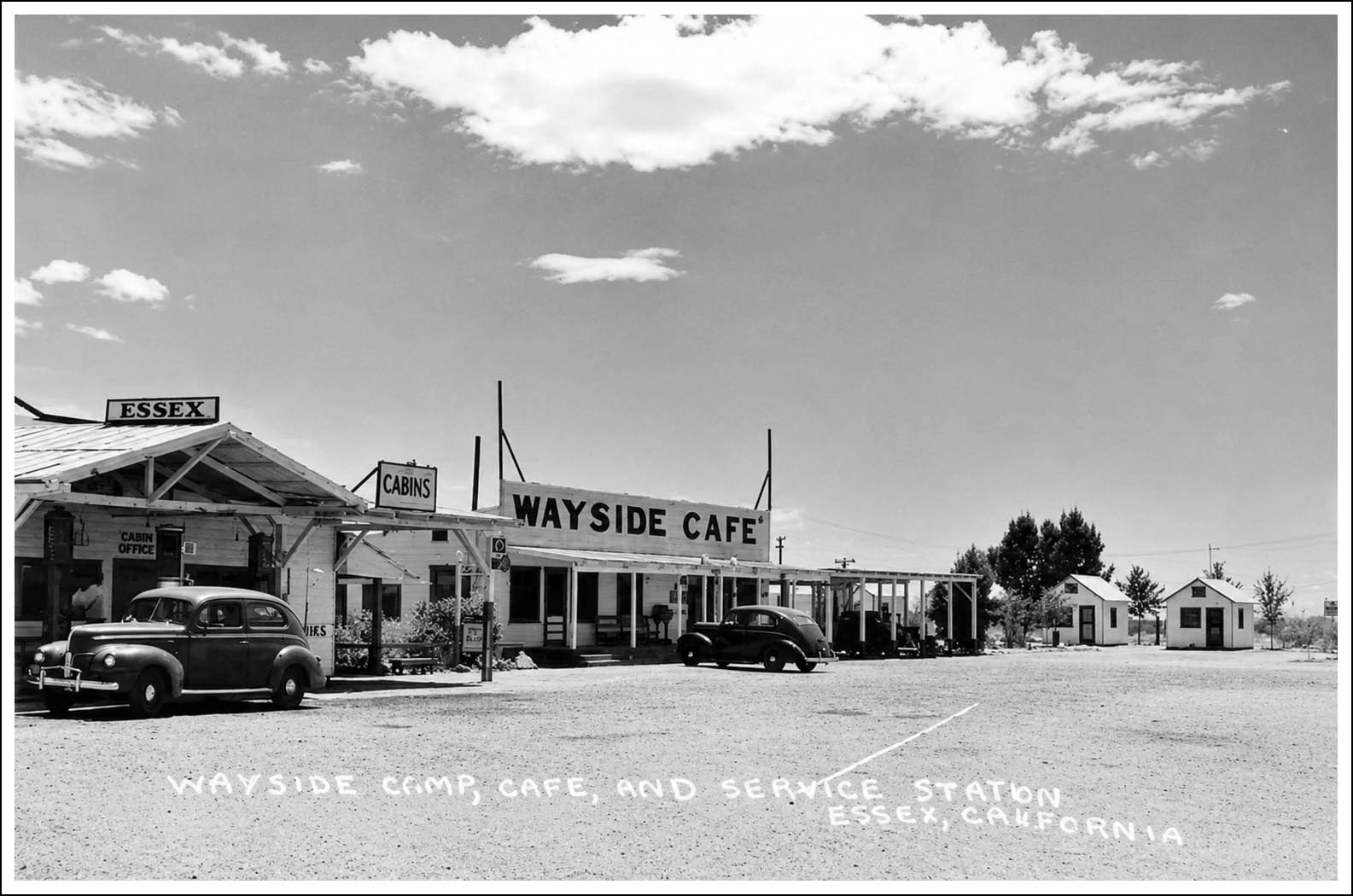
What you’re looking at
From left to right:
- The Essex service station with the large “ESSEX” sign on the roof.
- Cabin office where travelers checked in.
- Wayside Café, serving meals to motorists.
- A long covered parking area, offering shade for both fuel pumps and guest vehicles.
- Several tourist cabins, rented overnight.
This combination of gas station, café, and cabins was the classic roadside “motor court” that flourished before national motel chains appeared.
It was here that my grandparents stopped—not for convenience, but because circumstances left them little choice.
The Mojave Desert in April 1933 was beautiful but unforgiving. Roads were narrow, automobiles had no air conditioning, and thousands of families were migrating west during the Great Depression. The simple wooden cabin at Wayside Camp offered shelter and safety before the family would continue over the mountains into San Bernardino.
This is how Mom remembered that remarkable journey.
“Mother had inherited real estate in San Bernardino, and we moved in March of 1933. It was warmer there and she had family and property. Daddy was an electrician; had been a telephone lineman, climbing spurs and all. Could get a job anywhere, and did.”
“In my great Aunt Belle’s diary was this notation regarding Mom and her family: “When Orlo moved his family away from Colorado Springs to go to San Bernardino, Calif, she wrote ‘Quite an undertaking with the car, trailer, six children, goat with two kids, canary bird, and a cat and dog.’ Orlo’s caravan left March 15, 1933.”
“Neil (the youngest) was 18 months old . We had a goat and our stuff in a trailer, and the dog riding on the running board . And Mother pregnant. And six kids in (I think) a Rickenbacker. Shirley and I sat on jump seats that let down from the backs of the front seats. We had to sit out a sand storm in the desert on the way. Mother handed out raisins to us, one by one. I don’t know when we left Colorado, but we hit Essex, California April 5, 1933.”
For families with several children, the promise of steady work could outweigh the risks of relocating across the country. California had earned a reputation as the “land of opportunity.” Even during the Depression, it projected an image of abundance. A mild climate, productive farmland, and rapidly growing cities such as Los Angeles and San Diego offered employment in agriculture, construction, oil, and manufacturing.
At the same time, Southern California was experiencing an enormous expansion of its electrical infrastructure. For an experienced telephone lineman and electrician like my grandfather, moving west was more than a change of scenery—it was a smart career decision. San Bernardino sat at the center of one of the largest regional infrastructure booms in the country.
But before the family could begin that new chapter, there was one final, unplanned stop.
They had left Colorado with six children. When they drove away from Wayside Camp in Essex, California, they had seven. The newest passenger was my aunt, Dorol Elizabeth Willis, born that day in one of the small cabins beside Route 66.
For my family, Route 66 isn’t simply an iconic American highway.
It’s where our California story began.
Photo Credit:
Wayside Camp, Essex, California
Burton Frasher, Wayside Camp, Cafe and Store, U.S. 66 Essex, California, 1932
Photographic postcard, Frasher Foto Postcard Collection, Pomona Public Library