Zucchini, Really?

Like many people, the quarantine, stay-at-home, shelter in doors orders we have been living under for these past many weeks have caused disruptions we had never expected. Our work schedules have been disrupted, whether you have been furloughed or have adjusted to working online. Our recreation, family time, or even shopping for necessities have changed dramatically. In our own lives, one of the things that has changed, hopefully for the better, has been our meals.

While I have always enjoyed cooking and trying new recipes, I’ve never been much of a meal planner. We’ve always had ready access to a local grocery and farmers markets. I would shop every two or three days and plan meals based on what looked good, what was on sale, or even what I had seen browsing a magazine while sitting in my dentist’s waiting room. But plan and shop for a week or two in advance? Never happen.

So the first time my wife came back from our local Giant grocery and reported what she had found—empty shelves, bread aisles picked clean, meat coolers cleaned out— well I was shocked. And worried. What if this lasted for more than two or three days? Like many of us, I found that it was too late to stock up the pantry and freezer. If you hadn’t already been putting away that extra pound of hamburger or loaf of bread, well good luck friend. But we lived thru snowmageddon and blizzards before, power outages and hurricanes. Surely after a week, all would return to normal. We are still waiting for that to happen.

Which brings me to zucchini. Last week I stopped at our local international foods grocery, Lotte. One of the things I love about shopping there is the amazing selection of fruits and vegetables. So wandering the aisles, trying to keep my face mask on and pick up veggies using a plastic bag so as not to touch anything else, I filled my cart. Like a man liberated from a low calorie diet, I just grabbed stuff. When I got home, I had baby bok choy, plantains, Thai eggplant, scallions, garlic. And zucchini. 

But no plan how to use any of these foods. No menus, no recipes, just plastic bags full of my winnings. 

The bok choy and scallions ended up in a Korean meal with bulgogi (thank you Suki). Plantains became Puerto Rican pastelon. And the eggplant ended up in a casserole. But a week later the zucchini still lay in the bottom of my crisper. So two of them went into zucchini bread. That was easy. But the rest? What to do, what to do.

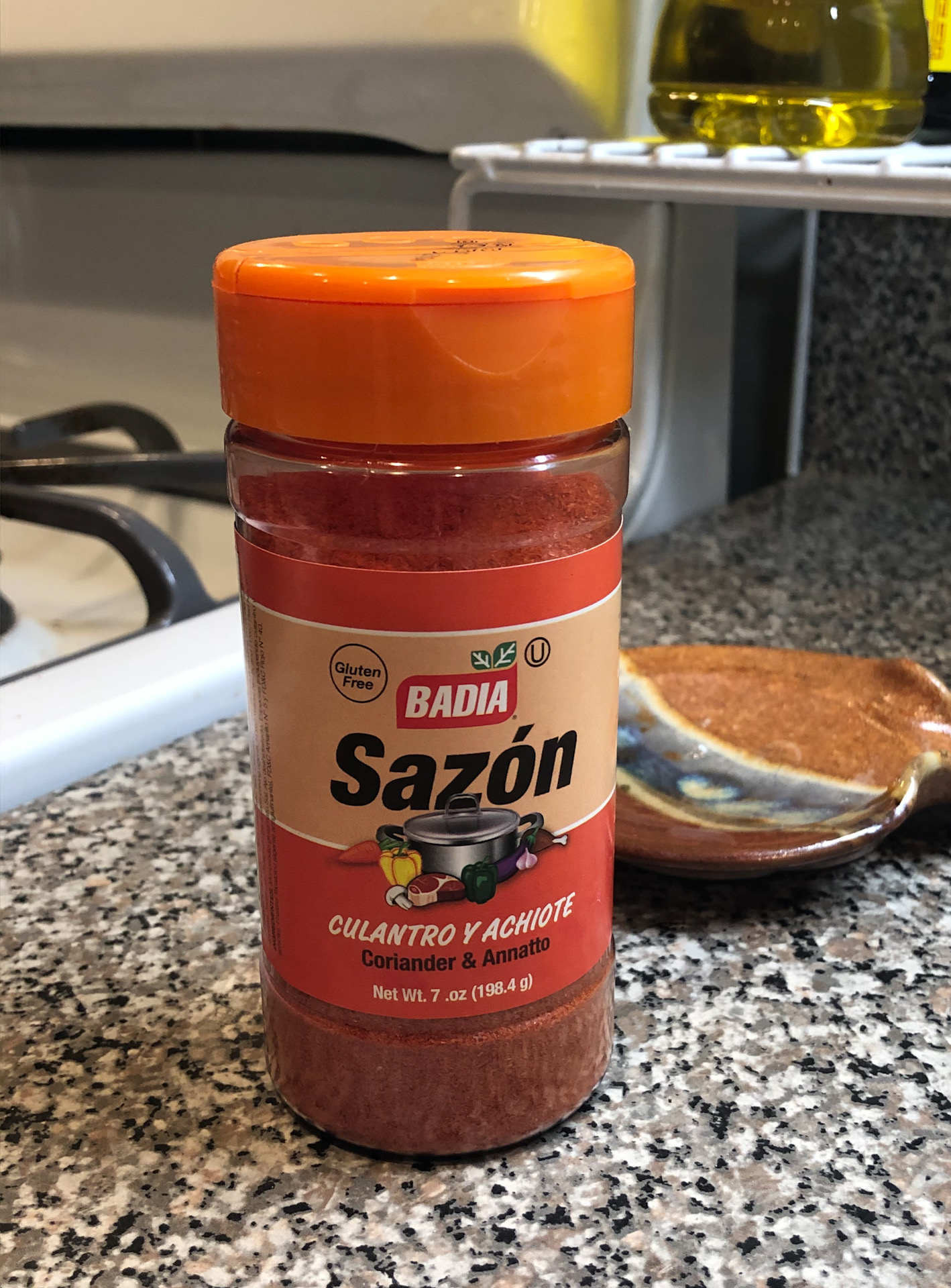
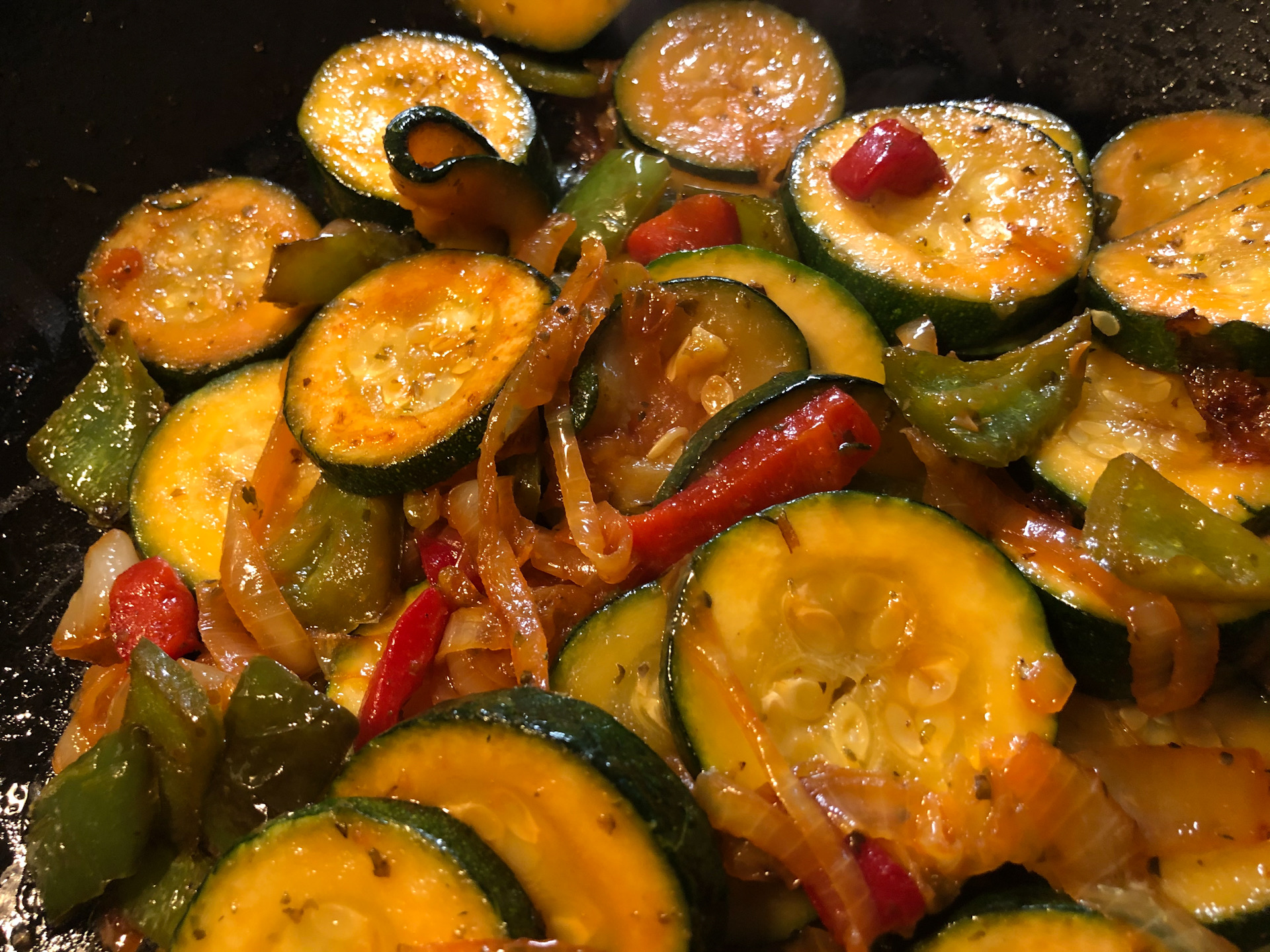
When I can, I reach back to my Dad’s cooking for inspiration. Nothing fancy, meat and potatoes kind of cooking, but he always had zucchini in the garden. And he always prepared it the same way, fried up with onion and green peppers. Which I had. So that’s what we had, though I’ve added seasonings that my Dad had never seen (and truthfully would never have used). And I like garlic more than he did. And I don’t think he ever bought olive oil. But still the same, here’s Dad’s fried zucchini with onions and peppers. Dressed up with pimientos and seasoned with Sazon.

Bueno provecho! Thanks Dad.


More Coffee, Please

I’m not really sure when I first starting drinking coffee as a beverage choice and not milk, or soda, or even water. “I’ll have coffee, please, cream and sugar if you have it.”  It probably coincided with late night trips to Denny’s or some other local stop that served breakfast at all hours, after a night of partying with the boys. It could have been when I would pour a cup from Dad’s percolator after it had just finished, before it had a chance to turn dark and bitter from sitting on the counter on a Saturday morning. 

I do know I was an avid coffee drinker in high school and would sit up evenings with my sister-in-law’s Mom and friends, talking about life and what it was like to work in Reno’s casinos before Reno became—bigger. There were small cafe’s and coffee shops in town back then but this was long before Starbucks invented four dollar lattes and drizzled caramel on everything. Coffee came in a cup—one size only, though occasionally you could get it in a mug. 

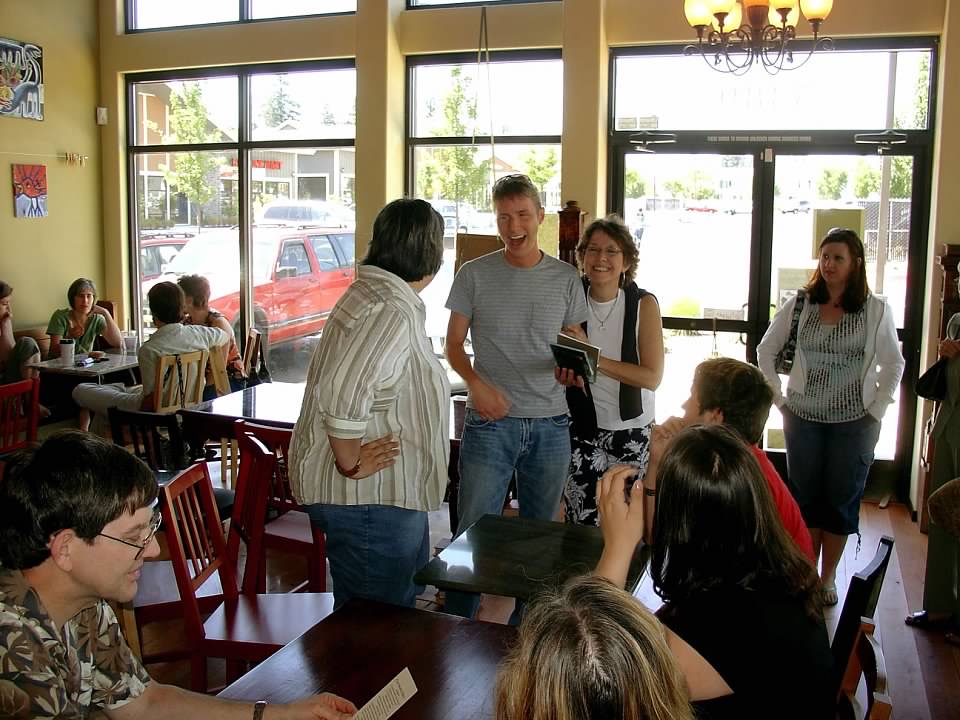
One of my life goals has always been to work as a barrista. I don’t know why: I have a terrible memory and couldn’t possibly manage more than one order at a time. So it was with a pride verging on envy that I learned one of our family friends had started a coffee shop out in the Portland, Oregon area. Deb and I had an opportunity to visit soon after they opened and it was everything I could imagine a neighborhood coffee shop might offer. Comfortable seating, warm sunlight pouring in, an eclectic mix of furnishings and really nice staff, people who talked to you with more than a “got it” when you placed your order.

Insomnia Coffee Company, July 2007

Thirteen years later and Tyler, Evan and the crew now have five shops in the Hillsboro—Beaverton area. I’ve been to all of them, I make it a point to stop by at least one when we travel to Oregon, and I couldn’t be prouder of them. I’m partial to their shop in Cannon Beach but it could just be that the view makes the coffee taste even better. The times we are in now have been hard on everyone, especially small business owners. But knowing these guys and their commitment to the community, and coffee, I think they are going to come out of this even stronger. When they do, I’m ordering a coffee, make that a latte. A large one. 

I think Tyler was surprised to see us!

If you are in the Hillsboro area, stop by and support this local business. And you can always order their coffee online. http://insomniacoffee.co

Cooking by Color

One of my favorite local restaurants has a dish that I just love: Hong Kong-style sea bass served over spinach with rice. But it isn’t a plate that will travel well as take out; and besides, a great part of eating out is enjoying the restaurant ambiance. What can I create at home that might be similar?

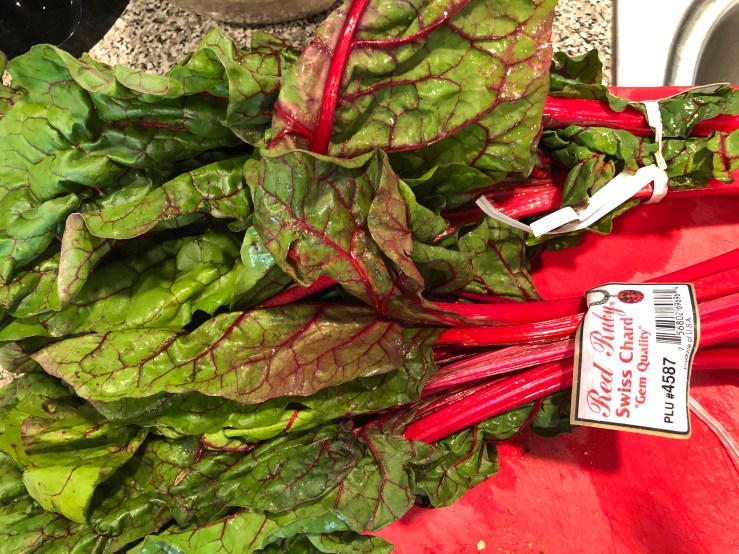
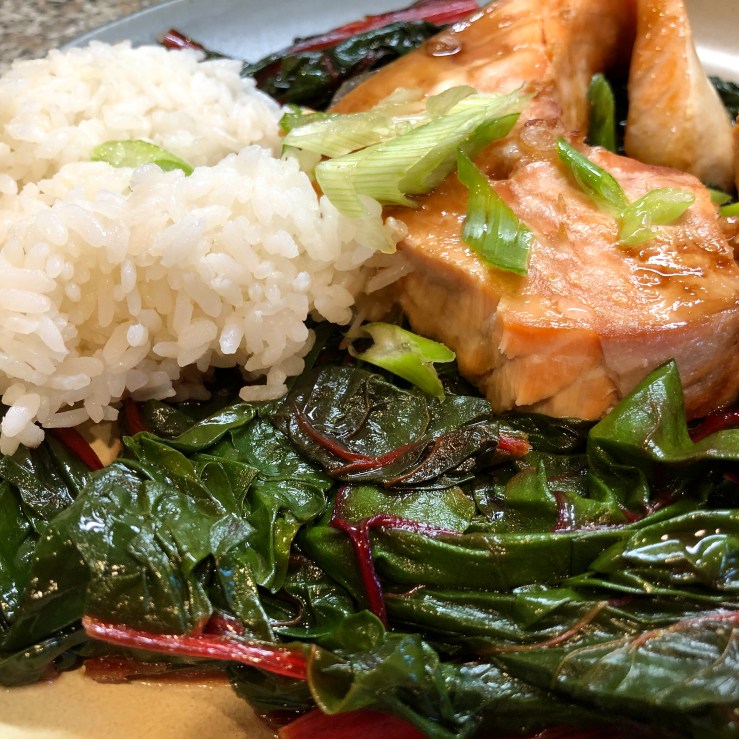
I found fresh salmon steaks at our local market. In the produce department they had a Swiss chard that I’ve never tried before, ruby red and absolutely gorgeous. Would it be possible to create a variation on their dish? Why not try? Salmon is quite a bit more affordable than sea bass and I love how easy it is to cook.

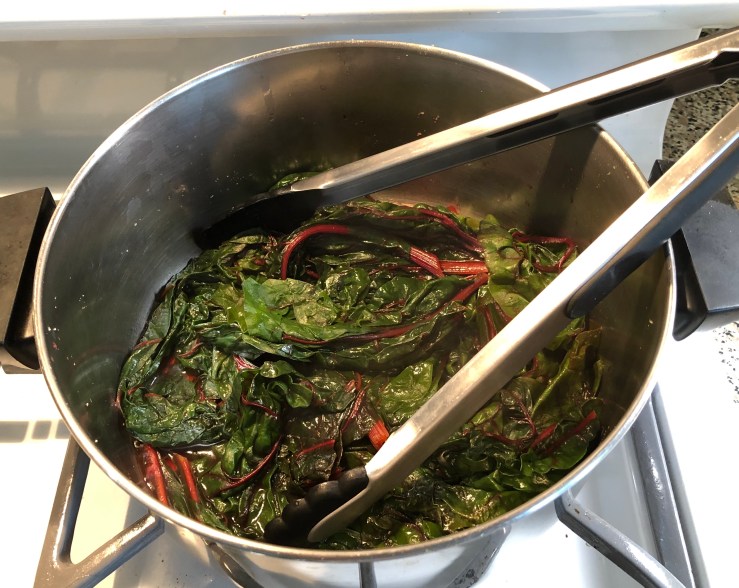
Incredible color, so crisp the stalks nearly snap off. After washing, into the pot with a bit of sesame oil, garlic powder, and ginger powder. High heat, then cover and set on low heat until the leaves cook down.

It always surprises me how much volume these leafy vegetables lose on cooking. Two bunches were plenty for four people. The sesame oil and ginger give a light Asian feel to the dish that I find appealing and a change-up from my usual “cook it with bacon” approach.

Two salmon steaks marinated in teriyaki sauce for 30 minutes. Cover with foil and bake for 30 minutes at 350. I’m a big fan of garlic so these got an extra sprinkle.

Teriyaki salmon served with ruby red chard and rice. And to keep the color theme going, strawberry shortcake for dessert. Enjoy!

Discovering Family Recipes

Lately I’ve been on a sort-of comfort food quest. I suppose it has a lot to do with all of us being quarantined, our typical schedules disrupted and travel restricted. Usually when I’ve got an urge to try something new for dinner, we just get on Yelp and see what’s near us, what looks good and go.

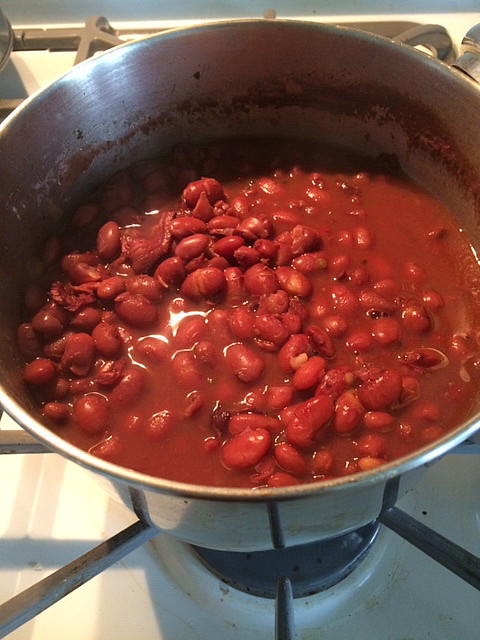
These are different times and I really do prefer to try and make it at home rather than ordering curbside pick up or delivery. With that thought in mind, I’ve been in search of recipes from my wife’s Puerto Rican heritage, either foods her Mother used to make, or dishes we have enjoyed on our visits to the Island. This week I tried my hand at another family favorite, Pastelon. It’s  essentially a layered dish similar to a lasagne, though made with plantains, accompanied by red beans and rice.

I’ve acquired several cookbooks of Puerto Rican cuisine thru the years, the one I turn to most often is Puerto Rican Cookery. But like many guys with only rudimentary kitchen skills, I prefer a cookbook with more pictures, and definitely fewer steps to success. So I’ve turned to the internet, especially YouTube videos for a little help in the kitchen. From making mofongo with shrimp, to pasteles and now pastelon, these often-home-made videos are just the thing for a guy with a short attention span.

Another quality I’ve appreciated about this online cooking resource: I like recipes that feature process over precision. Too many measured ingredients, finessed or tricky processes aren’t for me. “Salt to taste” or “cook for about 45 minutes” are my strengths.

So, for your consideration, my picture-book recipe guide to pastelon. With a few brief explanations as needed. Let me know how you like it in the comments below.

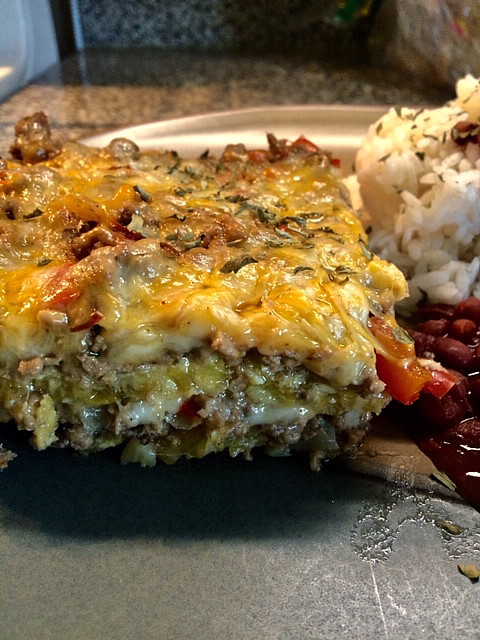
For the picadillo, simmer bell peppers and onions, then add ground meat (I prefer ground pork) and plenty of Adobe, sofrito, oregano for aromatics. This dish is all about the contrast between the sweet plantains and the savory meat layers. Red beans and rice are a great accompaniment. For this size of dish (9″x 9″ baking pan) I used four ripe plantains.

Slice the plantains and fry until golden, drain on paper towels, then start your first layer. An egg wash will help bind the ingredients. Similar to a lasagne, I layered grated mozzarella cheese over the meat layer.

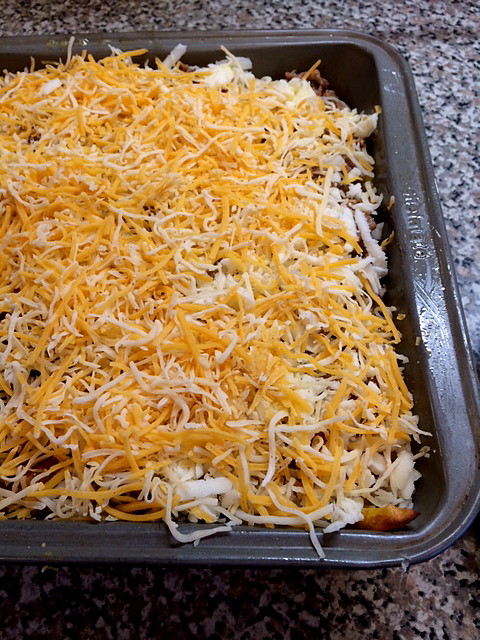
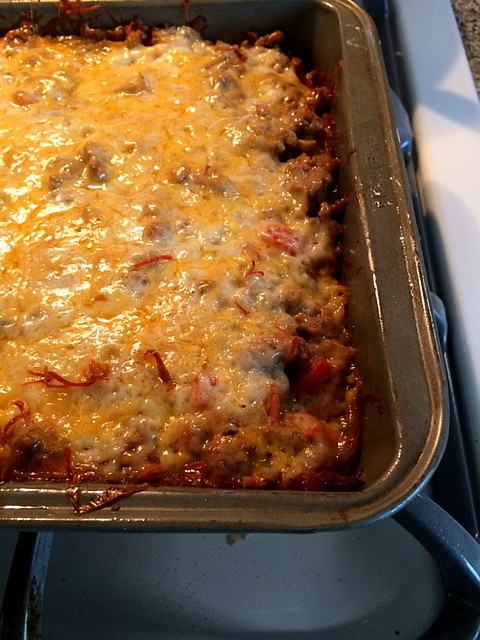
A layer of plantain, egg wash, a layer of meat, and then a layer of cheese. Repeat for a second layer. I topped off with mozzarella and grated cheddar cheese to provide a little color. Bake at 350 degrees for about 45 minutes.

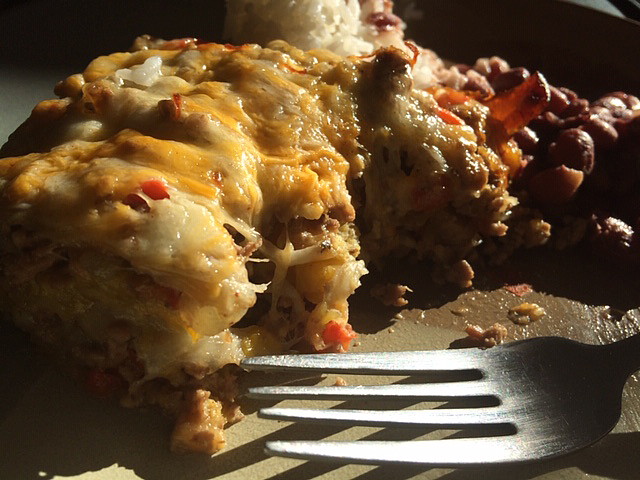
The final dish, served with the red beans and rice, is incredibly satisfying. It was more work than I had expected, which might explain why Yolanda only prepared it on special occasions. The aroma of sweet plantains and I’m longing for another visit to Puerto Rico. Enjoy!

If you enjoy YouTube cooking videos, here is the link to the one I watched. https://youtu.be/Ri-U8-95CG0

An excellent cookbook, I highly recommend Puerto Rican Cookery, by Carmen Aboy Valldejuli

We’ve Been Through This Before

For the past three weeks I have been house-bound, self quarantined would be today’s expression, not from any result of Corona virus but as I recover from knee surgery.

During that time, I have tried to follow online the progress of the US response to increasing numbers of afflicted individuals and communities across America. School closures, limiting the size of groups, church worship services going to online streaming rather than meeting in person, work schedules allowing for telework, and job loss: all of these have affected our family as well as countless families in our communities.

But what has struck me personally have been the food shortages at our local grocery. While the President has urged Americans to use restraint, not to hoard, that there is plenty of material in the supply line, it still seems as if many of the items we put on our shopping list are not available. Who would have thought that, along with toilet paper, there wouldn’t be any ground beef or milk, let alone bread, in the grocery aisles?

WWII rationing from The Ames History Museum. https://ameshistory.org/content/world-war-ii-rationing-us-homefront

Which in turn got me thinking of rationing and the days during World War 2 and America’s response during that time period. The Greatest Generation stepped up with a resilience I’m not sure we are seeing yet in our people. While President Trump has said that we are in a war with an invisible enemy.


“I do, I actually do, I’m looking at it that way,” Trump told reporters during a press briefing at the White House when asked whether he considered the U.S. to be on a wartime footing. “I look at it, I view it as, in a sense, a wartime president. I mean, that’s what we’re fighting.

“To this day, nobody has ever seen like it, what they were able to do during World War II,” he continued. “Now it’s our time. We must sacrifice together, because we are all in this together, and we will come through together. It’s the invisible enemy. That’s always the toughest enemy, the invisible enemy.”

https://www.politico.com/news/2020/03/18/trump-administration-self-swab-coronavirus-tests-135590


I asked my Mom, who was 12 at the start of WWII, what she remembered about the time, especially how food rationing would have affected her family. Her responses really had more to say about the change in America over the past 70 some odd years than any individual shortage of TP.

“We were not allowed to read newspapers nor listen to the radio. What money I made baby sitting and house cleaning for other people, Mother kept. She did send me to the store once  to buy Snowflake Soda Crackers for 31 cents.  I know leather was rationed, but we only got one pair of shoes a year, so that was no problem.  Meat was rationed , but we could not afford it anyway, sothat didn’t affect us. We had cows, so lots of milk;  we had chickens so we did have chicken on Sunday; usually with a soldier or two, or sailors.

The Arrowhead Springs Hotel in the foothills beneath the big bare arrow head on the mountain had been turned into a naval hospital.  Mother would call the USO and have them send a couple of guys out for Sunday dinner.   And we had plenty of eggs.  Mother did not tell us what anything cost, nor whether it was difficult to get anything.  We didn’t go shopping; Mother made most of our clothes…at least  the girl’s.

Mom (third from right) with her siblings.

I don’t think we were affected all that much by the rationing.  We got hamburger and made spaghetti…big pots of it.  We grew vegetables, had a small orchard of fruit trees, orange and lemon and a few others. (They were living in Southern California at the time.)

From the time I was about eight, we had dancing and music lessons; we sang in the children’s choir at church, played in the children’s orchestra on Wednesday at the high school, and on Saturday at the high school during the summer.  We belonged to the Y, and had library cards. We were really very busy.” Lora Lea Willis Chamberlin

For an interesting perspective on rationing during that time, take a look here: https://ameshistory.org/content/world-war-ii-rationing-us-homefront

We Met a Neighbor

We met one of our neighbors over the weekend. Which, on the face of it, shouldn’t be that unusual. But we’ve been in our townhome nine months now and so far we’ve only met the couple who lives next door to us. And that was only after I knocked on their door to offer our parking place (they appeared to be planning for a party, which turned out to be a baby shower).

When we moved into the culdesac of townhomes, I was certain we would soon get to know all the neighbors. After all, being retired I’m home most of the day, I walk up to get the mail at the community mailbox, I take the trash out twice a week. Surely we would be getting to know our neighbors soon, even if this is a community in which everyone seems to work during the day.

Our previous home was a single family split level in a small community. For a time I had served on the Home Owners Association. Whenever there was a major snow storm or other weather-related event, the neighbors would all be out either shoveling driveways and sidewalks, or walking thru the neighborhood looking for storm damage. And as an association member, I met a lot of people at our community festivals. It seemed natural to me then that we would soon know everyone in our new community. Not so.

Deb and I were napping in the living room when I heard a knock at the door. We have a doorbell so I just ignored the sound. But a few minutes later, they nocked again, a little louder, a bit more insistent. Since I’m not very mobile while recovering from surgery, Deb had to get up and check the door. She was met with a woman standing there holding several plastic bags, her purse, and something covered in a dish towel. 

Allison, our neighbor three doors down, explained that she had been wanting to meet the “new neighbors” for sometime now but hadn’t found a convenient time. She explained that she hadn’t seen us for several days and thought perhaps something was up? 

Dish towel

But this really floored me: she handed us a fresh-baked loaf of sourdough bread, carefully wrapped in a towel, as a “welcome to the neighborhood” gift. Who does that anymore? I asked if she was from the Midwest but she said no, from the Seattle, Washington area. That explained the sourdough bread, which she explained was her “go-to” bakery gift item. My favorite, I exclaimed!

She stayed for twenty minutes or so, we learned about their family, shared about what drew us to the area and why we were downsizing, and expressed how we hoped to be better neighbors. 

We got a chance to really meet a neighbor, and as life would have it, they are getting ready to move. 

The second is this: ‘Love your neighbor as yourself.’ There is no commandment greater than these.” Mark 12:31

Reaching Across the Decades

Leafing thru my worn copy of The Joy of Cooking cookbook, I came across a recipe from my step mother I had stuffed in there years ago. I seldom even use the printed cookbook anymore; like many people these days I search for recipes online. But there it was, a relic as it were from the distant past, her offering to me for a holiday long ago.

Recipe
Dorathy Hilbig’s recipe for Banana Nut Bread.

What was intriguing to me, apart from the fact that it’s over 30 years old and written on one of those preformatted recipe cards that you keep in a file box, was what she had written on the back of the card.

After the paragraphs of ingredients and cooking instructions and notes on what baking pans to use, she leaves me these final words. “If you have a microwave oven, butter a piece and warm it for 10 or 15 seconds—delicious!!! at least that is what your Dad claims—I don’t eat such goodies!!
To this day I am still amazed that she thought of a way to make my holidays special, home-made if you will, by sending me something she couldn’t even enjoy. It’s a gift that has only grown better with time.

Two loaves of banana nut bread
Two loaves of Banana Nut Bread
Banana Nut Bread

But we have this treasure in jars of clay to show that this all-surpassing power is from God and not from us. 2 Corinthians 4:7

Enjoying the Holidays

One of the advantages of having recently moved to a new area, is the opportunity to get out and explore what there is for shopping, dining, recreation and more. Practically everywhere we go, every restaurant or shop, is new for us. In some ways it’s like being on vacation, only you get to return if you find a place you really want to try again.

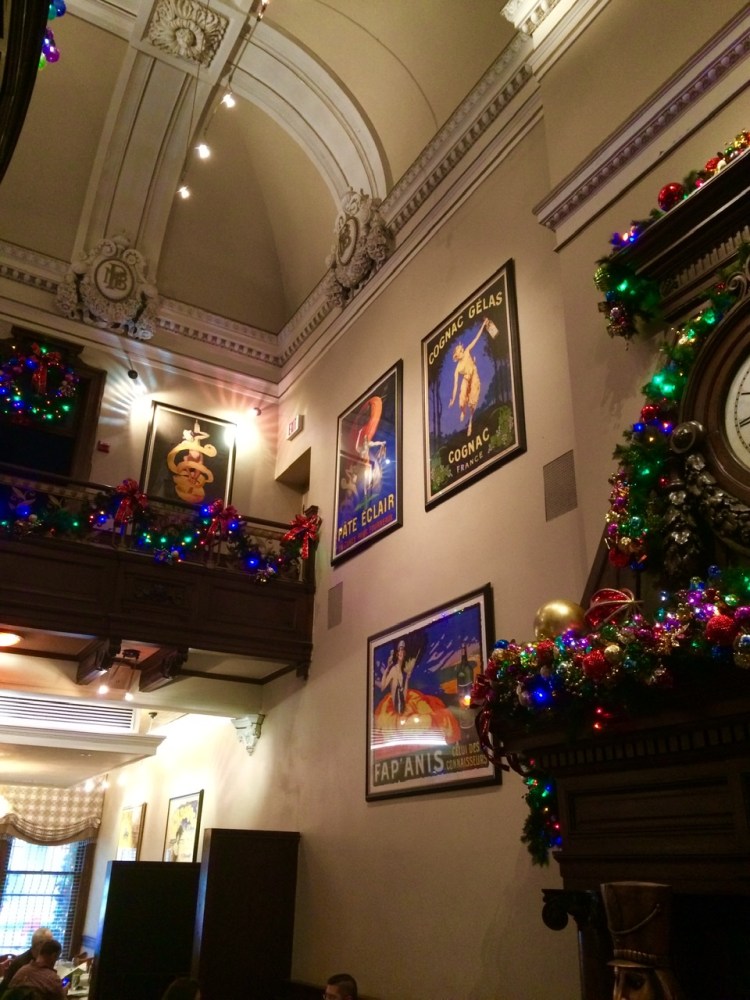
The holidays are an especially good time to try a new place. In the historic old town area of Leesburg, shop owners and dining establishments have gone full out decorating for the season. Whether urns filled to overflowing with evergreens, pine cones and such, or bountiful swag draping a fireplace, the town and her businesses are decked out and ready for their close up.

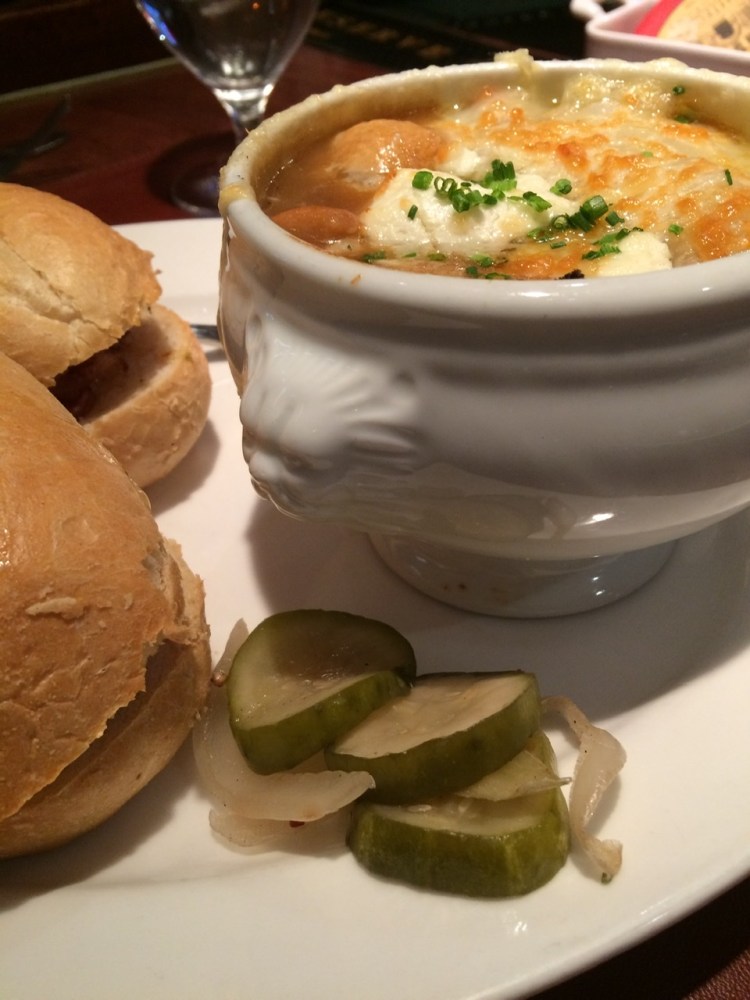
A break in our #shoplocal expedition gave us time for lunch at Lightfoot Restaurant. A hot drink from the bar and the soup and sandwich combination (pumpkin-apple soup with raisin pecan grilled cheese sandwich) were perfect on a cold winter day before Christmas.

A quick stop at Brick and Mortar Mercantile on S. King Street was a blast. This vintage-meets-modern shop had a lot going for it, including their name. And it fit our #shoplocal purpose. I love this descriptive phrase of their’s: we strive to provide you entertainment and an excellent customer experience by offering a non-click and human interactive way to shop. Yes please! We walked out with a number of gifts for family and expectations of returning soon.

King Street in Leesburg, Virginia