Back to Work, Ozians!

Admittedly I haven’t read the books. So that’s an awkward place to start. But I have to wonder about “world-building” in these new movies. Movies, sequels, prequels, adjacent, streaming, stage play, stage play into a movie, all of that.

For me, I think it began with the Hobbit, followed up with reading the Lord of the Rings; which became a series of movies (six movies from four books, imagine that). The Wizarding World of Harry Potter spawned a complete set of movies, theme park, then a stage play, and now a series on HBO. 

My question has always been about the details: are these created fictional worlds filled out enough to sustain multiple iterations and new storylines, remain faithful to their source material, and still be entertaining? or at best, even plausible reality?

Frank Baum created a series of 14 full-length novels that tell the fictional history of the Land of Oz. That is quite a universe to explore. I’m tempted to pick up the first novel and see where all of this started.

Gregory Maguire wrote the book Wicked: The Life and Times of the Wicked Witch of the West,  published in 1995 and turned into a very successful stage musical and now a two-part movie. There are an additional three books in the reimagined OZ Universe by Maguire. In 2025 Maguire published a true prequel to Elphaba’s story, Elphie: A Wicked Childhood: This 2025 prequel details the early life of the character, Elphaba and is set 30 years before the events of Wicked

There has been recent online discussion (here) of Universal Pictures exploring additional movies set in the OZ universe. Though I found the saturated coloring of the sets designed by Nathan Crawley to be eye-popping in the first movie (more muted tones in the second), the Art Deco inspired Emerald City was off the charts! The more art nouveau inspired buildings of Munchkin land at least looked like they had been built by the people who lived there.

But all I could think of was, “who built this place? How does it run? Do they use electricity, or some kind of magic?” Folks are dancing across the stage in fitted costumes: they couldn’t possibly be the working class? Who are they? What do they do? Who keeps the lights on, works in the sanitation department, or runs their mass transit system? I can’t wait for more stories from the Oz Universe, hopefully we will get a glimpse behind the curtain of how it all works!

A Singular Vision

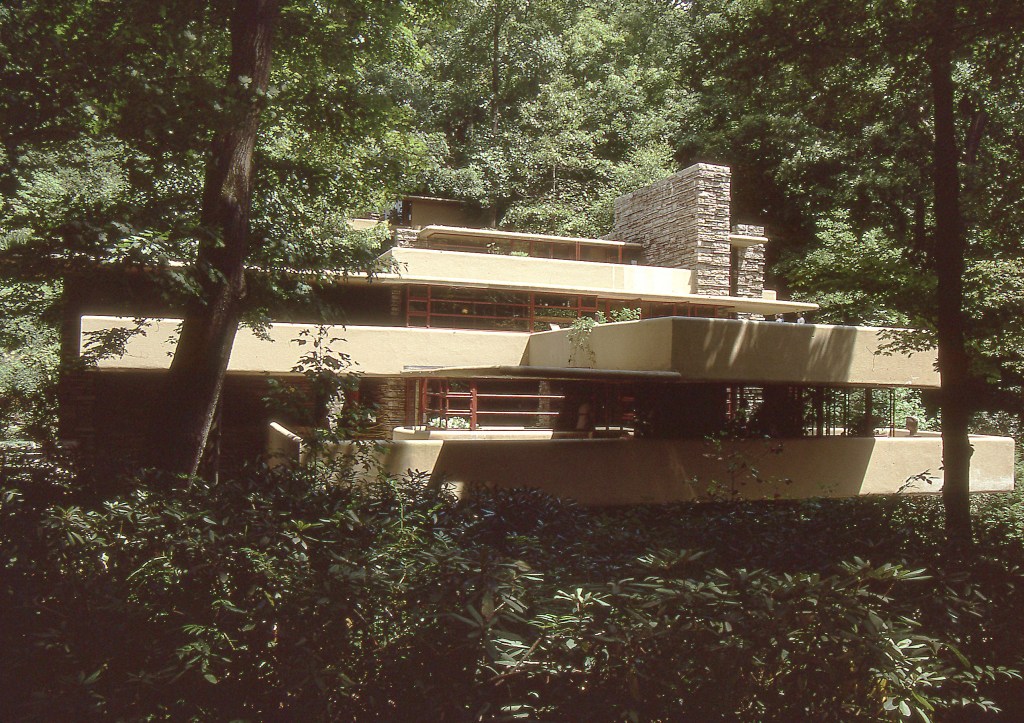
I’ve always appreciated the singular artistic vision of architect Frank Lloyd Wright. After looking through examples of his early work, primarily residences in the Midwest, I was struck by his embrace of modernism over then contemporary building styles. I had toured Fallingwater, the 1937 iconic summer retreat of Edgar and Liliane Kaufmann at Bear Run in Pennsylvania many years ago. Built in 1937, Fallingwater is perhaps one of the best examples of Wright’s mature style and his desire to merge the built environment with nature. 

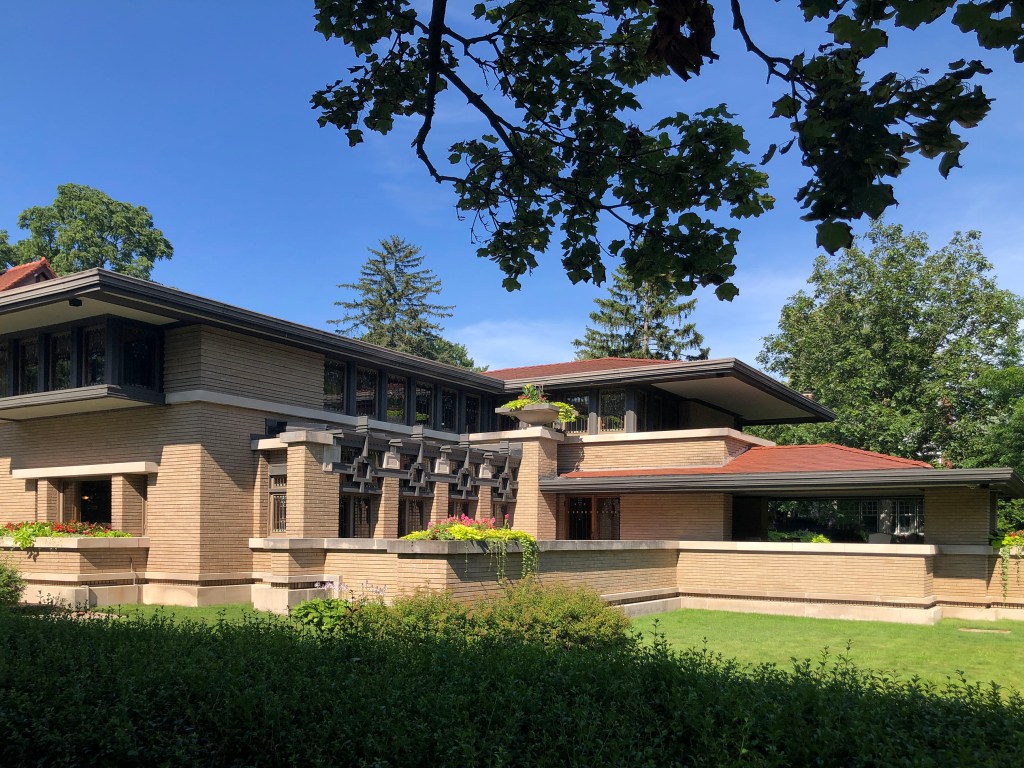
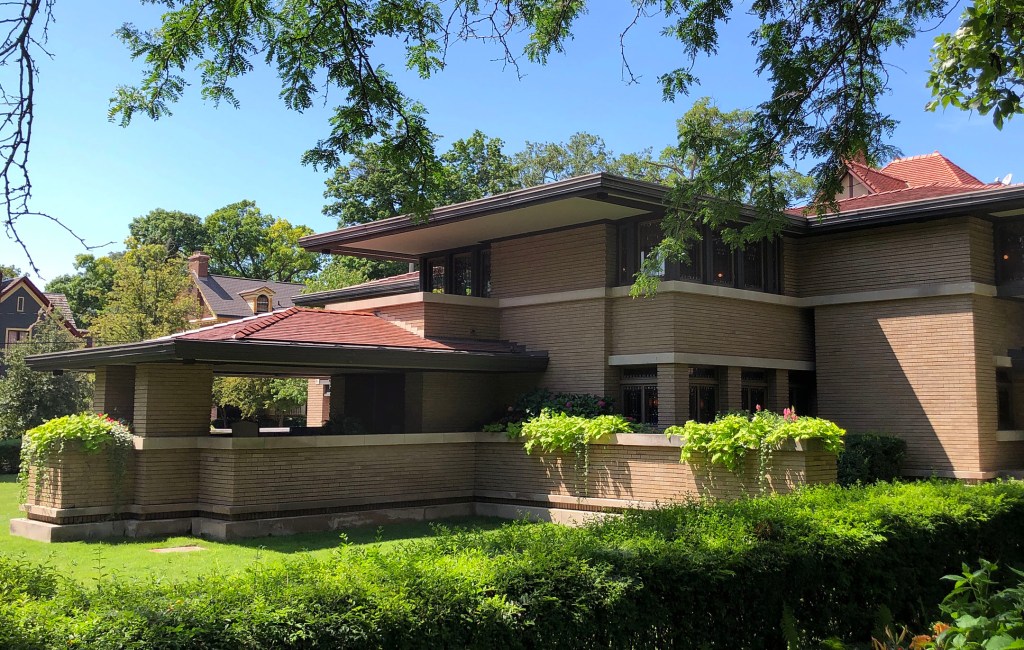
The summer home of Grand Rapids businessman Meyer May and his wife Sophie that he designed and built in 1908-09 is a great example of Wright’s style as it transitioned during the early part of the 20th century. Settled into the community on a street corner, surrounded by other grand homes in the prevailing Victorian and Italian revival styles, his brick prairie-style home, nearly devoid of exterior ornamentation, seems peculiarly out of place. And indeed, our tour docent recounted how his children felt picked upon because they “lived in the weird house.”

The home is a grouping of rectangular volumes and piers, with low pitched roofing and deep overhangs. Unlike the red metalwork of Fallingwater, the copper metal trim work here is a dark brown color throughout that contrasts with the sand-colored brick and limestone. Though perceptably a minimalist structure, it seems to me that the exterior moldings, especially those over the dining room windows, recall Japanese motifs. The overhang on the eaves bears a similar appearance to Japanese pagoda rooflines. Wright had visited Japan in 1905 and his love of Japanese woodblock prints is well documented. According to one website, he first visited the country in 1905 and created an extensive photographic record. No doubt some aspects of his designs going forward incorporated those interests. 

While the Arts and Crafts Movement of the late 1800, early 20th Century anchored his initial designs, it seems that his stripped down mimimalism and incorporation of Asian design motifs (not to mention Native American) really took hold after 1910s Frederick C. Robie House in Oak Park. Again the long, stacked verandas recall the beautiful cantilevered trays of Fallingwater though constructed from brick rather than concrete. Each design features enclosed spaces, whether grand or intimate, that open up from or are connected with other spaces. The effect is a dynamic of seclusion and revelation.

From the Frank Lloyd Wright Trust, “In his design (of the Oak Park Unity Temple), Wright abandoned the use of traditional church features of tower, steeple, and nave, creating a “noble room” in which man could reflect upon God.” This approach to ecclesiastical design has had a profound influence on modern church design, for example the church we attend here in Northern Virginia and built 115 years after Unity Temple.  

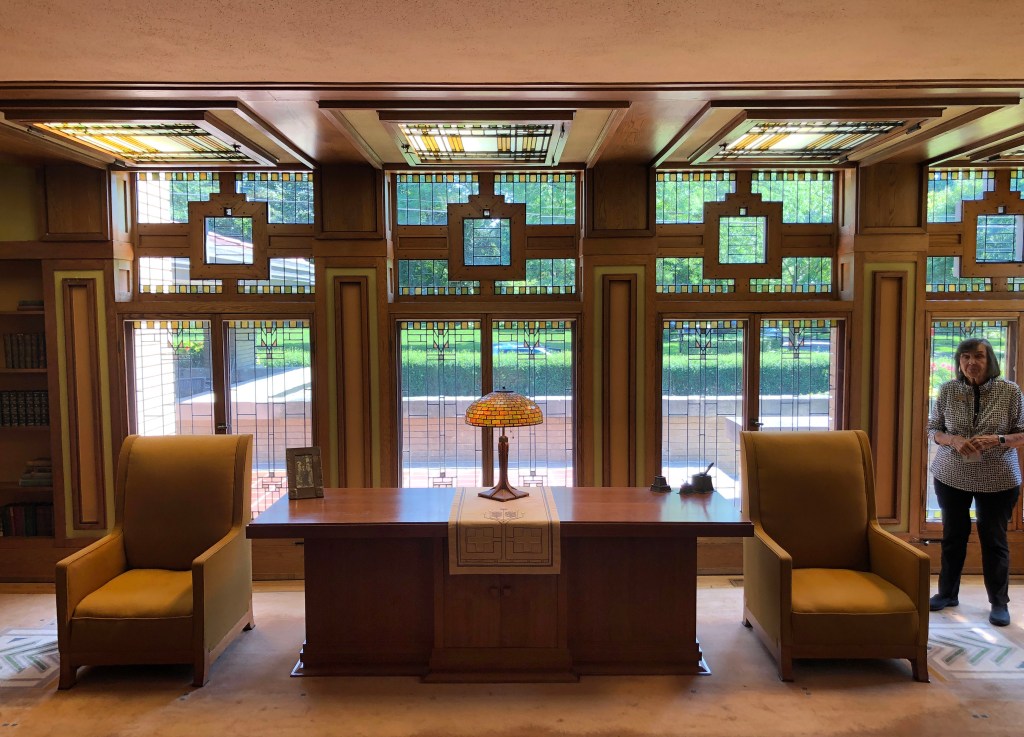
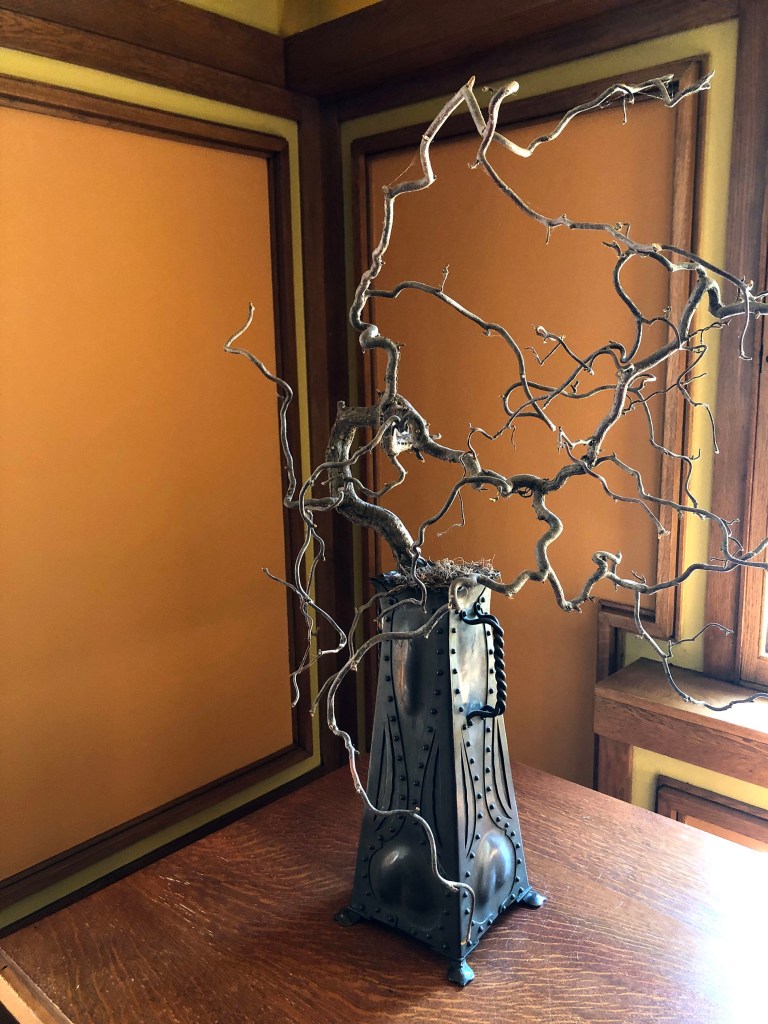
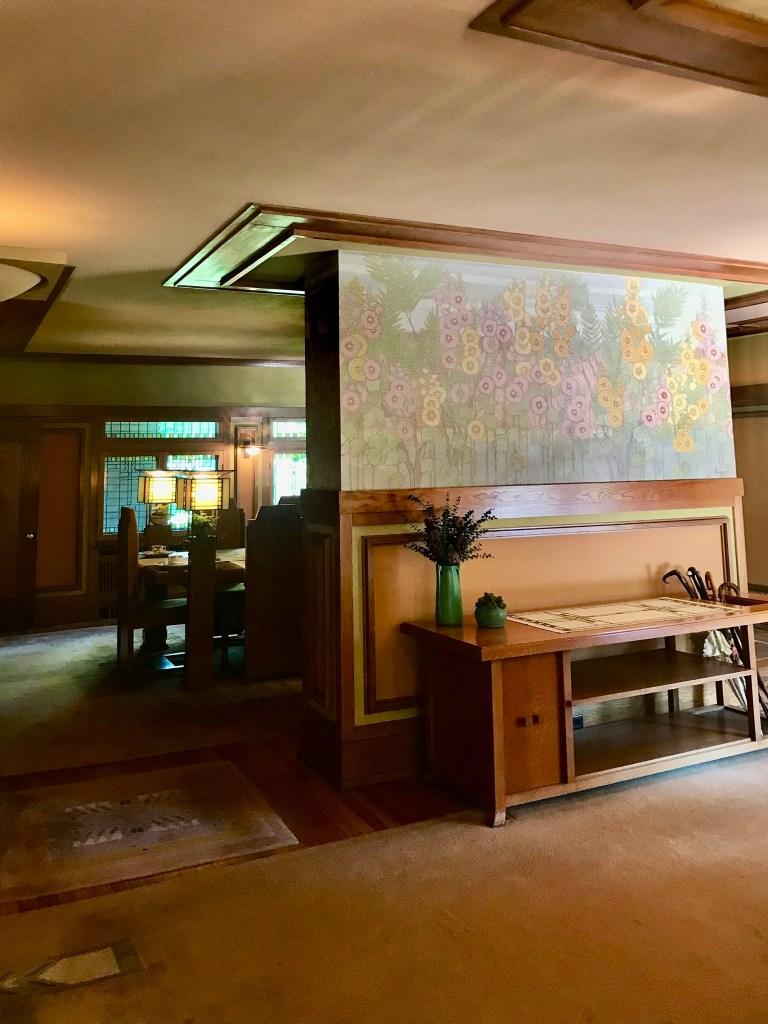
Wright’s pursuit of harmony: exteriors and interiors, ornamentation and furnishings all working together represents an individual who gave attention to details as well as the grand vision. While I personally felt that the Meyer May house showcased too much of the designer and virtually nothing of the home’s owners, his cohesive design can’t be ignored. Everything from carpets to wall colors, woodwork to windows complements each other. Motifs and materials are repeated throughout the building and nothing is placed by accident or without regard to the overall design scheme. 

In 1987 Steelcase, the present owner of the Meyer May property, restored the home to it’s original design (along with removing a later building addition) and sourced either original or replicated furnishings of the time period. It remains a stunning example of one man’s creative vision, though I saw only a few photographs and personal possessions reminding us of the family who had lived there for 27 years. We browsed the gift shop before leaving, of course, and brought home a pair of FLW decorative mugs to commemorate our visit, a tribute to one man’s genius.

Meyer May Merchandise

Faires and Festivals

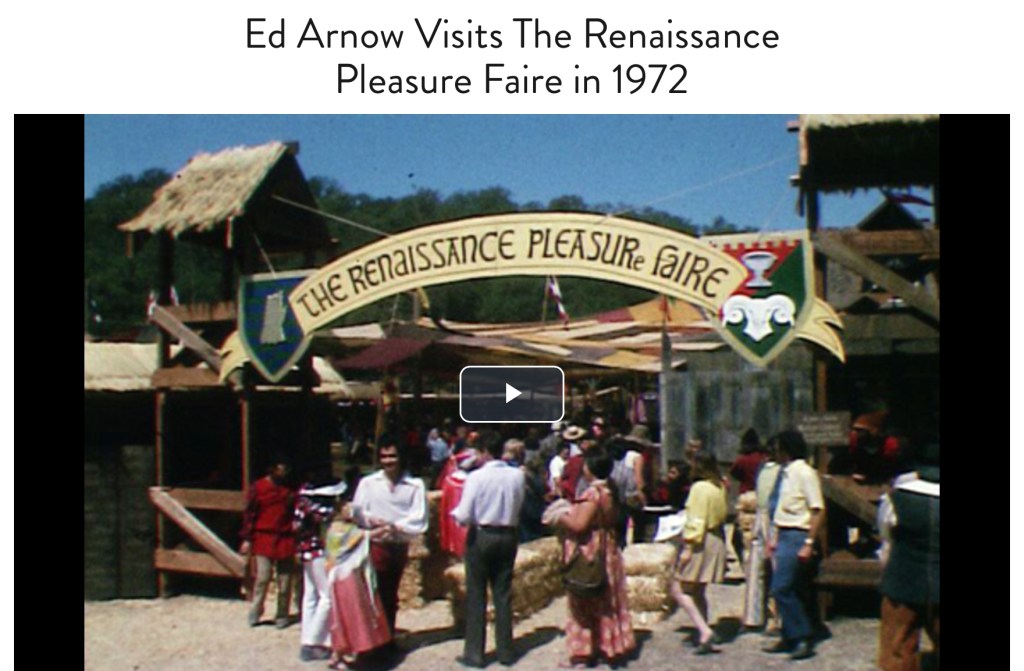
Years ago, many years ago, back during the early 1970s, my younger brother and I took a road trip in the MGB over to Blackpoint Forest in Marin County, California. It was our first encounter with a Renaissance Faire in the wild as it were, nestled back among the scrub pines and coastal oak trees of California. As I recall, this was during the gas shortages of the early 70s and though Novato was roughly 200 miles from Reno, we must have thought the gas mileage in the MG would allow the trek over the mountains. It did, but the sight of long gas lines was something I remembered to this day. 

My brother searched through his collection of slides from that time and came across these photos of our visit to the Faire. It looks much as I had remembered it.

California’s Renaissance Pleasure Faire originated in Agoura Hills in Southern California in 1963. The one we had attended in 1972 opened its Northern California location in 1967. An interesting article on the history of the faire can be found online here.

Today Renaissance Faires, or Festivals take place across the US, many of the largest being held in North Carolina, Maryland, Texas, Ohio, Wisconsin, New York, Arizona, even Georgia. The Renlist has a great website with listings by state and date. Maryland’s festival at Crownsville is one of the largest, many of which attract over 200,000 visitors over their season.

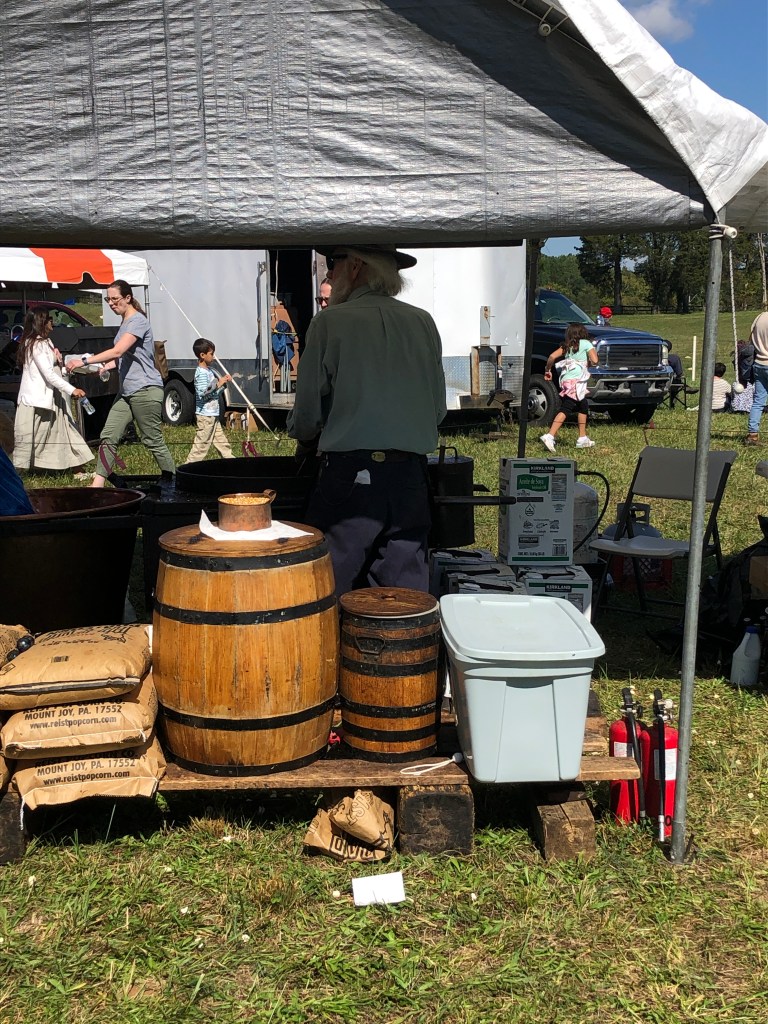
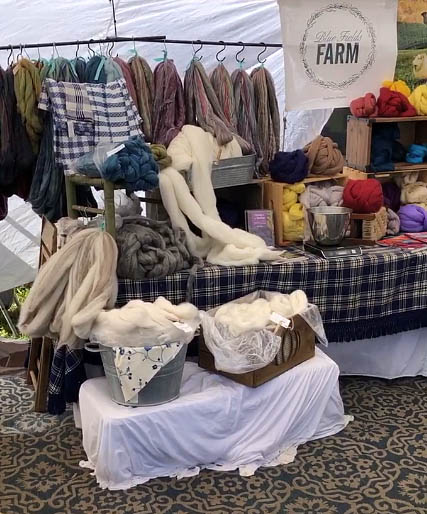
Apart from the lack of period costumes–nearly everyone was in modern dress– and the white tents set up in the field, the Fiber Festival and Sheep Dog Trials we went to recently had much the same feel as the Renaissance Faires I’ve attended in the past. The emphasis here was on homegrown/raised sheep, alpaca, and angora rabbits and the yarns produced from their wool. Whether knitted crafts or woven fabrics, the exhibits and demonstrations would have been right at home with the Renaissance faires and festivals so prevalent across our land. 

There seemed to be a greater emphasis on rich colors in the products being sold compared with the muted tones I remember seeing. In the morning sunlight, knit shawls and scarves shimmered and glowed in jewel tones; yet there were many vendors selling natural or un-dyed yarns for a more traditional homespun-look.

The two-day event was held at Montpelier and attracted quite a crowd. The sheep dog trials were a lot of fun to watch and I can see now where my son’s border collie gets her energy!


KPIX-TV news footage from September 2nd 1972 featuring a visit by reporter Ed Arnow to the Northern California Renaissance Pleasure Faire, based at the Blackpoint Forest in Novato, Marin County. You can watch the video here, or click the image above to access the San Francisco State University Bay Area Television Archive.

Memories and Mementos

“What are we going to do with all of these pictures?”

“What pictures, which ones?” I replied.

“All of them: all of the pictures, photos, albums, frames, paintings, prints, just everything.”

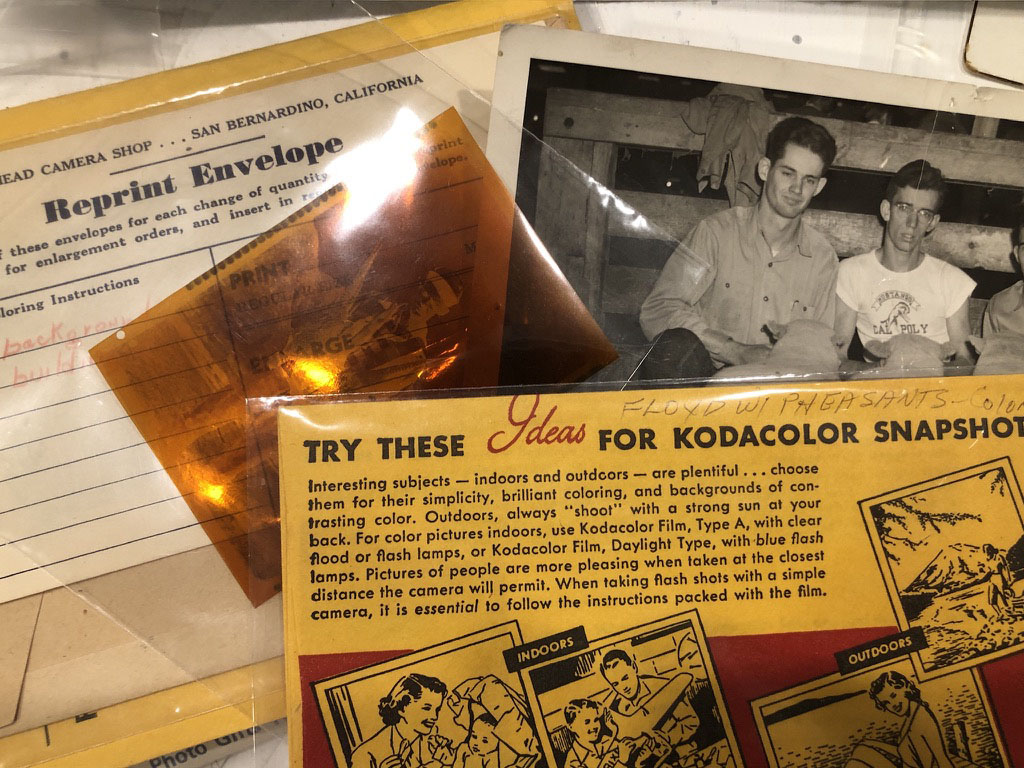
Well, I hadn’t given it much thought, but really, what are we going to do with all of this stuff? We had downsized and moved from our single family home to a smaller townhome several years ago. In the process of getting that home ready to sell, I had taken down all of our pictures, photos of family and family vacations, and packed them away in plastic bins. Now nearly four years after that move we are still wondering what to do with many of these mementos and memories, most of them still packed away.

When I was younger and first started taking photographs, I concentrated primarily on landscape photography. Years before digital cameras became popular I would shoot slide film in my Canon AE1 and occasionally have enlargements printed, many of which I framed and decorated my apartment. The prints are long gone but the slide film still looks great, beautiful rich colors after more than forty years.

I switched to a digital camera, also a Canon, when they came out and began taking more pictures of family and friends, documenting our trips and vacations, birthdays and holidays. And that introduced the beginnings of what would be a lifelong challenge: how to share and display, or store for posterity, the many, many images a digital camera produced.

When I got my first iPhone I was all set. Whereas before, one had to remember to bring the camera (or leave it in the car, always at the ready) an iPhone was the perfect accessory: I never went anywhere without my phone and consequently my camera was always with me.

Still the problem remained, what to do with all of these images? Before cloud storage enabled us to archive unlimited amounts of data, and images, I would back up my digital images on the computer and eventually transfer them to CDs. Great for storing photos, not so great for sharing them.

I’ve since been uploading many of my photos to Shutterfly. They have sharing options and also print capabilities for cards, enlargements, even photo books. I have friends who use digital frames that act like mini slideshows; the newer frames allow uploading the images to the internet (cloud servers!) and as long as the display is connected to the internet, any family member can view the display. Bluetooth or wifi-enabled devices are another option.

I’ve been printing photobooks now for years. They have taken the place of photo albums in our home. But like albums from our past, they have started to take up room on the book shelves. We visited friends recently and enjoyed looking through one of their old leather-bound albums, many of the photographs in black and white or sepia-toned. One could almost imagine the passage of time slowing down for a bit as we leafed-through and commented on their old family photos. It doesn’t feel quite the same when you scroll thru endless images on your phone!

I still don’t have a solution for the boxes of photos and albums we have accumulated through the years. We have thought about scanning all of the “pre digital” images. I am a little distraught over having lost or misplaced the CDs I used for “safe secure image storage” in the past. I have found several of the CDs I created have not held up well: the data has either become corrupted or otherwise unreadable. Perhaps storing the images on a DVD would work better. At some point I will probably upload all of our images to Shutterfly or some other third party service. I’ve put many images on a small external hard drive, not sure if that is my final answer yet or not.

What about you all? Is this a problem you have faced before? Any possible solutions you have tried successfully? If so, please share your success stories in the comments below. Love to hear from you!

Portrait of a Distinguished Gentleman

He’s sitting leaning a bit forward in his chair—with his upright posture it could even be a stool. Though out of view, his hands are resting comfortably, naturally at his side, not fidgeting. The pose is classic three-quarter view, the head turned towards the observer. He wears a dark grey striped suit coat, red-patterned tie over a crisp white shirt, a small lapel pin the only piece of jewelry. A full head of graying, nearly silver hair, warm flesh tones, a slight smile. The umber background appears to lighten around his face, darkens towards the bottom of the painting. The size of the painting, and the intricate gold frame, indicate that this is a corporate portrait, too large to hang over the mantle in one’s home but not out of place in a lobby or a corporate boardroom. He is a Distinguished Gentlemen whatever  his occupation might have been. 

What is it about us that we will memorialize our presence in this manner, capturing our idealized selves for posterity with oil on linen canvas, known and yet unknown? I bought this painting at an estate auction, the artist and the sitter both strangers to me. I don’t know them but I know a bit of their history and they both take their place in a very long line of artists and portraits made of distinguished gentlemen.

Have you been to a wedding or perhaps been in that lineup of groom and his best man and groomsmen? “Where do we stand? Where do we look?” And most importantly, “What do I do with my hands?” Some portraits handle the problem of hands by not painting them in, giving us only a portion of the subject. Perhaps the easiest solution is that of Rembrandt’s: tuck the hand under your coat. I like Franz Hals’ clever solution: his subject holds onto a book (which he has written) and the composition forces us to consider the book as nearly an important element as the subject’s own face.

One would expect the face to be the center of attention in a portrait (portrait: a likeness of a person, especially of the face, as a painting, drawing, or photograph. from the Latin “portrahere,” translated as “to drag out, reveal, expose.”) Yet in several of these historical examples, the hands or even the costume appear to be the center of attention. Perhaps the purpose here is to reveal or expose the character and nature of the subject even more so than could the face. Titian’s “Portrait of a Man in a Red Cap” ca 1510, overwhelms us with his beautiful ermine collar. Likewise the voluminous red robe and white wig of Largilliere’s “Portrait of a Gentleman” nearly obscures the smiling face of the sitter, though viewed up close, the rosy complexion and red lips reinforce the color palette and sense of privilege. The portrait of Juan de Pareja by the Spanish painter Velasques from 1650 was shocking at the time for the identity of the individual portrayed. I wonder if perhaps the white delicate collar, contrasting with that beard and full head of hair, was also a bit of a shock? All of the portraits shown here include some type of shirt or collar of white separating the flesh tones from the darker clothing.

My favorite of the lot is also the most recent. Jamie Wyeth’s painting of Andy Warhol and his daschund Archie, from 1976 places the subject squarely in front of us. Shocking white wig, white face, white shirt collar, and an exposed arm with hands holding Archie who also stares right at us. Quite a portrait indeed.

When I took art history in college, and later saw great art in person, I was always struck by the discrepancy of size. Paintings reproduced in books or viewed as film slides projected in a classroom gave no indication of their incredible power when later viewed up close in a gallery. Many of them were quite large, far larger than the 8”x10” framed photographs of family that many of us have in our homes. Even those seem to have shrunk down a bit as they have been replaced by images viewed online or in a digital frame.

As an artist I’ve never done a portrait, not even a self portrait. I had any number of life drawing classes in art school but the subject matter never really captured my attention. Perhaps at the time, if I had seen one of Chuck Close’s paintings up close, and really discovered his use of texture, then I might have attempted the challenging genre. The best of portraiture reveals more than surface texture, paint colors swirled across stretched canvas. It can reveal the subject, a psychological study perhaps, but great paintings also reveal the artist. I don’t know which takes precedence, we do after all want our portraits to at least resemble the sitter; but we lean in even closer when we feel we are reading the mind of the artist, following his thoughts.
Portrait of Ron, smiling with arms crossed

From of old no one has heard or perceived by the ear, no eye has seen a God besides you, who acts for those who wait for him. Isaiah 64:4 ESV


TOP IMAGE
Portrait of a Distinguished Gentleman, by Stephen Craighead

TOP ROW
Portrait of a Man in a Red Cap, by Titian ca. 1510
Portrait of Samuel Ampzing, by Frans Hals 1630
Rembrandt Self Portrait, 1636
Juan de Pareja, by Diego Velázquez 1650

BOTTOM ROW
Portrait of a Gentleman, by Nicholas Largilliere, about 1725
Portrait of the Artist, by John Vanderlyn 1800 
Portrait of the Artist, by Charles Loring Elliot 1850
Portrait of Andy, by James Wyeth 1976

BOTTOM IMAGE
Ron With Smile and Arms Crossed, Owen Mills

Post-Apocalypse Now

There seems to be no end to “end of the world” movies and TV shows recently. A twist in the plot here or there but they all share similar DNA. Whether it’s an individual (“only you can save the world!”) or a group of survivors just trying to make it to the end of that night’s episode alive— they all explore how we might react under the harshest of conditions.

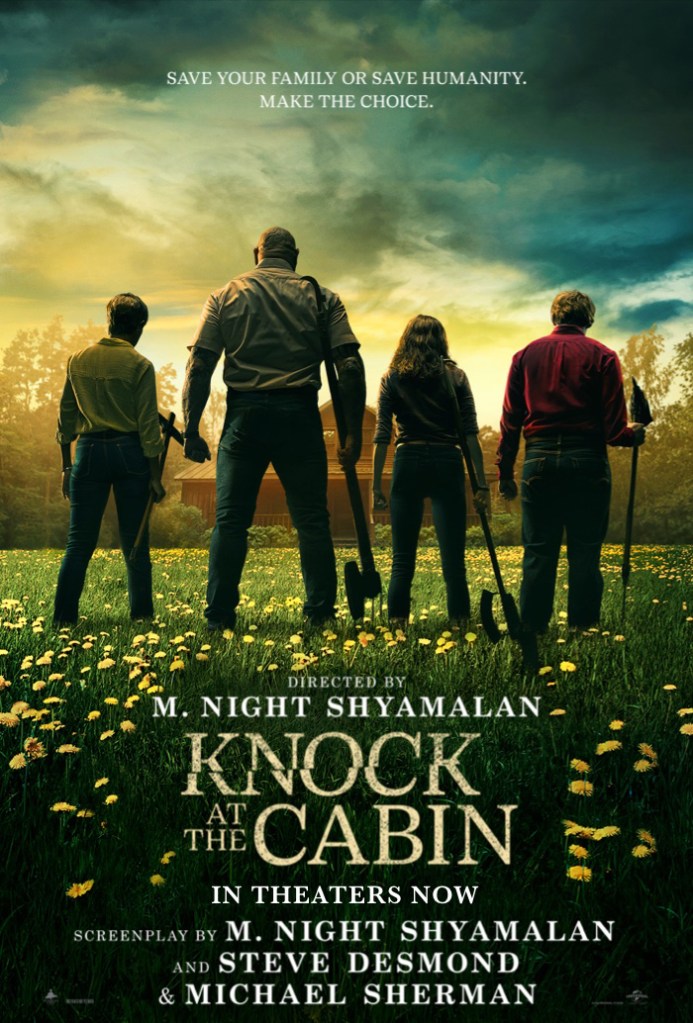
The director M. Night Shyamalan has a new movie out, Knock at the Cabin that updates the biblical End of the World story. I haven’t seen the movie yet, and this isn’t really a movie review, but it’s premise and themes are oddly tracking with a show that I am watching, The Last of Us, over on HBO. While the one is about ushering in or preventing the Apocalypse, the television series is about living in a dystopian post-apocalyptic world structured around a quest narrative. Love, loss, sacrifice, vengeance, judgment, and hope are some of the big themes both shows work through in varying ways.

However, before we compare and contrast these two shows, I want to take a side trip. For the past several months I have been reading and hearing ALOT about AI and ChatGPT. So in the interests of trying something new I thought I would interview the bot and let it (he/she/them?) write my blogpost today. The results were very…interesting. My questions below in bold type, the Chat’s answers follow.


I asked the Chatbot to write a paragraph describing the similarities in the apocalyptic worldview of the movie “Knock at the Cabin” and the HBO series “The Last of Us” and the presence, or lack thereof, of hope.

Both “Knock at the Cabin” and “The Last of Us” present a bleak and devastating world, post-apocalyptic and characterized by the collapse of human society due to a catastrophic event. The movies depict a world where survival is the main priority and people are struggling to make ends meet while facing various obstacles and threats, including mutated creatures and hostile human factions. Despite the grim reality, there is still a glimmer of hope in both stories, as the main characters work towards rebuilding and preserving what’s left of humanity. However, this hope is often fragile and uncertain, constantly tested by the harsh realities of the new world.

Overall, both works present a similar bleak worldview of a post-apocalyptic world but with a nuanced portrayal of the presence of hope.

“Knock at the Cabin” portrays the four figures of the Apocalypse demanding a sacrifice. How does this subvert our normal reading of the Four Horsemen?

“Knock at the Cabin” portrays the Four Horsemen of the Apocalypse as demanding a sacrifice, which subverts the typical interpretation of the Four Horsemen as symbols of destruction and judgement in the book of Revelation in the Bible. In the movie, the Horsemen are not just passive symbols of the end of the world, but active agents who require a sacrifice to be made in order to bring about the end. This shift in the role of the Horsemen adds a new layer of meaning to the story, as it emphasizes the idea that the end of the world is not just a inevitable outcome, but something that can be actively brought about through the actions of human beings.

By presenting the Horsemen as demanding a sacrifice, “Knock at the Cabin” challenges our conventional understanding of the Four Horsemen and their role in the end of the world, suggesting that the end is not just a matter of fate but also a result of human agency.

Are there any biblical themes in “The Last of Us” show on HBO?

Yes, “The Last of Us” series on HBO draws on various biblical themes. For example, the story of a father-daughter relationship and the theme of sacrifice, can be seen as references to the story of Abraham and Isaac from the Bible. The concept of a pandemic bringing about the end of the world can also be interpreted as a commentary on the biblical notion of judgement and the end times. Additionally, the idea of a chosen one or messiah figure, who must sacrifice themselves for the greater good, is also a recurring biblical theme that appears in the show. These themes add depth to the story and bring a spiritual dimension to the post-apocalyptic world portrayed in “The Last of Us.”

If the character of Ellie in The Last of Us” is portrayed as a messiah figure, what would be her likely future?

If Ellie in “The Last of Us” is portrayed as a messiah figure, her future would likely involve her making significant sacrifices and facing significant challenges in her quest to save humanity and bring about a better future. In such a portrayal, Ellie would be seen as a symbol of hope, who brings about change and redemption in the bleak and desolate world of the post-apocalyptic setting.

However, her journey would also likely be fraught with difficulties, as she would face resistance from those who are unwilling to change, as well as the harsh realities of the post-apocalyptic world, such as the threat of infected creatures and hostile human factions.

Ultimately, the future of Ellie as a messiah figure would be shaped by the choices she makes and the sacrifices she is willing to make in the pursuit of a better future. Whether she succeeds in bringing about a new dawn or not, her journey as a messiah figure would likely be one of struggle, sacrifice, and ultimate redemption.

If the character of Ellie in “the last of us” is accurately portrayed as being immune from the cordyceps infection, how would her condition be exploited by the ruling authorities?

In a world where the majority of the population is affected by the cordyceps infection, a person who is immune would be considered a valuable asset. For example, the ruling authorities might try to use Ellie as a source of information and research to better understand the nature of the infection and find a cure. They may also try to use her as a weapon, forcing her to venture into infected areas to gather information or carry out dangerous missions.

Additionally, the ruling authorities may try to use Ellie’s immunity as a means of maintaining control over the population. By exploiting her condition, they could manipulate the public into following their rules and regulations, or even use her as a propaganda tool to promote their own interests.

Overall, if Ellie is portrayed as being immune from the cordyceps infection, her condition would likely be exploited by the ruling authorities in a variety of ways, as they would see her as a valuable asset in their attempts to maintain control over the world and find a cure for the infection.

If the cordyceps infection controls the victims brain, and if Ellie is immune, would examining her brain likely reveal clues to her immunity?

Yes, if the cordyceps infection is portrayed as controlling the victim’s brain and Ellie is immune, examining her brain would likely reveal clues to her immunity. As the cordyceps infection takes over the victim’s brain, it would likely leave its mark on the brain’s structure and function. By comparing Ellie’s brain to the brains of infected individuals, researchers could potentially identify the differences that confer her immunity and gain insights into the mechanism of the cordyceps infection.

This information could be crucial in developing a cure for the infection, as understanding the basis of Ellie’s immunity could provide a starting point for developing a vaccine or other treatment. Additionally, by examining Ellie’s brain, researchers could gain a better understanding of the neural mechanisms underlying the control of the cordyceps infection, which could be applied to developing more effective therapies.

Overall, examining Ellie’s brain would likely be a valuable tool in gaining insights into the cordyceps infection and developing a cure for those affected.

So a likely scenario would be the sacrifice of Ellie, her resulting death, in order to save the rest of the population?

It is possible that a scenario could emerge in which Ellie’s death is seen as necessary in order to save the rest of the population. If her immunity is crucial to understanding the cordyceps infection and developing a cure, the ruling authorities or scientific community might believe that the only way to obtain this information is to sacrifice Ellie through dissection of her brain or other means.

Such a scenario would likely be a difficult and controversial decision, as it raises ethical questions about the value of one life versus the potential to save many others. It would also likely have a profound impact on the characters and the world of the story, as the decision to sacrifice Ellie would be a significant turning point in the narrative.

Ultimately, the outcome would depend on the specific details of the story and the motivations of the characters involved. While a sacrifice scenario is possible, it is not guaranteed and could be challenged or avoided altogether by the characters in the story.


My interaction with ChatGPT raised a number of ideas regarding both the movie and the TV show that I had not considered initially. The amount of agency and control over their individual destinies the characters exhibit and how their decisions could possibly affect the outcome of the scenarios was very intriguing to me. Both shows present similar End of the World viewpoints. However “The Last of Us”, perhaps because it seems more grounded in real-world (recent?) or plausible events, holds out a hope for the future that I was not expecting, especially from an adaptation of a video game. What do you think? Is there hope at the End of the World?

https://www.knockatthecabin.com

https://www.hbo.com/the-last-of-us

Images copyright their respective copyright holders, taken from their websites.

Seeing Double

We lived in several houses growing up in Reno. Until my parents divorced we lived near Wooster High School. Later after my Dad remarried, we lived in a small home off Peckham Lane in the Smithridge area. 

In the living room of both homes we had a fireplace and over the fireplace hung a painting. George Carter painted many Nevada scenes during his lifetime, some of which may have been inspired by Nevada magazine covers. The view of desert and mountains that we have was purchased from him in 1964 while Mom worked at Brundidge’s in downtown Reno. It now hangs in our guestroom and of all the paintings, photos, and memorabilia—this painting most reminds me of Nevada. The dark layering clouds over snow-covered mountains, mountain peaks catching the light, the scent of sagebrush in the dry air.

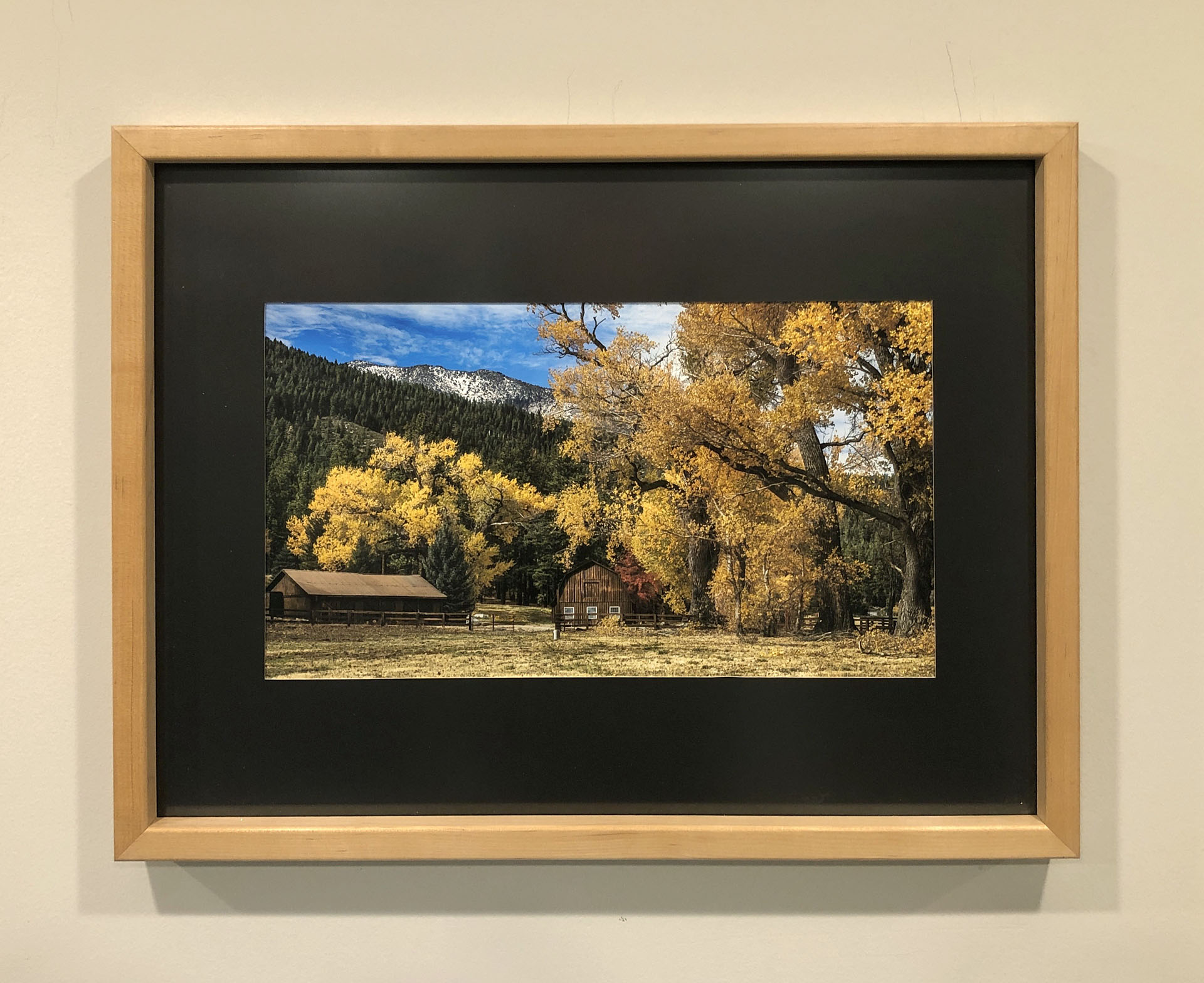
In my Dad’s home we had a different painting hanging over the mantle. Painted by my stepmother’s sister, Maxine Randall Peters, it depicts a red barn surrounded by gold-leafed trees in autumn, snuggled up against the foothills of Mount Rose. It’s a readily identifiable location in Washoe Valley. It appears Maxine had painted a lake or pond up close to the building in order to reflect the brilliant yellow trees and that gorgeous red color. 

The two paintings capture two very different views of Northern Nevada, one looking possibly towards the Sierra in the West, the other a view of the foothills from Washoe Valley, both areas I was familiar with growing up.

Though I now live in Virginia, my wife and I return often to visit family in Reno. I’ve joined a number of Reno and Nevada-interest Facebook groups, most of which feature photos of the amazing landscapes for which the state is known. Some of the sights are new to me (wild horses seem to be everywhere now, rarely seen when I was growing up there); other photos are of familiar areas such as Pyramid Lake, the Truckee River, or Lake Tahoe.

But I stopped immediately when I came across a familiar image on Facebook last month. Incredible! The red barn from my aunt’s painting, pictured in all the golden glory of fall, in a group of photos by an FB group member. Impossible! Maxine had created her  oil painting back in the 60s. The barn was old then, how could it still be standing?! I’ve framed the photo and it now hangs in my Nevada-themed guestroom. It’s a brighter version of the scene Maxine painted years ago; the cottonwood trees dominate the image and nearly obscure the barn at the center of the photo. The barn isn’t red like our painting; perhaps it never was, maybe that was just another embellishment of the artist. I like it.

While I was searching online for more photos by Lee Molof, I came across another painting by George Carter dated sometime during the early 1960s. And then another. A third and now a fourth.

All five images bear striking similarities: the pyramid-shaped mountain in the middle ground, mountains to the left of the image, sagebrush in the lower right foreground. All of them are overshadowed by immense cumulonimbus clouds. Of the four, I prefer the overall coloring in ours: the coral-tinged mountains are a little closer to the viewer; the arroyo or dirt road in the center has a slate grey that mimics the snow covered mountains in the distance. Orange flowers dot the foreground and place the image as perhaps early spring, snow hasn’t yet receded from the mountain peaks.

I’m curious to find the original location that Carter used as reference material. If it is indeed from a Nevada magazine I would like to get a copy of it, perhaps a nicely framed photo to go with our painting. If civilization and the expansion of Northern Nevada suburbs haven’t destroyed the view, I think it would be great to pair the photo and the painting in the same room. It’s a bit of Double Vision, a nod to the past as well as the present. I like it.


Just to be clear, I don’t own the four paintings in the collage above. All of them were found on online art auction sites. In most cases, Carter oil paintings sell in the mid $500-800 range. Mom says she paid $30 for ours and bought it directly from George Carter when he would come in to Brundidge’s for art supplies or to have paintings framed.

Second Chances

I know, I know. I said that we were downsizing. And if that means anything, it means decreasing what we own and definitely NOT buying more stuff.

But since I discovered online estate sales last year, I have definitely taken a turn for the worse.

Today I went through my invoices to see exactly what all I have been bidding on (and winning). I’ve lost out on any number of things by not bidding high enough to secure them as the timed-bidding ran out. But I’ve won quite a bit, some things of value; some things I think (or thought) I needed; some items I just thought would be fun to have.

A few things, after I’ve picked them up from the home where the estate sale was being held, turned out to be, shall we say, not quite what I had expected. To be sure, nothing online has been misrepresented and for all of the auctions we have followed, there has been an in-person preview period. Those I generally forego as I don’t want to drive the distance twice. But wheels have needed to be replaced. A Nikon camera I bought wasn’t a digital format, that one is on me. The deer-antler-handle carving set was a win.

Over the past year it looks like I have concentrated on indoor furnishings, vintage furniture or decor. But more recently I have looked for garden tools, garden furniture, cement planters or garden sculpture. There is a wide variety of just stuff available through online estate sales. The company we have been bidding through will list everything in your home, from the contents of the silverware drawer to everything found in an outdoor shed. And under the deck as well. And the linen closets.

I’ve come to realize that, while there are many good deals to be had (we just recently picked up an unused toaster oven), there are also things that have left me scratching my head and wondering. Why? Why did l bid on that? Hmm?

The savvy collector will seek out comparable items to determine the worth of an item. I found myself bidding on something when luckily I was outbid and thought, “Did I really want to spend that much for a used item?” and Heaven help you if you have bid more than what an item is worth new because you hadn’t done your homework. But I’ve also let a few things get away that I hadn’t set an appropriate upper limit to my bid. Bids generally increase by $2 but at some point that increment can jump up to $10 or more. And I have lost out on something by $2 simply because I had set my max bid too low.

Over the year I’ve bought several mahogany picture frames, an antique Lane cedar chest, an antique Victorian mahogany wash stand which I refinished; several tables; a couple of wingback chairs; a beautiful sleeper sofa which we ended up taking to the dump; binoculars; a handpainted floor lamp; a metal detector that needed a new set of batteries; concrete garden planters; iron garden table and chair set; garden carts and a wheelbarrow and more I’m sure.

Have your participated in any online estate sales? Or perhaps have been thinking that a sale (really it’s a silent auction format) would be a great way to downsize? I look around at all that we have and shudder when I think how little our stuff might actually be worth. On the other hand, I’m pretty excited to get a nice garden cart–in need of new wheels– for only $15. It’s all relative.

A few of the fun things I’ve purchased over the past year. The gorgeous Victorian mahogany frame is still waiting on a decision to paint it or leave it natural. And I have a couple of tables that are waiting on refinishing, other than that we are in a good place. But maybe it’s not quite the time to really downsize.